
Breakfast & Brunch
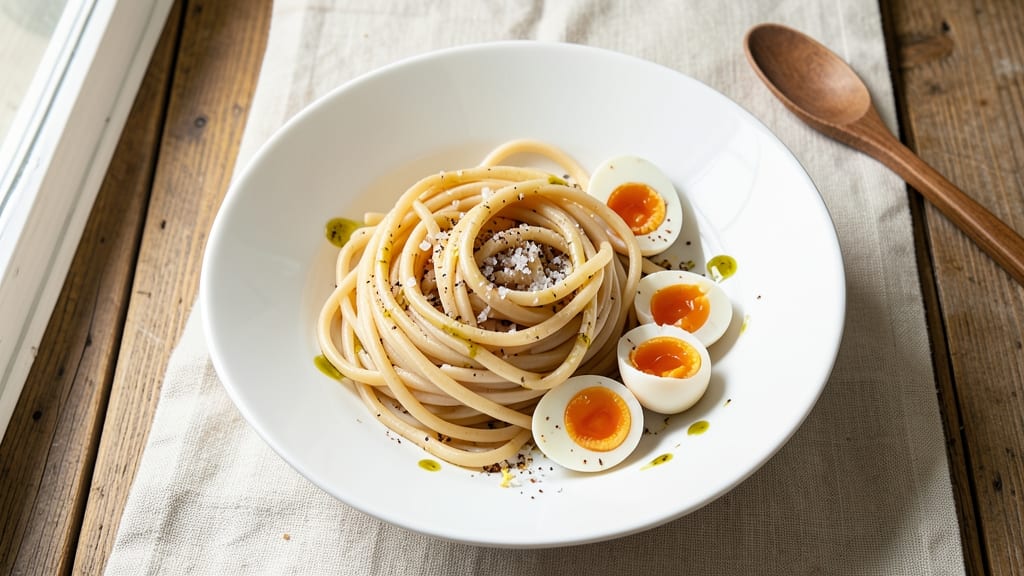
This almond flour egg noodles recipe transforms breakfast with light, silky strands that cook in just 5 minutes. Unlike traditional wheat noodles, these gluten-free twists rely on almond flour and eggs for a delicate yet sturdy texture—perfect for quick meals or elegant dishes.
The secret lies in the right flour-to-egg ratio, which prevents crumbling while keeping them tender.
The dough comes together in 10 minutes with just 4 ingredients, then rests briefly to develop elasticity. Rolling it thin ensures those signature silky strands, while a quick boil delivers al dente perfection.
What sets these apart is their ability to absorb sauces beautifully—whether tossed in garlic butter, stir-fried with veggies, or served in miso soup.
What you’ll achieve is a versatile, gluten-free noodle that’s faster than store-bought but far more flavorful. The almond flour adds a subtle nuttiness, while the eggs bind everything together for a cohesive bite.
These noodles hold their shape during cooking yet melt slightly when served, creating that ideal balance between chew and tenderness.
Serve them as a breakfast twist with poached eggs and hollandaise, or use them in place of rice noodles for Asian-inspired dishes. The recipe scales easily, so you can make a batch ahead and store it in the fridge for up to 3 days. Let’s get started!
Ingredients for almond flour egg noodles
Four core ingredients create these delicate, gluten-free strands perfect for quick breakfast meals.
| Ingredient | Amount | Notes |
|---|---|---|
| Almond Flour 🥜 | 1 ½ cups | Finely ground, unsweetened preferred |
| Large Eggs 🥚 | 4 whole | Room temperature for even blending |
| Water 💧 | ¼ cup | Room temperature for smooth dough |
| Salt 🧂 | ½ tsp | Fine sea salt preferred |
| Olive Oil 🫒 | 1 tbsp | For rolling and preventing sticking |
| Sesame Oil 🌾 | 1 tsp | Optional for nutty aroma |
| Garlic Cloves 🧄 | 2 cloves | Minced for flavor infusion |
| Vegetable Oil 🫒 | 2 tbsp | For frying or sautéing noodles |
| Sesame Seeds 🌾 | 1 tbsp | Toasted for garnish |
The almond flour is non-negotiable here—Bob’s Red Mill or Anthony’s Goods brands yield the finest texture. Pre-ground flour works, but for optimal results, pulse whole almonds in a food processor until ultra-fine (no grit). Eggs must be at room temperature to blend seamlessly with the dry ingredients; cold eggs create pockets that disrupt the dough's uniformity. Pasture-raised eggs add richness, but any large eggs will suffice. The water acts as a binder, so measure it precisely—too much makes the dough sticky, too little creates crumbly strands.
No almond flour? Blend toasted almonds into a fine powder using a high-speed blender, but expect slightly coarser texture. Egg allergies? Replace with 4 tbsp aquafaba per egg (chilled overnight for best results). For extra flavor, infuse the olive oil with minced shallots or garlic before using. Sesame oil can be swapped for toasted sesame paste at half the amount, though texture may vary slightly. The garlic cloves should be fresh—roasted garlic adds sweetness but lacks the punch of raw.
Freshly made noodles keep in an airtight container for 3 days in the fridge, or 3 months frozen between parchment layers. For best texture, cook from frozen—no thawing required. Reheat in a dry skillet with a splash of water for 2 minutes to restore their silky quality. These noodles absorb sauces exceptionally well, so prepare them just before serving to maintain their delicate structure. Garnish with toasted sesame seeds immediately after cooking for maximum crunch.
Why You'll Love This Recipe
- Four-Ingredient Magic: I swear by this recipe—just almond flour, eggs, water, and olive oil. No fancy equipment, no measuring cups (eyeball it!), and no waiting for dough to rise. Honestly, it’s the kind of recipe that makes me feel like a chef even when I’m too tired to cook.
- Nutty But Not Heavy: The almond flour gives these noodles a delicate, almost silky texture—nothing like the dense, dry pasta I’ve had before. A light coat of olive oil keeps them tender, and the eggs bind it all together so smoothly. Between us, it’s the best low-carb noodle I’ve ever made.
- Weeknight & Meal Prep Hero: I make a double batch on Sundays and freeze half—perfect for busy nights when I need something quick. They reheat beautifully with any sauce, from creamy Alfredo to spicy stir-fry. (Yes, even on a Tuesday night when takeout sounds better than cooking.)
- Budget-Friendly Luxury: Almond flour might seem pricey, but a little goes a long way—this recipe stretches further than store-bought noodles. Plus, the eggs and olive oil are pantry staples, so I’m not breaking the bank for a restaurant-quality dish. My wallet (and my taste buds) thank me.
Step-by-step instructions for almond flour egg noodles
Here's the method for creating delicate, silky noodles that cook in minutes and pair beautifully with savory sauces.
Combine Dry and Wet Ingredients for Smooth Dough
In a medium mixing bowl, whisk together the 1.5 cups almond flour and 0.5 teaspoon salt until evenly distributed. This ensures consistent texture throughout the dough. Create a well in the center and add the 4 whole large eggs at room temperature, allowing them to settle into the flour mixture.
Gradually pour in the 0.25 cup room-temperature water while whisking continuously. The dough should begin to come together as the liquid incorporates. Add the 1 tablespoon olive oil and 1 teaspoon sesame oil next, mixing until fully combined. The dough should form a soft, pliable ball that's slightly tacky but not sticky. If it feels too dry, add 1 teaspoon more water; if too wet, sprinkle in 1 tablespoon more almond flour.
Knead and Rest for Optimal Texture
Turn the dough onto a lightly floured surface and knead gently for 2-3 minutes until smooth and elastic. Avoid overworking the dough, as almond flour can develop gluten differently than wheat flour. Wrap the dough tightly in plastic wrap and rest it at room temperature for 30 minutes. This resting period allows the proteins to relax and the dough to become more pliable, ensuring even rolling later.
During this time, prepare your work surface by lightly dusting it with almond flour. This prevents sticking and ensures clean cuts when you roll the dough. The rested dough should be cool to the touch and hold its shape when pressed gently.
Roll and Cut into Delicate Noodles
After resting, divide the dough into 4 equal portions (about 60 grams each) for easier handling. Working with one portion at a time, roll it between two sheets of parchment paper using a rolling pin or pasta machine. Start with the widest setting and gradually decrease to your desired thickness—aim for about 1/8-inch thickness for delicate noodles that cook quickly.
Once rolled to the correct thickness, use a sharp knife or pasta cutter to slice the dough into 1/8-inch wide strips. For classic egg noodle appearance, cut the strips diagonally into 2-inch lengths. As you work, keep the remaining portions covered with damp paper towels to prevent drying. The cut noodles should be smooth and uniform, with clean edges that indicate proper rolling.
Cook Noodles to Al Dente Perfection
Bring a pot of water to a rolling boil and add the 2 tablespoons vegetable oil to prevent sticking. Add the noodles in batches to avoid overcrowding, and cook for 2-3 minutes until they float to the surface. This indicates they're cooked al dente—tender but still with a slight bite. Drain immediately and rinse briefly under cold water to stop the cooking process and preserve their delicate texture.
For serving, toss the cooked noodles with the minced 2 cloves garlic and a drizzle of sesame oil. Garnish with 1 tablespoon toasted sesame seeds for added crunch and aroma. These noodles pair beautifully with simple soy-based sauces, stir-fry vegetables, or even as a light base for hearty meat dishes.
Pro Tips For Making Almond Flour Egg Noodles
- Mix the Dough Cold: I learned this the hard way—warm eggs make almond flour dough sticky and impossible to handle. Keep everything (bowl, eggs, water) chilled until you’re ready to mix, then work fast but gently. The dough should clump like wet sand, not glue your fingers together.
- Use Room-Temp Eggs: Cold eggs from the fridge will make your dough tougher and harder to roll. Let the eggs sit in warm water for 5 minutes before cracking them into the almond flour. The dough will be smoother and more pliable—no more fighting with a stubborn, crumbly mess.
- Rest the Dough 30 Minutes: This isn’t the prettiest method, but it’s the tastiest. After mixing, cover the dough and let it rest while you prep your rolling surface. The gluten (yes, even in almond flour) relaxes, so you won’t end up with snapped noodles when cutting. Trust the process—your future self will thank you.
- Roll Thin, Cut Fast: Skip the temptation to roll the dough thick for "forgiveness." Aim for ⅛-inch thickness—thinner noodles cook faster and absorb sauces better. Use a sharp knife or pasta machine, and cut immediately after rolling. If the dough dries out while resting, spritz lightly with water before rolling again.
Perfect pairings for almond flour egg noodles
Breakfast Pairings
Start your day with these almond flour egg noodles as a silky base for a fluffy scrambled egg bowl—top with sautéed mushrooms, crispy bacon, and a drizzle of hollandaise sauce.
The nutty flavor of the noodles complements the richness of eggs perfectly, while the bacon adds a satisfying crunch. For a lighter option, try a poached egg with avocado slices and a sprinkle of everything bagel seasoning. 🥚
Savory Sauce Pairings
Toss your noodles with garlic butter sauce by melting 2 tablespoons butter, 2 minced garlic cloves, and a pinch of red pepper flakes in a pan.
For a soy-ginger glaze, combine 3 tablespoons soy sauce, 1 tablespoon rice vinegar, 1 teaspoon grated ginger, and a drizzle of honey. Both sauces cling beautifully to the noodles without overpowering their delicate texture.
Stir-Fry Combinations
Use these noodles as a low-carb rice substitute in stir-fries. Sauté 1 bell pepper, 1 cup snap peas, and ½ block firm tofu in 1 tablespoon sesame oil, then toss with the cooked noodles.
Add a peanut sauce made from 2 tablespoons peanut butter, 1 tablespoon soy sauce, and 1 teaspoon sriracha. The almond flour adds a subtle nuttiness that enhances the dish. 🥜
Soup Additions
Transform miso soup into a heartier meal by adding these noodles. Simmer 4 cups dashi broth, 2 tablespoons white miso paste, and 1 sheet nori (cut into strips). Drop in the noodles just before serving so they absorb the flavors without becoming mushy.
For extra depth, stir in a spoonful of pickled ginger or toasted sesame seeds at the end.
Dessert Twist
Sweet tooth craving? Toss cooked noodles with 2 tablespoons maple syrup, 1 teaspoon cinnamon, and a pinch of sea salt, then top with dark chocolate shavings and toasted coconut flakes.
The subtle sweetness of the almond flour pairs surprisingly well with chocolate, creating a dessert that’s both elegant and quick to prepare. 🍫
Nutrition facts
Frequently asked questions
Why do these almond flour noodles turn out crumbly?
The most common cause is overworking the dough or using too much almond flour. Almond flour lacks gluten, so handle it gently during kneading (2-3 minutes max) and ensure your eggs are at room temperature. If the dough feels dry, add 1 teaspoon water at a time until pliable—but don't overdo it, or the texture will suffer.
Can I make these noodles ahead of time?
Cooked noodles keep in an airtight container in the fridge for 3 days or freeze for 3 months. For best texture, cook from frozen (no thawing needed) and reheat in a dry skillet with a splash of water for 2 minutes. They'll be slightly firmer but still delicious—toss with fresh garlic and sesame oil to revive their silky quality.
What's the best way to prevent sticking when rolling?
Work between two sheets of parchment paper dusted with almond flour, not regular flour. Regular flour can make the dough tough. Keep unused dough portions covered with damp paper towels to maintain moisture. If the dough still sticks, chill it for 10 minutes before rolling again—this firms it up without drying.
Are these noodles safe for nut allergies?
No—these contain almond flour, which is a tree nut. For nut-free versions, substitute with 1.5 cups gluten-free oat flour or 1 cup tapioca starch + 0.5 cup coconut flour, though texture will differ. Always check labels on almond flour for cross-contamination warnings if severe allergies are present.
How do I adjust the thickness for different textures?
For thin, delicate strands (like vermicelli), roll to 1/16-inch thickness and cut into 1/16-inch strips—they'll cook in 1-2 minutes. For thicker, chewier noodles (like fettuccine), aim for 1/4-inch thickness and cut into 1/4-inch strips, cooking time increases to 4-5 minutes. Adjust based on your preferred bite!