
Breakfast & Brunch
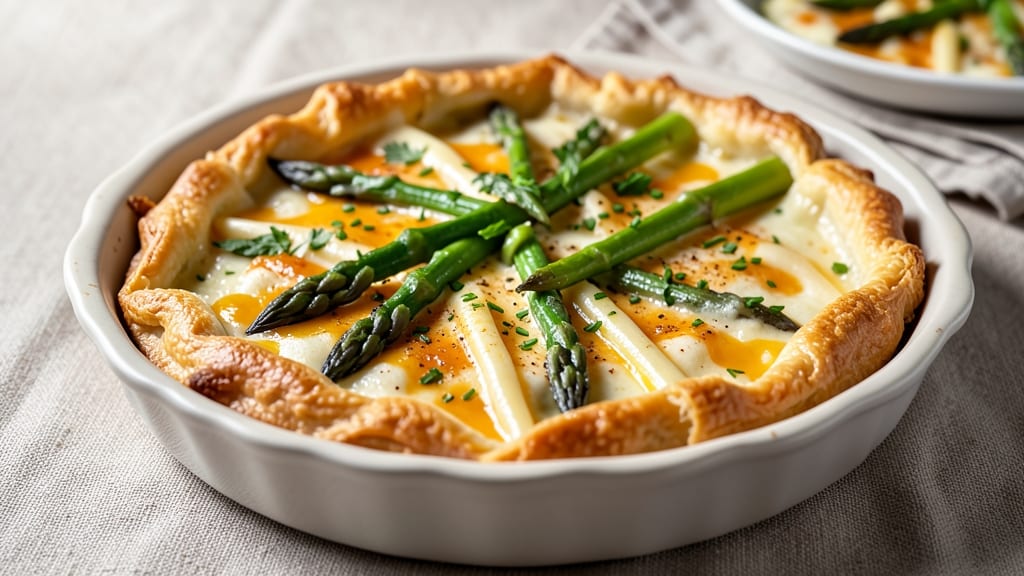
This asparagus egg quiche recipe delivers a perfect balance of flaky crust and tender, savory filling that makes breakfast feel like a special occasion. 💛 The secret lies in properly pre-cooking the asparagus to maintain its vibrant color and crisp texture while ensuring the egg mixture sets just right for a creamy, golden finish.
Whether you're using a store-bought crust or making one from scratch, this recipe builds confidence with every step.
The foundation starts with a buttery crust that bakes to a beautiful golden brown, providing the ideal base for the rich egg mixture. Asparagus spears are blanched first to preserve their bright green hue and crisp bite, then layered with a blend of eggs, heavy cream, and sharp cheddar cheese.
This combination creates a filling that's both creamy and satisfying, with just the right amount of tangy depth from the cheese.
Baking at 375°F ensures the quiche emerges with a perfectly set top and a crust that's crisp enough to hold its shape. The result is a restaurant-quality dish that's equally impressive served for brunch or a light dinner.
Every slice reveals tender asparagus spears nestled in a velvety egg custard, topped with a golden crust that's impossible to resist.
For added flavor, consider sprinkling fresh chives or a dusting of Parmesan cheese before serving. This vegetarian-friendly recipe also works beautifully with variations like feta cheese or spinach for those who prefer different textures and flavors. Let's create this crowd-pleasing quiche that's sure to become a weekend staple.
Ingredients for asparagus egg quiche
Six ingredients transform into a golden, restaurant-worthy quiche with crisp crust and vibrant asparagus.
| Ingredient | Amount | Notes |
|---|---|---|
| Asparagus Spears 🥬 | 1 ½ lb | Trimmed, ends snapped off |
| Large Eggs 🥚 | 6 whole | Room temperature preferred |
| Heavy Cream 🥛 | 1 cup | Full-fat for best texture |
| Sharp Cheddar Cheese 🧀 | 1 ½ cups | Shredded, aged for flavor |
| Unsalted Butter 🧈 | 1 cup | Cold, cubed for crust |
| All-Purpose Flour 🌾 | 2 ½ cups | Plus 1 tbsp for dusting |
| Ice Water 💧 | ½ cup | For pie dough consistency |
| Salt 🧂 | 1 ½ tsp | Kosher or sea salt |
| Black Pepper 🌶️ | ½ tsp | Freshly ground preferred |
| Fresh Chives 🌿 | ¼ cup | Chopped, for garnish |
| Parmesan Cheese 🧀 | ¼ cup | Freshly grated, for topping |
The asparagus is non-negotiable here—look for bright green spears with tight tips at your local market or grocery store. Trader Joe's and Whole Foods often carry the freshest cuts, but even your regular supermarket will do. Trim the woody ends carefully—this is where flavor and texture start. For the crust, Land O'Lakes unsalted butter gives the richest flavor, but any good-quality brand works. The flour should be King Arthur or AP brand for reliable texture. Pre-shredded cheese is convenient, but freshly grating the cheddar makes all the difference in taste.
No heavy cream? Full-fat coconut milk or half-and-half works in a pinch, though the texture will be slightly lighter. Substituting Parmesan for cheddar adds depth but loses that tangy bite. Fresh chives are ideal, but dried chives at half the amount work if you're in a bind. The crust can be store-bought (just skip the butter in ingredients), but homemade delivers that golden, flaky perfection. For a gluten-free option, swap the flour for a 1:1 gluten-free blend—just add an extra tablespoon to compensate for density.
Blanched asparagus keeps for 3 days in the fridge, wrapped tightly in a damp towel. The crust dough can be prepped 24 hours ahead and chilled. Fully assembled quiche stays fresh for 4 days in the fridge, though it's best enjoyed within 2 days for peak texture. Reheat slices at 350°F for 10 minutes to restore crispness. Freeze uncut quiche for 3 months—thaw overnight in the fridge before reheating.
Why You'll Love This Recipe
- I’ll be real: it feels fancy, but it’s not breaking the bank. Eggs, cheese, and asparagus are affordable staples, and the heavy cream makes it taste like a restaurant dish without the price tag. Plus, leftovers? They’re the best.
- One-Pan Magic: I swear by this recipe when I’m too tired to wash dishes. Butter the crust, dump in the asparagus and cheese, crack in the eggs—boom. Done. The asparagus roasts right in the oven while the custard sets, so no separate pans, no fuss.
- Creamy Cheese Crunch: Honestly, that sharp cheddar melting into the custle with the bright, slightly charred asparagus is chef’s kiss. The heavy cream makes it rich but not heavy, and the asparagus adds this fresh, grassy pop that cuts through the richness perfectly.
- Meal Prep MVP: Between us, this is my go-to for office lunches or lazy Sundays. Slice it up, wrap it in foil, and it stays fresh for days. The asparagus holds its texture, and the custle reheats like a dream—no soggy quiche here.
Step-by-step instructions for asparagus egg quiche
Here's how to assemble a perfectly golden quiche with tender asparagus and creamy custard.
👨🍳 Step 1: Prepare the Crust Using Cold Butter Technique
In a large mixing bowl, combine the 2.5 cups all-purpose flour and 1.5 tsp salt. Cut in the 1 cup cold unsalted butter using a pastry cutter or your fingers until the mixture resembles coarse crumbs with pea-sized butter pieces. This cold butter creates flaky layers when baked.
Gradually add the 0.5 cup ice water, 1 tablespoon at a time, mixing gently with a fork just until the dough begins to come together. Avoid overmixing—this develops gluten and makes the crust tough. Form the dough into a disk, wrap in plastic, and chill for 30 minutes while you prepare the filling.
🍳 Step 2: Roll and Blind-Bake the Crust
On a lightly floured surface, roll the chilled dough into a 12-inch circle about 1/8-inch thick. Transfer to a 12-inch pie dish, gently pressing it into the bottom and up the sides. Trim any excess dough hanging over the edge. Prick the bottom all over with a fork to prevent puffing.
Preheat oven to 375°F. Line the crust with parchment paper, fill with pie weights or dried beans, and bake for 15 minutes. Remove the weights and bake 5 more minutes until the edges begin to golden. The crust should be set but not browned—this prevents sogginess when adding the filling.
🔪 Step 3: Blanch and Prep the Asparagus
While the crust bakes, snap off the tough ends of the 1.5 lb asparagus spears and trim any woody bases. Bring a pot of salted water to a boil and blanch the asparagus for 2 minutes until just tender-crisp. Drain immediately and plunge into ice water to stop cooking. Pat dry thoroughly with paper towels—this prevents a watery filling.
Cut the blanched asparagus into 1-inch pieces and set aside. The bright green color and crisp texture will shine through the custard. Real talk: don't skip blanching—raw asparagus releases bitter juices that ruin the delicate egg flavor.
🥘 Step 4: Assemble the Quiche Filling
In a large bowl, whisk together the 6 whole large eggs, 1 cup heavy cream, 1.5 cups shredded sharp cheddar cheese, 0.5 tsp black pepper, and 0.25 cup freshly grated parmesan cheese until smooth. The mixture should be thick but pourable—this ensures a creamy, not runny, quiche.
Spread the asparagus pieces evenly over the pre-baked crust. Pour the egg mixture over the asparagus, gently tilting the dish to distribute evenly. Sprinkle the 0.25 cup chopped fresh chives evenly over the top for freshness and color contrast.
🔥 Step 5: Bake Until Golden and Set
Return the quiche to the 375°F oven and bake for 35-40 minutes until the custard is just set and the edges are golden brown. You'll know it's ready when the center is barely jiggly (about 160°F internal temperature) and the top has a firm, golden crust.
Let the quiche rest for 10 minutes before slicing—this allows the custard to firm up slightly. Here's the thing: quiche continues cooking off the heat, so remove it when it looks slightly underdone. Serve warm or at room temperature with a crisp green salad for a complete meal.
Pro Tips For Making Asparagus Egg Quiche
- PREP ASPARAGUS STRAIGHT: Cut asparagus spears into 2-inch pieces before blanching—this keeps them crisp-tender and prevents soggy spots in the quiche. I learned this the hard way after serving mushy asparagus that had absorbed too much water during a long pre-cook.
- BAKE COLD CREAM: Whisk heavy cream into the egg mixture cold—no warm eggs here. The cold cream tempers the eggs and prevents curdling, which I used to get when mixing everything at room temperature. Trust me, your quiche will set up smoother.
- SALT THE CHEESE: Grate sharp cheddar with a pinch of salt—unsalted butter and cheese alone won’t cut it. I used to skip this, and the flavor felt flat until I realized the cheese needed a boost to stand out against the eggs.
- COVER THE FIRST 20: Tent the quiche with foil for the first 20 minutes of baking—this traps steam and guarantees a custardy center. After that, uncover to let the top brown. (Yes, even if you’re impatient like me.)
Pro cooking tips for great asparagus egg quiche
Crust Perfection
For that signature flaky texture, keep your butter cold—cut it into cubes and store it in the freezer for 10 minutes before mixing. I use my fingers to work the butter into the flour until it resembles coarse crumbs with pea-sized pieces.
Overmixing turns the crust tough, so handle it gently. Let the dough rest 30 minutes before rolling—this relaxes the gluten for a tender result. 🥧
Blanching Secrets
Blanching asparagus for just 2 minutes preserves its vibrant green color and crisp texture. Use a timer—I’ve learned the hard way that overcooking turns it mushy. Immediately shock in ice water to stop cooking, then pat completely dry with paper towels.
Any moisture in the filling will make it watery. Pro tip: Trim the ends at an angle for a more elegant presentation.
Egg Mixture Mastery
Whisk your eggs and cream until smooth but not frothy—this creates a silky custard. For extra richness, I add 1 tablespoon of Dijon mustard to the egg mixture (about 1 tsp per egg) for depth.
Season generously with salt and pepper, but taste the cheese first—sharp cheddar can be salty. The mixture should coat the back of a spoon but still be pourable. 🥚
Baking Like a Pro
Pre-baking the crust (blind-baking) prevents a soggy bottom. Use pie weights or dried beans, and bake until just set—not browned. For even cooking, place your quiche on the middle rack. The custard is done when it’s barely jiggly in the center (about 160°F).
Here’s the thing: quiche continues setting as it cools, so don’t overbake. A toothpick should come out clean with a few moist crumbs.
Resting Matters
Never slice quiche immediately—let it rest 10-15 minutes to firm up. This allows the custard to set properly and makes slicing cleaner. For reheating, cover slices with foil and warm at 350°F for 5-7 minutes.
Microwaving dries out the crust, so always use the oven. Store leftovers in an airtight container for up to 4 days in the fridge. 💪
Garnish Game-Changer
Fresh chives add a pop of color and brightness, but don’t skip the Parmesan—its umami notes elevate the dish. For a smoky twist, sprinkle ½ tsp smoked paprika over the top before baking.
I also love a drizzle of truffle oil (just ½ tsp**) after serving for a gourmet touch. Garnishes should complement, not overpower, the quiche’s natural flavors.
Nutrition facts
Frequently asked questions
Can I make this quiche without a homemade crust?
Use a high-quality 9-inch store-bought pie crust or even a pre-made puff pastry for a quicker version. Just follow the package instructions to blind-bake it first—this prevents a soggy bottom. A frozen crust works too, but thaw it completely before assembling. The key is ensuring the crust is fully set before adding the filling.
How do I prevent the quiche from being too runny?
Overmixing the egg mixture or underbaking are the usual culprits. For a perfect set, whisk the eggs and cream just until smooth (no froth), and bake until the center reaches 160°F with a slight jiggle. A 10-minute rest after baking helps it firm up too. Pro tip: Add 1 tablespoon cornstarch to the egg mixture for extra stability.
What can I substitute for asparagus?
Try spinach, mushrooms, or artichoke hearts for a different texture. For a similar earthy flavor, swap in fennel or zucchini (blanched first). If you prefer a meaty option, diced ham or smoked salmon work beautifully. Just adjust the cooking time—veggies like mushrooms release more moisture, so pat them dry thoroughly.
Can I make this quiche ahead of time?
Yes! Assemble the quiche and refrigerate it unbaked overnight. When ready to bake, add 5-10 minutes to the baking time (about 40-45 minutes total). For leftovers, store in an airtight container for 4 days in the fridge. Reheat slices at 350°F for 10 minutes to restore crispness—microwaving makes the crust soggy.
Why did my crust turn out puffy instead of flat?
This happens when air gets trapped during baking. To fix it, prick the crust all over with a fork before blind-baking, and use pie weights or dried beans to press it down. For next time, chill the dough longer (1 hour) and roll it slightly thinner (1/10-inch**). A puffy crust is still edible, but a flat base ensures even cooking.