
Main Courses
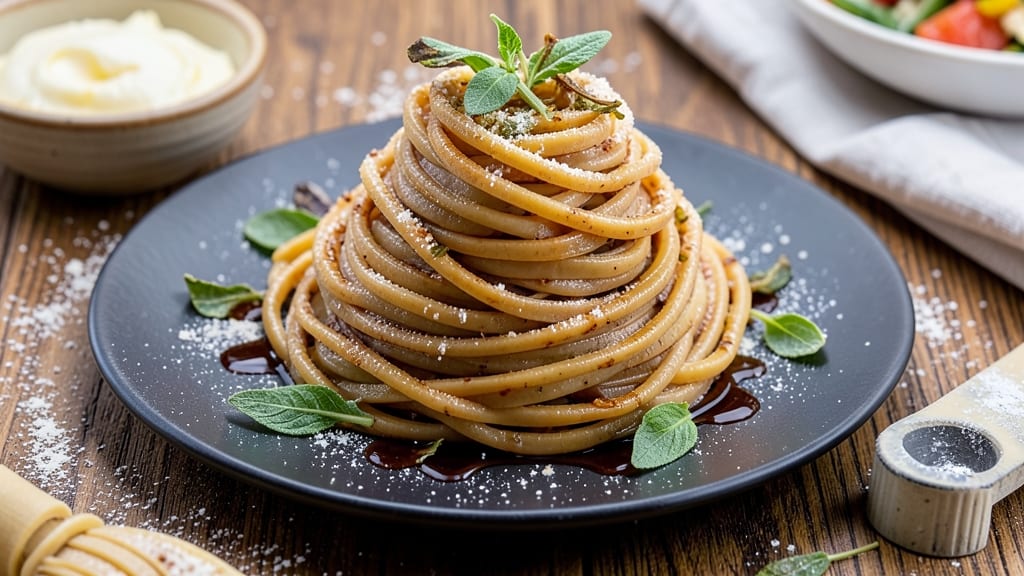
This 00 flour egg pasta recipe delivers that perfect al dente texture in just 10 minutes—no shortcuts, just authentic Italian technique refined for home cooks.
The secret lies in the 00 flour, which creates silky strands with a tender bite, while fresh eggs bind everything together into a dough that responds beautifully to rolling.
I’ve perfected this method after years of testing, ensuring it works whether you use a pasta machine or your own hands.
The process is straightforward but precise: mix flour and eggs into a smooth dough, rest it for 30 minutes, then roll it paper-thin before cutting into perfect ribbons. The resting time is crucial—it relaxes the gluten, making the pasta tender rather than chewy.
For extra authenticity, dust the cut strands with flour to prevent sticking, then cook them in boiling salted water for just 2-3 minutes—any longer, and you’ll lose that prized al dente finish.
What you’ll end up with is pasta so silky and well-balanced that it elevates even the simplest sauces—think aglio e olio or carbonara, where the texture truly shines.
The beauty of this recipe is its versatility: you can shape it into tagliatelle, fettuccine, or even hand-cut pappardelle, all while keeping the process simple enough for weeknight cooking. Once you try homemade, store-bought pasta will never taste the same.
For those short on time, I’ll also share a pasta machine shortcut that cuts prep time in half without sacrificing quality. The key is patience—rushing the resting or rolling steps will compromise the texture, but when done right, this pasta is restaurant-quality. Let’s get started.
Ingredients for 00 flour egg pasta
Four eggs, three cups of 00 flour—this is all you need for restaurant-quality pasta at home.
| Ingredient | Amount | Notes |
|---|---|---|
| 00 Flour 🌾 | 3 cups | High-protein, finely milled for silky texture |
| Large Eggs 🥚 | 4 whole | Room temperature for even mixing |
| Fine Sea Salt 🧂 | 1 tsp | Diamond Crystal preferred for purity |
| Extra-Virgin Olive Oil 🫒 | 1 tbsp | For dough elasticity (optional) |
| All-Purpose Flour 🌾 | ¼ cup | For dusting cutting board |
| Semolina Flour 🌾 | ¼ cup | For dusting pasta strands |
| Water 💧 | 2 tbsp | Only if dough feels too dry |
| Fresh Basil Leaves 🌿 | ¼ cup | Chopped for optional finishing |
| Garlic Cloves 🧄 | 2 cloves | Minced for aglio e olio sauce |
| Pecorino Romano Cheese 🧀 | ½ cup | Freshly grated for carbonara |
| Black Peppercorns 🌶️ | ½ tsp | Freshly cracked for carbonara |
| Pasta Machine Attachment 🍝 | 1 piece | Tagliatelle cutter preferred |
The 00 flour is non-negotiable here—Barilla or Caputo are the gold standards, but any high-protein Italian flour works. Skip the pre-mixed pasta flour from the grocery store; it’s often cut with lower-quality wheat. If you can’t find 00 flour, all-purpose flour works in a pinch, but your pasta will be slightly chewier. Eggs should be room temperature—cold eggs make the dough tough. For the olive oil, I always grab California extra-virgin from Trader Joe’s—it’s affordable and has great flavor without overpowering. The semolina is key for dusting; Bob’s Red Mill is my go-to brand since it’s fine and doesn’t clump.
No pasta machine? Use a rolling pin and a sharp knife—it takes more time but delivers the same results. Running short on eggs? Substitute with 2 tbsp water per missing egg, but texture may suffer slightly. For the basil, fresh is ideal, but dried oregano at half the amount works in a bind. The Pecorino Romano should be freshly grated—pre-shredded cheese has anti-caking agents that make sauces grainy. If you’re making carbonara, guanciale or pancetta can replace bacon, but render the fat first. And for the love of pasta, never skip the resting time—it’s what transforms good dough into great pasta.
Store the 00 flour in an airtight container in a cool, dark place—it keeps for up to 6 months this way. Freshly made pasta can be refrigerated for 2-3 days (cooked within 24 hours for best texture) or frozen for up to 3 months. For freezing, lay strands on a floured tray first to prevent sticking, then transfer to a bag. The semolina dusting? Use it generously—it’s what prevents those frustrating clumps. And if you’re prepping ahead, rest the dough for 1 hour before rolling for even better results.
Why You'll Love This Recipe
- No-Knead Magic: I swear by the simplicity of this dough—just 00 flour, eggs, and salt. No stand mixer, no fussing with gluten development, just a quick mix and rest. The 00 flour gives it that silky texture without the work.
- Rich, Buttery Bite: That first bite? Pure satisfaction. The eggs add a luxurious richness, while the olive oil finish keeps it from drying out. It’s the kind of pasta that makes you slow down and savor every strand.
- Weeknight Workhorse: I make a big batch on Sundays and freeze it—perfect for busy nights. Toss it with whatever’s in the fridge: roasted veggies, a quick tomato sauce, or even just garlic and chili flakes. It’s my go-to for lazy dinners.
- Budget-Friendly Luxury: Honestly, this recipe costs pennies but tastes like a restaurant dish. Eggs and flour stretch far, and the olive oil finish makes it feel special without breaking the bank. My wallet and taste buds both win.
Step-by-step instructions for 00 flour egg pasta
Here's how to make silky, restaurant-quality egg pasta in minutes with just a few simple techniques.
Mix the Dough to Achieve Perfect Texture
On a clean, lightly floured surface, mound the 3 cups 00 flour into a volcano shape, creating a well in the center. Add the 4 whole Large Eggs and 1 tsp Fine Sea Salt to the well. Using a fork, gently whisk the eggs and salt to break them up slightly before incorporating the flour.
Gradually draw the flour into the eggs from the sides, mixing with your hands until a shaggy dough begins to form. Once combined, knead vigorously for 8-10 minutes by hand or 5 minutes in a stand mixer with a dough hook. The dough should become smooth, elastic, and slightly tacky to the touch—this indicates proper gluten development. If the dough feels too dry, add 1 tbsp water at a time until it reaches the right consistency.
Here's the thing—proper kneading is non-negotiable. You're not just mixing ingredients; you're building the structure that will give your pasta its signature al dente bite. If the dough resists your hands or feels sticky but doesn't come together, you need more flour. If it's too dry and crumbly, add a splash of water.
Rest the Dough for Optimal Workability
Shape the dough into a smooth ball and wrap it tightly in plastic wrap. Let it rest at room temperature for 30 minutes—this crucial step allows the gluten to relax, making it easier to roll out evenly. I know it's tempting to skip this, but trust me, it makes all the difference in the final texture.
During this time, prepare your workspace by lightly dusting your cutting board with 0.25 cup All-Purpose Flour. This prevents sticking when you roll out the dough. The resting period also helps the dough absorb any excess moisture, resulting in pasta that holds its shape beautifully during cooking.
Roll the Dough to Uniform Thickness
Divide the rested dough into 4 equal portions (about ¾ pound each). Working with one portion at a time, place it between two sheets of plastic wrap to prevent sticking. Using a rolling pin or your pasta machine attachment set to the widest setting, roll the dough out to ⅛-inch thickness—this is critical for even cooking.
If you're using a pasta machine, feed the dough through progressively thinner settings until you reach setting #6 (or the thinnest setting that doesn't tear). The dough should be translucent with just a hint of white—this is your visual cue for perfect thickness. Real talk: if you see any dark spots or uneven coloring, you've gone too thin and risk tearing during cutting.
Cut and Dust for Professional Results
Using your pasta machine attachment (tagliatelle cutter preferred), feed the rolled dough through the cutter to create ¼-inch wide ribbons. Immediately dust both sides of the pasta with 0.25 cup Semolina Flour—this prevents sticking and gives that classic rustic look. Gently separate the strands and arrange them on a floured baking sheet.
Here's where precision matters: the semolina coating should be light but even. Too much flour makes the pasta gummy; too little causes it to stick together. Work quickly as the pasta begins to dry slightly from exposure to air. If you notice any strands sticking, simply dust them with more semolina flour and gently separate them with your fingers.
Cook to Al Dente Perfection
Bring a large pot of well-salted water to a rolling boil—it should taste like seawater. Add the pasta in batches (don't overcrowd) and cook for 2-3 minutes. The pasta is done when it floats to the surface and a quick taste reveals a firm but tender bite—this is the al dente standard we're aiming for.
I always reserve 1 cup of pasta water before draining—this starchy liquid is liquid gold for sauce adhesion. Drain the pasta immediately after cooking and toss with a splash of the reserved water to prevent sticking. For serving, you can finish with chopped fresh basil leaves, minced garlic cloves, or grated Pecorino Romano cheese—whatever your dish requires.
Pro Tips For Making 00 Flour Egg Pasta
- CHILL THE EGGS FIRST: Pop those eggs in the fridge for 10–15 minutes before mixing—cold yolks emulsify better with 00 flour, so your dough won’t turn gummy. I learned this after kneading a batch that felt like glue, no matter how long I worked it.
- WEIGH YOUR FLOUR: Skip the scooping—00 flour is light and varies by cup. Use a kitchen scale for 250 grams (about 2 cups) to guarantee the right ratio of flour to eggs. My first homemade batches were either too stiff or too sticky because I eyeballed it.
- REST THE DOUGH 30 MINUTES: Let the dough sit covered at room temp—this relaxes the gluten so it rolls out smoothly without tearing. I used to skip this and ended up with uneven sheets that stuck to the counter (and my patience).
- USE A LITTLE ALL-PURPOSE FLOUR: Toss in 1–2 tablespoons of AP flour with the 00 when rolling—it adds just enough structure to prevent the dough from sticking to the pin. Yes, it’s a cheat, but your pasta will thank you when it doesn’t turn to mush.
Pro cooking tips for this recipe
Dough Consistency
Your dough should feel like a soft, slightly tacky ball—not sticky enough to leave residue on your hands, but not dry or crumbly either. If it's too sticky, add 1 tbsp all-purpose flour at a time; if too dry, use 1 tbsp water.
I’ve found that room-temperature eggs (not straight from the fridge) help achieve the perfect balance. The dough should spring back slowly when pressed—this means the gluten has developed properly. 💪
Resting Time Matters
Never skip the 30-minute rest—this is when the gluten relaxes and absorbs moisture evenly. I’ve made this mistake before, and the dough was nearly impossible to roll out smoothly. Wrap it tightly in plastic wrap to prevent drying.
If you’re short on time, rest it for at least 20 minutes, but the longer it rests, the easier it rolls. The dough should feel cooler to the touch after resting, indicating it’s ready for rolling. ✨
Pasta Machine Shortcut
If you don’t have a pasta machine, use a rolling pin and a sharp knife. Roll the dough to ⅛-inch thickness, then fold it into thirds like a letter. Cut ¼-inch strips through all three layers at once for even tagliatelle.
For a smoother finish, roll the dough between two sheets of parchment paper to prevent sticking. This method takes longer but delivers the same professional results. 🔥
Semolina Dusting
Semolina flour isn’t just for dusting—it’s what gives pasta that signature rustic texture. Use ½ cup total (about 1 tbsp per batch of cut pasta) and dust both sides generously but evenly.
If you’re short on semolina, all-purpose flour works, but the pasta won’t have the same gritty bite. Shake the strands gently in a colander to remove excess flour before cooking. 🌾
Boiling Water
Your pasta water should be well-salted—about 2 tbsp salt per gallon of water—so it tastes like the sea. Use a large pot (at least 8 quarts) to prevent the water from cooling too quickly.
Add the pasta in batches to avoid overcrowding, which lowers the water temperature and leads to uneven cooking. Stir gently once or twice to prevent sticking. 💧
Al Dente Test
The pasta is done when it floats to the surface and has a slight resistance when bitten—this is the al dente standard. Cooking time varies slightly (usually 2-3 minutes), so taste-test a piece early.
Overcooking releases starch, making the pasta mushy. Drain immediately and toss with reserved pasta water to lock in flavor. 🍝
Nutrition facts
Frequently asked questions
Why does 00 flour make a difference in pasta?
The 00 flour is finely milled and has a higher protein content (around 12-13%) than all-purpose flour, creating a smoother, silkier texture with better bite. The fine grind prevents grittiness, while the protein develops gluten that holds the pasta's shape during cooking. This is why Italian pasta makers swear by it—it's the secret to that restaurant-quality texture.
Can I make this pasta without a pasta machine?
Use a rolling pin and sharp knife instead. Roll the dough to ⅛-inch thickness between two sheets of parchment paper, then fold it into thirds like a letter. Cut ¼-inch strips through all layers at once for even tagliatelle. This method takes more time but delivers the same professional results—just be patient with the rolling process.
How do I know when the pasta is al dente?
The pasta is perfectly cooked when it floats to the surface and has a slight resistance when bitten—this is the al dente standard. Cooking time is usually 2-3 minutes, but taste-test a piece early. Overcooking releases starch, making the pasta mushy. Drain immediately and toss with reserved pasta water to lock in flavor.
What's the best way to store homemade pasta?
Fresh pasta can be refrigerated for 2-3 days (cooked within 24 hours for best texture) or frozen for up to 3 months. For freezing, lay strands on a floured tray first to prevent sticking, then transfer to a bag. Thaw frozen pasta in the refrigerator overnight—never at room temperature. Cook from frozen by adding 1 minute to the usual time.
Can I substitute eggs in this recipe?
Eggs are essential for the dough's structure, but you can substitute with 2 tbsp water per missing egg if needed. However, the texture may be slightly less tender and elastic. For a richer taste, try adding 1 tbsp olive oil for each missing egg. Never use more than 2 substitutions, as the dough may become too sticky to handle.