
Breakfast & Brunch
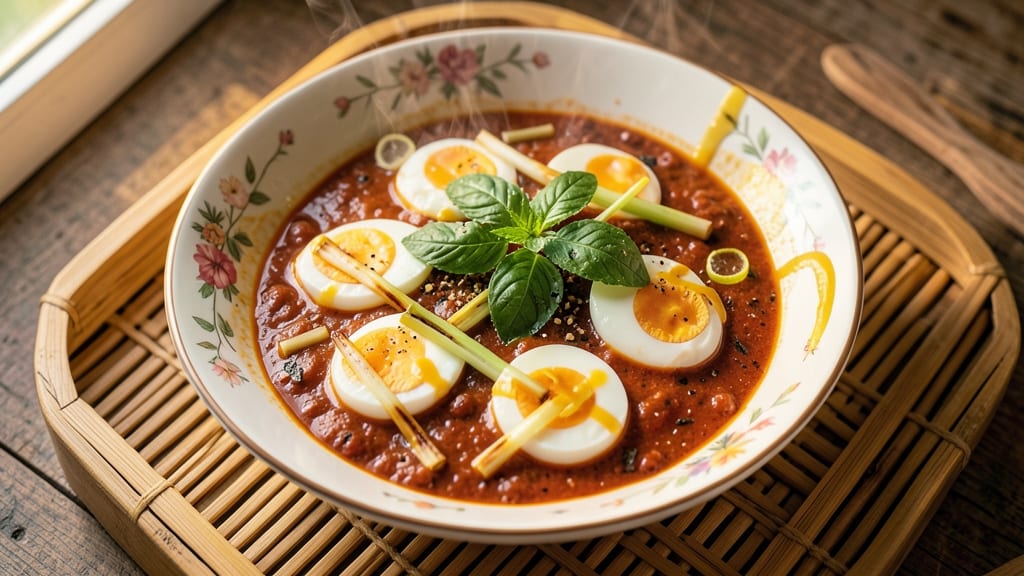
This Thai egg curry recipe transforms a simple breakfast into a fragrant, spiced coconut dream with tender eggs nestled in velvety sauce. The aromatic blend of lemongrass, galangal, and kaffir lime leaves creates layers of complexity that balance sweet, sour, and spicy notes perfectly.
I developed this version after years of experimenting with Thai home cooking, ensuring every spoonful delivers restaurant-quality depth without requiring specialized ingredients.
The foundation of great Thai egg curry lies in the sauce—a rich coconut milk base infused with traditional Thai spices that simmer until fragrant and slightly thickened. Soft-cooked eggs are gently poached directly in the simmering curry, absorbing the aromatic flavors while maintaining their delicate texture.
This method creates a dish that's both comforting and vibrant, perfect for breakfast or a light lunch.
By the time you're done, you'll have a fragrant curry with tender eggs floating in a sauce that's creamy yet balanced, with just the right amount of heat and brightness. The dish pairs beautifully with steamed jasmine rice, which soaks up every bit of the flavorful sauce.
Garnish with fresh cilantro and lime wedges for a burst of freshness that cuts through the richness.
What makes this recipe special is its versatility—adjust the heat level to your preference by adding more or less chili, or thicken the sauce further by simmering longer.
The technique is straightforward but yields professional results, making it ideal for both weeknight meals and special occasions. Let's create this fragrant, comforting dish together.
Ingredients for thai egg curry
The aromatic core of Thai egg curry—lemongrass, galangal, and kaffir lime—transforms simple eggs into a fragrant coconut dream.
| Ingredient | Amount | Notes |
|---|---|---|
| Large Eggs 🥚 | 4 whole | Freshly laid preferred |
| Full-Fat Coconut Milk 🥥 | 13 ½ oz | One 13.5 oz can, full-fat |
| Lemongrass Stalks 🌿 | 3 whole | Bruised and cut into 2-inch pieces |
| Galangal Root 🥕 | 2 oz | Fresh, peeled and sliced thin |
| Kaffir Lime Leaves 🍋 | 4 whole | Fresh, torn into strips |
| Red Curry Paste 🌶️ | 2 tbsp | Thai brand preferred |
| Garlic Cloves 🧄 | 4 cloves | Peeled and minced |
| Shallots 🧅 | 3 whole | Peeled and thinly sliced |
| Bird's Eye Chilies 🌶️ | 2 whole | Adjust to taste |
| Coconut Sugar 🍯 | 2 tbsp | Or substitute brown sugar |
| Fish Sauce 🍶 | 1 tbsp | Red Boat preferred |
| Fresh Cilantro 🌿 | ¼ cup | Chopped, for garnish |
| Lime Wedges 🍋 | 2 whole | For serving |
| Vegetable Oil 🫒 | 2 tbsp | For sautéing |
| Diamond Crystal Kosher Salt 🧂 | ½ tsp | For seasoning |
The galangal and lemongrass are non-negotiable for authentic flavor. Thai markets carry the best quality, but Asian grocery stores like H Mart or 99 Ranch stock them year-round. Look for galangal with tight, pale skin—no brown spots. Fresh kaffir lime leaves should be fragrant and bright green, not wilted. If you can't find galangal, ginger at half the amount works in a pinch, though it won't replicate the citrusy depth. The fish sauce? Red Boat brand is the gold standard—salty, funky, and complex, not the sweetened versions you'll find in some stores. Buy it in small bottles and keep it refrigerated once opened.
No red curry paste? Make your own with Thai basil, lemongrass, galangal, and chili—it's easier than you think. The coconut milk must be full-fat for that velvety texture; light coconut milk will separate and taste thin. For heat control, remove the seeds from the chilies before adding them to the sauce. The eggs should be soft-poached, not fully cooked—think runny yolks. If you're worried about timing, parboil the eggs for 3 minutes before adding them to the curry to ensure they cook through. The coconut sugar adds just enough sweetness to balance the heat and acidity, but don't skip it—it's what makes the sauce sing.
This curry reheats beautifully—better the next day as flavors meld. Store in an airtight container for up to 5 days in the fridge, or freeze for 3 months. For meal prep, portion the sauce and eggs separately—reheat the sauce first, then gently warm the eggs in it. Garnish with fresh cilantro and lime wedges just before serving to keep the herbs vibrant. The lime juice brightens the dish, cutting through the richness of the coconut milk. If you make extra sauce, freeze it in ice cube trays—perfect for quick future meals.
Why You'll Love This Recipe
- One-Pot Magic: I swear by this recipe when I’m too tired to scrub a million dishes—just a deep skillet, a few swirls of coconut milk, and those eggs poached right in the simmering broth. The galangal and lemongrass do all the work while I sip tea.
- Creamy Without Guilt: Full-fat coconut milk makes this rich but not heavy, and the kaffir lime leaves add that bright, citrusy punch that cuts through the richness. Honestly, it’s the kind of creamy that doesn’t leave me regretting seconds.
- Leftover Hero: This curry actually improves the next day—flavors meld deeper, and the eggs soak up all that aromatic broth. I freeze portions for lazy mornings or toss them into rice bowls when I’m too busy to cook.
- Budget-Friendly Luxury: Eggs and coconut milk stretch into a meal that feels fancy without breaking the bank. Between us, I’ve made this for date nights, family dinners, and even a last-minute potluck—no one ever guessed it was this easy.
Step-by-step instructions for Thai egg curry
Master this aromatic Thai dish with silky coconut cream and perfectly soft-cooked eggs.
Prepare the Aromatic Base
Heat the 2 tablespoons vegetable oil in a heavy-bottomed pot over medium heat. Add the 3 whole lemongrass stalks (bruised and cut into 2-inch pieces), 2 oz galangal root (peeled and sliced thin), and 4 whole kaffir lime leaves (torn into strips). Sauté for 2-3 minutes until fragrant—you should detect citrusy, piney aromas from the galangal and lemongrass.
Add the 3 whole shallots (peeled and thinly sliced) and 2 whole bird's eye chilies (adjust to taste). Cook for another 2-3 minutes until the shallots soften and become translucent. This foundational step develops the complex flavor profile that defines authentic Thai curry.
Develop the Curry Paste
Increase heat to medium-high and add the 2 tablespoons red curry paste. Stir continuously for 1-2 minutes until the paste darkens slightly and releases its deep, earthy aromas. This step is crucial—properly blooming the curry paste ensures maximum flavor extraction.
Add the 4 cloves garlic (peeled and minced) and cook for 30 seconds until fragrant. Immediately pour in the 13.5 oz full-fat coconut milk, stirring to combine. The mixture will bubble vigorously—reduce heat to medium-low to prevent scorching. Let it simmer for 5 minutes until the coconut milk separates slightly, creating a luscious cream layer on top.
Season and Simmer the Curry
Add the 2 tablespoons coconut sugar and 1 tablespoon fish sauce, stirring to dissolve completely. Taste and adjust seasoning—you should detect sweet, salty, and umami flavors balanced harmoniously. The curry should be fragrant but not overly spicy at this stage.
Simmer uncovered for 8-10 minutes until the coconut cream thickens slightly and coats the back of a spoon. This gentle reduction concentrates the flavors while maintaining the creamy texture. Remove from heat and let it rest for 2 minutes—this brief pause allows the flavors to meld completely.
Cook the Eggs to Perfection
Crack the 4 whole large eggs (freshly laid preferred) directly into the simmering curry. Gently stir with a spatula to distribute the eggs evenly throughout the coconut cream. Return to low heat and cook for 3-4 minutes, stirring occasionally, until the egg whites set but yolks remain softly runny.
Here's the key: the eggs should be just set when they slide through the curry but still have a custard-like center. Overcooking will make them rubbery—watch carefully as they transform from liquid to creamy perfection. Remove from heat immediately when they reach this ideal texture.
Finish and Serve
Stir in the 0.5 teaspoon diamond crystal kosher salt and adjust seasoning if needed. The curry should be balanced—sweet from the coconut sugar, salty from the fish sauce, and aromatic from the galangal and lemongrass.
Ladle the curry into serving bowls and garnish with the 0.25 cup chopped fresh cilantro. Serve immediately with the 2 whole lime wedges on the side for brightness. Each spoonful should deliver creamy coconut, tender eggs, and complex Thai flavors in perfect harmony.
Pro Tips For Making Thai Egg Curry
- Sear Eggs First: Crack the eggs into a hot, oiled pan before adding them to the curry—this gives them a proper set and prevents them from turning into scrambled bits. I used to just pour them in raw, and they’d always end up rubbery; now they hold together like little custardy pockets.
- Bruise Galangal: Smash the galangal root with the flat side of your knife before slicing—it releases more flavor without turning the curry bitter. I learned this the hard way after skipping it and wondering why my curry tasted flat.
- Simmer Coconut Milk: Reduce the coconut milk by half before adding the eggs, or you’ll end up with a watery mess. Sounds tedious, but it thickens the sauce and makes the curry rich, not soupy—trust me, it’s worth the 10 minutes.
- Toast Kaffir Lime: Lightly fry the kaffir lime leaves in the oil for 10 seconds before adding them to the curry—it deepens their aroma without burning. I was skeptical until I tried it, and now I never skip it.
Serving suggestions for this dish
Jasmine Rice Pairing
Steamed jasmine rice is the classic companion to Thai egg curry, soaking up the fragrant coconut sauce beautifully. Use a 1:1.5 rice-to-water ratio and cook in a rice cooker or pot with a tight lid.
For extra flavor, add a pinch of salt and a bay leaf while cooking. Serve directly in the bowl with the curry for a satisfying, aromatic meal. 🍚
Crispy Thai Bread
Add texture with Thai-style garlic bread made from a baguette or kanom krok (Thai crispy pancakes). Brush slices with garlic butter and toast until golden. The crunch contrasts perfectly with the creamy curry and soft eggs. For a shortcut, use store-bought naan or pita bread warmed in the oven. ✨
Fresh Vegetable Sides
Brighten the plate with steamed bok choy or Thai green beans (tender-crisp variety). Toss with a squeeze of lime, a drizzle of fish sauce, and a pinch of chili flakes for a quick, refreshing side.
Alternatively, serve cucumber slices sprinkled with salt and lime to cut through the richness. 🥗
Garnish Like a Pro
Elevate your dish with fresh cilantro, Thai basil, and lime wedges at the table. For extra flair, add crushed peanuts or toasted sesame seeds for crunch. A drizzle of chili oil or a sprinkle of crushed bird’s eye chilies lets diners adjust the heat to their liking. 🌿
Dipping Sauces
Offer a sweet chili sauce (like Sriracha Sweet Chili) or a fish sauce dip (mix fish sauce with lime juice and a touch of honey). These sauces enhance the curry’s flavors while adding another layer of complexity. Serve in small bowls for dipping or drizzling. 🍶
Breakfast vs. Lunch
For a breakfast twist, serve with buttered toast or croissants alongside the curry. For a lunch or dinner upgrade, pair with Thai iced tea (sweet and creamy) or a crisp Sparkling lime drink. The contrast of hot curry and cold beverage balances the meal perfectly. 🍹
Nutrition facts
Frequently asked questions
Can I substitute chicken or tofu for the eggs in this Thai egg curry?
This curry works beautifully with chicken thighs (poached or shredded) or firm tofu (pressed and cubed). For chicken, simmer pieces for 8-10 minutes until cooked through. For tofu, add it during the last 5 minutes of simmering to prevent it from absorbing too much liquid. The coconut sauce will still shine with either protein.
How do I adjust the spice level if I prefer milder flavors?
Start by removing the seeds from the bird's eye chilies before adding them to the curry paste. For extra mildness, reduce the curry paste to 1 tablespoon instead of 2 tablespoons. If you still need less heat, add a splash of coconut milk at the end to dilute the spice. Always taste as you go!
Can I make this Thai egg curry ahead of time?
Yes! Prepare the curry sauce up to 2 days in advance and store it in an airtight container in the fridge. When ready to serve, reheat the sauce gently, then cook the eggs fresh in it for 3-4 minutes to maintain their perfect texture. The flavors actually deepen overnight, making it taste even better the next day.
What's the secret to getting perfectly soft-cooked eggs in the curry?
The key is timing and temperature. Use fresh eggs (they poach better) and cook them on low heat for just 3-4 minutes after adding them to the curry. Stir gently to distribute heat evenly. The eggs should slide through the sauce but still have a runny yolk. Overcooking turns them rubbery—watch carefully!
I can't find galangal—what can I use instead?
While nothing perfectly replaces galangal, try using ginger at half the amount (1 oz instead of 2 oz) for a milder flavor. For more authenticity, look for ginger-galangal blends in Asian markets. If you're missing both, a mix of turmeric and lemon zest can add some citrusy warmth, though the texture will differ.