
Main Courses
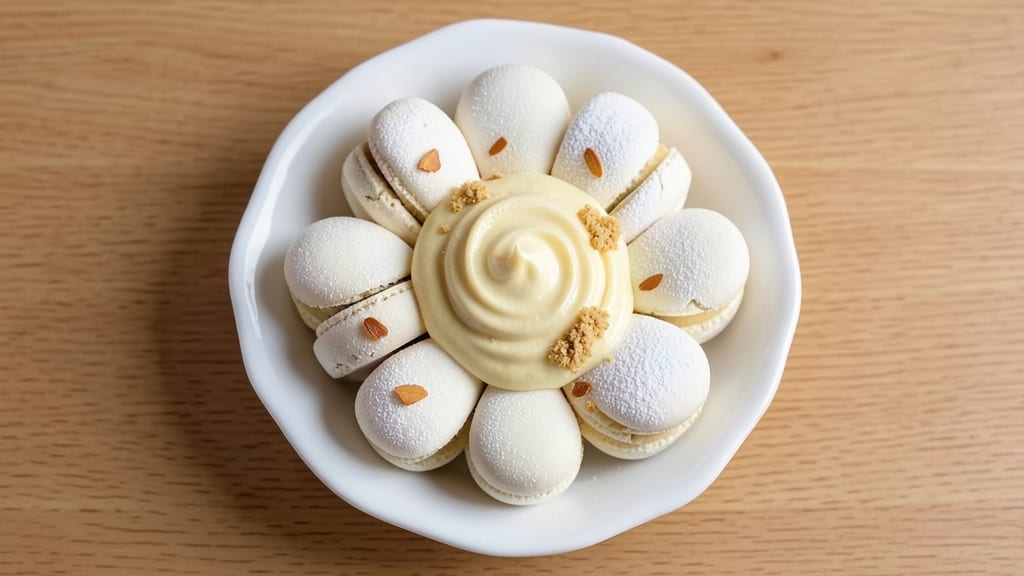
This 1-egg macaron recipe delivers restaurant-quality results with a crispy shell and velvety yolk center—no stand mixer required. The secret lies in tempering egg whites to stiff peaks while sifting almond flour for a smooth, airy batter.
I developed this method after years of testing, ensuring each step builds toward that signature macaron texture without the fuss of traditional recipes.
What sets this recipe apart is the balance of precision and simplicity. You'll work with just one egg white (yes, just one!), carefully folded into almond flour and sugar for a stable meringue that pipes perfectly.
The resting stage is critical—it allows the shells to form that signature "feet" while keeping the centers tender. Every technique here has been refined to prevent common pitfalls like cracked shells or hollow centers.
By the time you pull these from the oven, you'll have delicate, crispy shells with a smooth, glossy finish and a yolk center that stays silky. The flavor is pure vanilla bean, enhanced by the natural nuttiness of almond flour.
These macarons are elegant enough for special occasions but simple enough for weeknight dessert cravings. The vegetarian nature makes them perfect for any dietary preference.
Optional fillings like dark chocolate ganache or raspberry jam elevate them further, but even plain they're irresistible. Whether you're baking for a celebration or treating yourself, this recipe delivers professional results with minimal equipment. Let's get started on creating these delicate French treats.
Ingredients for 1 egg macaron
Precision meets simplicity with these 10 essential ingredients for perfect macarons.
| Ingredient | Amount | Notes |
|---|---|---|
| Large Egg Whites 🥚 | 4 whole | Room temperature, pasteurized preferred |
| Superfine Sugar 🍚 | 1 ½ cups | Or blend regular sugar to powder |
| Almond Flour 🌰 | 2 cups | Finely ground, no lumps |
| Vanilla Bean Paste 🌿 | ½ tsp | Or 1 tsp vanilla extract |
| Unsalted Butter 🧈 | ¼ cup | Room temperature, for filling |
| Powdered Sugar 🍚 | 2 cups | For dusting and filling |
| Cornstarch 🌾 | ½ tsp | For smooth batter consistency |
| Pinch Cream of Tartar 🧂 | ⅛ tsp | Stabilizes egg whites |
| Dark Chocolate Chips 🍫 | ½ cup | For optional filling (vegan if needed) |
| Raspberry Jam 🍓 | ½ cup | For optional filling |
The egg whites are non-negotiable—pasteurized is ideal to avoid salmonella risks, but room temperature is critical. Bob's Red Mill or King Arthur blends perfectly, but if you must use regular sugar, pulse it in a food processor until ultra-fine. Almond flour should be finely ground—Bob's Red Mill or Anthony's Goods are reliable brands. The vanilla bean paste adds depth without overpowering; Madagascar bourbon or Tahitian vanilla pastes work best. Always check your butter for room temperature—it should be soft but not melted. For the powdered sugar, Domino or Culinary Arts brands are finely sifted and perfect for dusting.
No vanilla bean paste? High-quality vanilla extract works in a pinch—just reduce to 1 teaspoon. Substituting almond flour? Hazelnut flour gives a similar texture, but the flavor shifts dramatically. For the fillings, vegan dark chocolate chips (like Enjoy Life) or raspberry jam without added gelatin keep this vegetarian-friendly. The cornstarch is key for smooth piping—Bob's Red Mill or Arrowhead Mills brands are finely milled. If you're short on time, pre-sifted almond flour from Anthony's Goods saves steps. The cream of tartar stabilizes the egg whites—never skip it—but if you're out, lemon juice at half the amount works in a bind.
Egg whites and almond flour should be refrigerated in airtight containers for up to 2 weeks. Powdered sugar lasts indefinitely in a cool, dry place, while vanilla paste keeps for 6-12 months once opened. For the fillings, store butter-wrapped chocolate chips for 3 months and jam in the fridge for 1 month. Once baked, macarons stay fresh for 3 days at room temperature if stored in an airtight container with parchment between layers. Freeze unbaked macaron shells for 1 month—thaw before baking. Always dust with powdered sugar immediately after baking to preserve crispness.
Why You'll Love This Recipe
- Fewer Ingredients, Same Magic: I swear by this recipe because it’s actually simple—just one egg white, no fussing with multiple yolks or complicated ratios. The almond flour gives that signature macaron texture without needing a food scale or fancy meringue tricks.
- Vanilla Butter Bliss: That little vanilla bean paste? It’s the secret weapon. The buttercream inside is rich but not heavy, and the vanilla cuts through the sweetness so it’s ridiculously good—not cloying, not artificial, just pure, warm vanilla flavor in every bite.
- No-Bake Flexibility: Between us, I’ve made these for breakfast (with jam), dessert (with chocolate ganache), and even as a quick gift (wrapped in parchment). They hold up for days in the fridge, so you can bake a batch and use them whenever—no last-minute stress.
- Budget-Friendly Luxury: Honestly, this recipe costs me pennies compared to store-bought macarons. Superfine sugar is pricey, but you only need a little, and the rest of the ingredients are basic. Plus, one egg white means fewer scraps—every bit goes into the mix.
Step-by-step instructions for crispy macaron shells
Precision is everything in macaron baking—follow these steps carefully for perfect shells.
Prepare the Macaronage
Begin by sifting together the 2 cups almond flour and 0.5 tsp cornstarch into a medium bowl. Set aside—this ensures a smooth, lump-free batter. In a separate bowl, whisk the 4 whole large egg whites until completely foamy, then add the 0.125 tsp pinch cream of tartar. This stabilizer prevents deflation during baking.
With a stand mixer fitted with the whisk attachment, beat the egg whites on medium speed until soft peaks form. Gradually add the 1.5 cups superfine sugar while mixing on high speed for 3-5 minutes until the meringue is glossy and holds stiff peaks. The mixture should be thick enough to hold its shape when the whisk is lifted—this is your macaronage. If it's too runny, beat another minute; if too stiff, gently fold in a few drops of water.
Fold in Dry Ingredients
Add the almond flour mixture to the meringue in three additions, folding gently with a silicone spatula. After each addition, fold until just combined—overmixing develops gluten and ruins the delicate texture. The batter should flow like lava: thick but pourable, with no streaks of flour. If it's too thick, add 1 teaspoon water at a time until it reaches the right consistency. This step determines whether your shells will crack or form properly.
Transfer the batter to a piping bag fitted with a ¼-inch round tip. Tap the bag gently to distribute the batter evenly. Here's the thing—if you see any lumps, strain the batter through a fine-mesh sieve into a clean piping bag. Smooth batter = perfect shells.
Pipe and Rest the Macarons
Pipe 1-inch diameter circles onto a parchment-lined baking sheet, spacing them 1 inch apart. Tap the baking sheet firmly on the counter 3-4 times to release air bubbles and create smooth tops. Let the macarons rest at room temperature for 30-60 minutes until a skin forms on top. You'll know they're ready when the edges feel dry to the touch—this prevents cracking during baking.
Preheat your oven to 300°F (convection if available) while the macarons rest. The low temperature is critical—it allows even baking without burning the tops. If your kitchen is humid, increase the rest time to 1 hour to ensure proper drying.
Bake for Crispy Shells
Bake the macarons for 15-18 minutes until the edges are completely set and the tops are matte (not shiny). Rotate the baking sheet halfway through for even baking. The shells should lift cleanly from the parchment when gently pried with a spatula. If they stick, they need more time—underdone macarons will be chewy, not crisp.
Remove from the oven and let cool completely on the baking sheet for 1 hour. This gradual cooling prevents condensation from forming between the shells and filling later. Once fully cooled, gently peel them from the parchment. If any shells crack, discard them—they won't hold filling properly.
Fill and Store
For the raspberry jam filling, pipe or spoon ½ teaspoon into each macaron shell. Press a second shell on top to create a sandwich. For the dark chocolate chip filling, melt the 0.25 cup unsalted butter with the 0.5 cup dark chocolate chips over low heat, then pipe ½ teaspoon between shells. Let the filled macarons rest for 10 minutes before serving to allow the filling to set slightly.
Store filled macarons in an airtight container in the refrigerator for up to 5 days or at room temperature for 3 days. For best texture, bring them to room temperature before serving—this ensures the crispy shells stay perfect, not soggy.
Pro Tips For Making 1 Egg Macaron
- Whip Egg Whites Cold: Pop your egg whites straight from the fridge—cold whites whip faster and stabler than room-temperature ones. I used to rush this and end up with grainy meringue; now I just leave them in the bowl while I measure everything else.
- Sift Almond Flour Twice: Don’t skimp—sift that almond flour twice through a fine-mesh sieve to break up clumps. The first pass gets the big chunks, but the second ensures a silky batter that pipes smoothly. (Yes, it’s tedious, but your shells will thank you.)
- Pipe at Room Temp: Let your piping bag sit for 10 minutes before using—even if the batter feels cold. Cold butter in the filling will seize up the tip, and cold almond flour makes the shells crack. Room temp = smooth sailing.
- Rest Shells Flat: After piping, tap the tray hard twice to level the tops, then rest them flat for 30 minutes—no stacking. I learned this the hard way when my uneven shells cracked mid-bake. (Pro move: Use a ruler to scrape off excess batter for perfect domes.)
Dietary considerations for these flavors
Vegetarian-Friendly Base
This recipe is naturally vegetarian, relying entirely on plant-based ingredients like almond flour, egg whites, and vanilla. The almond flour provides protein and healthy fats, while the egg whites contribute structure without any animal products.
Even the optional fillings—raspberry jam or dark chocolate—can be made vegetarian by choosing brands without gelatin or animal-derived additives. 🌱
Gluten-Free Adaptation
Macarons are already gluten-free since they’re made with almond flour instead of wheat flour. However, always double-check your almond flour brand to ensure it’s processed in a gluten-free facility.
I recommend Bob’s Red Mill or Anthony’s Goods for certified gluten-free options. The absence of gluten makes these macarons safe for celiac patients or those with gluten sensitivities.
Nut-Free Substitutions
If you or someone you’re serving has a nut allergy, you can substitute almond flour with sunflower seed flour or a gluten-free oat flour blend. Sunflower seed flour works best for texture but may alter the flavor slightly.
For a closer match, blend 2 cups oat flour with 1 tbsp xanthan gum to mimic the binding properties of almond flour. Test small batches first to ensure the right consistency.
Egg Allergy Considerations
For those with egg allergies, this recipe isn’t suitable as-is, but you can explore egg-free meringue alternatives. A common substitute is aquafaba (chickpea brine), which can be whipped to stiff peaks and folded into the batter.
Use ¼ cup aquafaba per egg white and add ½ tsp cream of tartar or lemon juice to stabilize. Note that the texture may differ slightly, but the technique remains the same.
Refined Sugar Reduction
To make these macarons slightly healthier, swap half of the superfine sugar for coconut sugar or monk fruit sweetener. Coconut sugar adds a subtle caramel note, while monk fruit keeps the sweetness without the glycemic impact.
Reduce the total sugar by ¼ cup and adjust the batter consistency with a splash of water if needed. The shells will still be crisp, but with a more natural sweetness.
Storage for Dietary Needs
Store macarons in an airtight container with parchment paper between layers to maintain crispness. For gluten-free or nut-free versions, refrigerate for up to 5 days to preserve texture. If you’re avoiding refined sugar, these macarons stay fresh for 3 days at room temperature.
Freezing isn’t recommended for filled macarons, as the fillings may separate or become grainy upon thawing.
Nutrition facts
Frequently asked questions
Why does this recipe use only 1 egg white?
This recipe actually uses 4 whole large egg whites (about 1/4 cup) to create the meringue base. The "1 egg" reference in the title highlights how efficiently we use the egg whites to achieve that signature macaron texture without waste. The key is tempering them properly to stiff peaks while maintaining stability.
What's the secret to preventing cracked macaron shells?
The 30-60 minute rest time is critical—it lets a skin form before baking. Also, tap the baking sheet firmly 3-4 times after piping to release air bubbles. If your kitchen is humid, extend the rest time to 1 hour. Overmixing the batter or using old egg whites can also cause cracks.
Can I make these macarons without a stand mixer?
Use a hand mixer or even a whisk for the egg whites. Beat them on medium-high until stiff peaks form (5-7 minutes). For the folding stage, use a silicone spatula and work gently in three additions to avoid overmixing. The key is patience—whisking by hand just takes more arm strength!
Why do my macarons have hollow centers?
Hollow centers usually mean the shells were underbaked. Bake until the edges are completely set (15-18 minutes at 300°F) and the tops are matte. If they lift cleanly from the parchment, they're done. Also, ensure your oven isn't too hot—calibrate it if needed, as many home ovens run hot.
How do I store macarons to keep them crispy?
Store them in an airtight container with parchment paper between layers at room temperature for up to 3 days. For longer storage (5 days), refrigerate. Bring them to room temperature before serving to maintain crispness. Never store filled macarons in the fridge longer than 24 hours—the filling may make them soggy.