
Main Courses
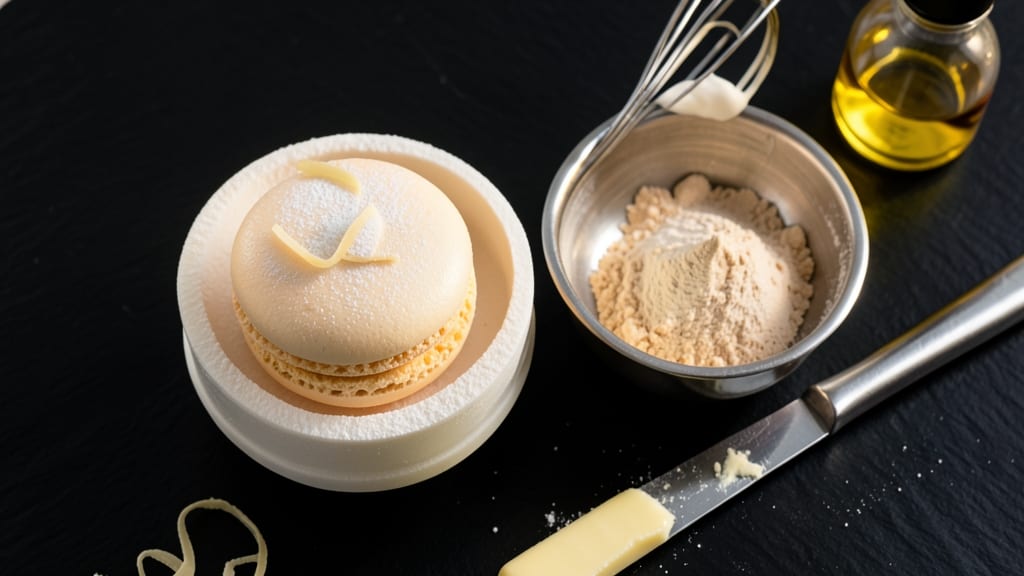
Mastering macarons with just one egg white transforms these delicate French pastries from intimidating to achievable. The key lies in precise technique—sifting powdered sugar, perfecting macaronage, and baking at the right temperature.
I’ve refined this method over years to eliminate guesswork, ensuring consistent results every time without relying on foil tricks or expensive equipment.
This light-as-air macaron recipe focuses on three critical steps: preparing a stable meringue, resting the shells for structural integrity, and baking with controlled heat. The single egg white creates a delicate yet sturdy shell, while the French buttercream filling delivers that signature macaron texture.
No special tools are required beyond a stand mixer and piping bag—just patience and attention to detail.
By the end, you’ll have perfectly rounded shells with smooth tops and crisp edges, filled with velvety buttercream. The secret? A slow, steady macaronage process and a perfectly preheated oven. This method ensures foolproof results, even for beginners, without sacrificing the refined elegance of traditional macarons.
Whether you’re baking for a special occasion or perfecting your pastry skills, this recipe delivers restaurant-quality macarons at home. Let’s get started with the step-by-step instructions that make the process clear and reliable.
Ingredients for 1 egg white macaron
Precision and patience create these delicate French pastries with just one egg white.
| Ingredient | Amount | Notes |
|---|---|---|
| Large Egg White 🥚 | 1 whole | Room temperature, no yolk |
| Powdered Sugar 🍚 | 3 cups | Sifted, fine grain preferred |
| Almond Flour 🌰 | 1 ½ cups | Superfine, blanched preferred |
| Unsalted Butter 🧈 | 1 cup | European-style, 82% fat |
| Powdered Sugar 🍚 | 2 cups | For filling, sifted |
| Vanilla Extract 🌿 | ½ tsp | Pure Madagascar or bourbon |
| Cornstarch 🌾 | ½ tsp | For buttercream stability |
| Food Coloring 🎨 | ¼ tsp | Gel-based, optional |
| Granulated Sugar 🍬 | ¼ cup | For macaronage |
| Diamond Crystal Kosher Salt 🧂 | ⅛ tsp | Fine grain for precision |
| Water 💧 | ½ tsp | For meringue adjustment |
The egg white must be at room temperature—cold whites won’t whip properly. Whole Foods or specialty markets carry high-quality pasteurized options, but fresh is ideal if you can source it. For powdered sugar, Domino or C&H brands are reliable, but sift it through a fine-mesh sieve to eliminate lumps—this is non-negotiable for smooth shells. Almond flour should be superfine (like Bob’s Red Mill or King Arthur brands) to prevent graininess. The butter for the filling? European-style (82% fat) like Plugrá or Miyoko’s ensures a stable, velvety texture.
No stand mixer? A hand mixer with a whisk attachment works, though macaronage will take longer. Substitute almond flour with hazelnut flour (1:1 ratio) for a nuttier profile, but texture may vary slightly. For the filling, vanilla bean paste adds depth if extract isn’t available, though pure Madagascar or bourbon extracts are ideal. The cornstarch in the buttercream is critical—it prevents graininess and extends shelf life. If you’re color-conscious, gel-based food coloring (like Wilton) disperses evenly without altering texture, while liquid dyes can make shells bleed.
Store unfilled shells in an airtight container with parchment between layers for up to 3 days at room temperature, or freeze for 2 weeks. Once filled, keep refrigerated for 5 days or frozen for 3 months. For best results, fill macarons 24 hours after baking—this allows shells to fully set. The buttercream can be prepped a day ahead and stored in the fridge, softened slightly before use. Avoid humidity when baking; a silica gel packet in the oven tray prevents cracking.
Why You'll Love This Recipe
- No Whisk Fatigue: I swear by this recipe because it’s one egg white—no overmixed meringue disasters here. Just whip, pipe, and bake. The almond flour keeps the texture light without the fuss of sifting or weighing multiple whites.
- Buttery Sweet Crunch: That single layer of butter between the shells? Chef’s kiss. The outside stays crisp, the inside melts like a dream, and the powdered sugar dusting makes every bite taste like a fancy patisserie—without the $30 price tag.
- Tea-Time Hero: Honestly, these are my go-to for afternoon pick-me-ups. They’re sturdy enough to sip with Earl Grey, sturdy enough to pack in a lunchbox, and sturdy enough that my toddler won’t squish them before I finish my coffee.
- Pantry Staple Magic: Between us, this recipe uses stuff you already own: egg whites, sugar, almond flour. No special tools, no last-minute grocery runs. Make a batch on Sunday, and you’ve got dessert for the week—no wilting, no reheating, just pure, unapologetic sweetness.
Step-by-step instructions for light-as-air macarons
Master the single egg white technique for perfect macarons without relying on foil or complex equipment.
Prepare the Macaronage Mixture
In a clean, dry mixing bowl, combine the 1 whole Large Egg White and 0.25 cup Granulated Sugar. Using a stand mixer fitted with the whisk attachment, beat on medium-high speed until the mixture reaches 160°F—this should take about 5-7 minutes. You'll notice the mixture first becomes frothy, then thickens into a glossy, ribbony consistency that holds its shape when you lift the whisk.
I like to test the doneness by tilting the bowl—if the mixture flows slowly like honey and leaves a trail for 10-15 seconds, it's ready. This precise temperature and texture are critical for proper shell formation. If you don't have a thermometer, look for stiff peaks that collapse slightly when the whisk is lifted.
Sift and Fold the Dry Ingredients
In a separate bowl, sift together the 3 cups Powdered Sugar, 1.5 cups Almond Flour, 0.5 tsp Cornstarch, 0.125 tsp Diamond Crystal Kosher Salt, and 0.25 tsp Food Coloring (if using). This sifting step is non-negotiable—it prevents lumps that can ruin your shells. Gently fold in the 0.5 tsp Vanilla Extract at this stage to distribute the flavor evenly.
With the mixer on low speed, gradually add the dry ingredients to the egg white mixture. Use a spatula to fold from the bottom up, ensuring no dry pockets remain. The batter should become thick and glossy, resembling thick pudding. If it's too stiff, add 0.5 tsp Water one drop at a time until it reaches a smooth, pipeable consistency—it should flow like lava but hold its shape when piped.
Pipe and Rest the Macarons
Transfer the batter to a piping bag fitted with a ¼-inch round tip. Pipe 1-inch circles onto a parchment-lined baking sheet, spacing them 1 inch apart. Tap the sheet firmly on the counter 10-15 times to release air bubbles. Let them rest at room temperature for 30-45 minutes until they develop a dry, matte skin—this prevents cracking during baking.
Here's the thing—don't rush this step. The skin should feel dry to the touch but not brittle. If you poke a macaron gently with your finger and it springs back, it's ready. This resting period allows the alcohol in the egg white to evaporate, which is crucial for proper shell formation. Place the baking sheet in the refrigerator for 15 minutes if your kitchen is humid to accelerate this process.
Bake for Perfect Shells
Preheat your oven to 300°F (convection if available) and place a baking sheet with a wire rack inside to preheat. Gently slide the macarons onto the preheated rack. Bake for 15 minutes, then rotate the sheet and bake for another 15 minutes. The shells should be completely dry to the touch with no visible moisture.
Watch for the classic macaron "feet"—small rounded bases that form as the shells bake. If they don't develop, your oven may be too hot or the batter wasn't rested properly. Let the shells cool completely on the rack before removing them. This cooling phase prevents condensation from forming between layers when you fill them later.
Prepare the Buttercream Filling
In a stand mixer fitted with the paddle attachment, beat the 1 cup Unsalted Butter on medium speed until completely smooth and creamy. Gradually add the 2 cups Powdered Sugar, mixing until fully incorporated. Add the 0.5 tsp Vanilla Extract and mix for another 30 seconds to combine.
This buttercream should be thick but pipeable. If it's too soft, chill the bowl in the refrigerator for 10 minutes before proceeding. The filling should hold its shape when piped but still be smooth enough to spread. Transfer to a piping bag fitted with a ½-inch round tip for filling between the shells.
Pro Tips For Making 1 Egg White Macaron
- Whip Egg Whites Cold: Grab that bowl of egg whites and pop it in the fridge for 10 minutes before whipping—yes, even if you’re in a hurry. I learned this the hard way when my meringue turned grainy and refused to peak. Cold whites stabilize faster and hold shape better, especially when you’re working with just one.
- Sift Almond Flour Twice: Don’t be lazy here—sift that almond flour twice through a fine-mesh sieve. The first pass removes lumps, but the second ensures no gritty bits sneak into your batter, which ruins the silky texture. I used to skip this and ended up with macarons that tasted like sandpaper.
- Pipe Slow and Steady: Squeeze the batter out of the piping bag in one continuous motion—no stopping, no wiggling. If you pause mid-pip, the shell collapses or cracks when baking. My grandmother swore by this, and she was right: consistency is everything when you’re working with such a delicate ratio.
- Butter the Baking Sheet: Skip the parchment paper and lightly brush the baking sheet with melted butter before piping. The fat creates a nonstick barrier that prevents sticking, and the flavor? Subtle but noticeable—especially in a single-egg recipe where every detail matters. (Yes, even if it sounds counterintuitive for a butter-free recipe.)
Regional styles of 1 egg white macaron
Classic French Technique
The traditional Parisian method focuses on three precise stages: meringue preparation, resting, and baking. Here, the egg white is whipped to stiff peaks (not soft) at 160°F, then folded with sifted powdered sugar and almond flour until the batter flows like lava.
The shells rest 45 minutes to form a dry skin before baking at 300°F for 15 minutes per side. This method relies on patience—rushing the resting phase causes cracks. 🥖
Italian Meringue Adaptation
For a lighter texture, replace the French-style meringue with Italian meringue by adding hot simple syrup (equal parts sugar and water) to the whipped egg white. This creates a more stable base that reduces cracking.
The Italian approach uses superfine sugar (like Domino) and adds 1 tsp cornstarch to the almond flour mix for extra stability. Bake at 275°F for 18 minutes—lower heat prevents over-browning. The result? Crispier shells with a chewier bite.
Japanese Matcha Version
Japanese bakers elevate macarons with matcha powder (use ½ tsp ceremonial-grade matcha like Ippodo or Jade Leaf), replacing half the almond flour. The batter turns vibrant green and develops a subtle earthy flavor.
Rest shells 1 hour to intensify the matcha aroma, then bake at 290°F for 16 minutes. Pair with white chocolate ganache for a modern twist. The key? Sift the matcha twice to avoid clumping. 🌿
American Shortcut Style
For busy home bakers, the American method skips the resting phase entirely. Whip the egg white to soft peaks, fold in dry ingredients, and pipe immediately onto a preheated baking sheet (no rack). Bake at 325°F for 12 minutes—higher heat compensates for the lack of resting.
Use store-bought almond flour (like Bob’s Red Mill) and add ¼ tsp xanthan gum to the dry mix for structure. While less refined, this yields decent results in 30 minutes.
Vegan Almond-Free Option
Replace egg whites with aquafaba (chickpea brine) and almond flour with coconut flour (use 1.25 cups for binding). Whip ¼ cup aquafaba to stiff peaks, then fold with 3 cups powdered sugar, 1.25 cups coconut flour, and ½ tsp apple cider vinegar (for stability).
Pipe and rest 1 hour before baking at 310°F for 14 minutes. The texture is denser but still delightful—perfect for nut allergies. 🌱
Seasonal Citrus Twist
Infuse the buttercream with zest from 1 lemon or orange (use organic for stronger flavor). Add 1 tbsp lemon juice to the meringue for brightness. Pipe shells in pastel colors (use gel food coloring) and bake at 285°F for 17 minutes.
The citrus pairs beautifully with white chocolate filling—ideal for spring or summer celebrations. Store shells in the fridge for 3 days to preserve freshness. 🍊
Nutrition facts
Frequently asked questions
Why does my macaron batter look too runny or too thick?
The ideal consistency should flow like lava—thick enough to hold its shape when piped but thin enough to spread slightly. If too runny, add 1 tsp more almond flour and fold gently. If too thick, add 0.5 tsp water one drop at a time. Overmixing causes stiffness, so fold just until combined.
How do I fix cracked macaron shells?
Cracks usually mean the batter wasn’t rested long enough or the humidity was too high. For future batches, rest shells 45 minutes at room temperature (or 15 minutes in the fridge if humid). If shells already cracked, fill them anyway—they’ll still taste great! Use a toothpick to hide cracks if presenting.
Can I make macarons without a stand mixer?
Yes! Use a hand mixer with a whisk attachment. Whip the egg white to 160°F (or stiff peaks), then fold dry ingredients by hand with a spatula. It takes longer, but the technique works. For macaronage, fold until the batter flows like lava—this may require 5-10 minutes of gentle folding.
How do I store leftover macaron shells?
Store unfilled shells in an airtight container with parchment paper between layers for up to 3 days at room temperature. For longer storage, freeze shells for 2 weeks. Once filled, keep refrigerated for 5 days or freeze for 3 months. Thaw in the fridge overnight before serving.
What’s the secret to perfect macaron feet?
Macaron "feet" form when shells bake long enough to develop a rounded base. Bake at 300°F for 15 minutes per side on a preheated rack. If feet don’t form, your oven may be too hot or the batter wasn’t rested properly. A slight underbake (shells still warm to touch) helps too!