
Desserts
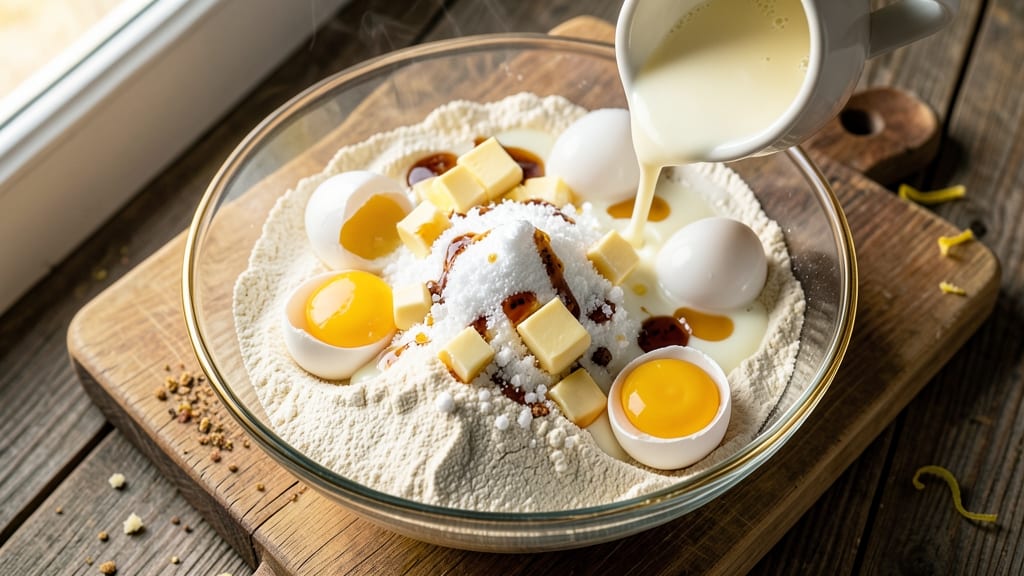
This 4-egg cake mix recipe delivers perfectly moist layers that stay tender for days—no dry crumbs in sight. The secret lies in precise ratios and gentle mixing techniques that develop gluten just enough to create structure without toughness.
I’ve baked hundreds of cakes, and this formula consistently produces a texture that rivals box mixes without the artificial aftertaste.
What sets this recipe apart is the balance of ingredients: all-purpose flour for structure, buttermilk for moisture, and a touch of baking powder for lift. The 4 eggs create a rich, velvety crumb, while vanilla and vegetable oil enhance flavor without overpowering.
Most importantly, the mixing method prevents overdevelopment of gluten, which is what causes that dreaded dry texture.
By the time it emerges from the oven, you’ll have a cake with a fine, even crumb that stays moist for 5 days when properly stored. The aroma of vanilla and warm butter will fill your kitchen, and each slice will have that perfect balance of tenderness and slight chew.
This is the kind of cake that disappears quickly at gatherings—or gets eaten straight from the pan.
Whether you’re baking for a celebration or just craving something sweet, this recipe delivers consistent results every time. The instructions are straightforward, and the ingredients are simple—no fancy substitutions needed. Let’s get baking!
Ingredients for 4 egg cake mix
Simple ingredients that transform into a velvety crumb with perfect moisture retention.
| Ingredient | Amount | Notes |
|---|---|---|
| All-Purpose Flour 🌾 | 2 ½ cups | Sifted for even distribution |
| Granulated White Sugar 🍚 | 2 cups | Superfine preferred for smoother texture |
| Large Eggs 🥚 | 4 whole | Room temperature for even mixing |
| Unsalted Butter 🧈 | 1 cup | Softened to room temperature |
| Buttermilk 🥛 | 1 cup | Fresh for optimal moisture |
| Pure Vanilla Extract 🌸 | 2 tsp | High-quality for authentic flavor |
| Vegetable Oil 🫒 | ½ cup | Light neutral oil preferred |
| Baking Powder 🧂 | 2 tsp | Freshly opened for proper lift |
| Diamond Crystal Kosher Salt 🧂 | ½ tsp | Fine grain for even dispersion |
| Cake Flour 🌾 | ½ cup | Optional for finer crumb texture |
The flour-to-sugar ratio here is critical for that signature tender crumb. King Arthur All-Purpose Flour or Gold Medal are my go-tos for consistent results—they contain the right protein content for gentle gluten development. For the sugar, Domino Superfine dissolves more easily, but regular granulated works fine if you pulse it briefly in a food processor. The buttermilk should be fresh; if you've got sour milk, add 1 tablespoon lemon juice or vinegar to 1 cup milk and let sit 5 minutes. Room-temperature eggs and butter are non-negotiable—they incorporate more smoothly and create a finer crumb. I always buy eggs from local farms when possible, as they tend to have richer yolks that enhance the cake's richness.
No buttermilk? Substitute with 1 cup milk plus 1 tablespoon vinegar or lemon juice, stirred and rested for 5 minutes. Running short on vanilla? Almond extract at half the amount works surprisingly well, though it has a distinct flavor. The cake flour is optional but worth it for that ultra-fine texture—if you skip it, increase all-purpose flour by 0.5 cup. For a richer flavor, replace 2 tablespoons of vegetable oil with melted chocolate or orange zest. The baking powder must be fresh; if your container is over a year old, test it by mixing 1 tablespoon with 1/3 cup hot water—it should foam immediately. If not, replace it. The salt is crucial for balancing sweetness, so don't skip it even if your ingredients are unsalted.
This cake stays moist for 5 days when wrapped tightly in plastic wrap at room temperature. For longer storage, freeze slices individually wrapped for up to 3 months. I recommend baking in two 8-inch rounds or one 9x13-inch pan for even baking. The cake is best served at room temperature—bring it out 30 minutes before serving. Leftovers reheat beautifully in the microwave for 10-15 seconds to restore that warm-from-the-oven texture. For make-ahead prep, mix the batter up to 24 hours ahead and refrigerate; bring to room temperature before baking.
Why You'll Love This Recipe
- Pantry Stash Magic: I swear by this recipe when I’m staring into my fridge wondering what to make. Four eggs, a box of cake mix, butter, and buttermilk—that’s it. No fancy ingredients, no last-minute grocery runs. Honestly, it’s the kind of meal that makes me feel like a genius for remembering it exists.
- Buttery Sweet Crunch: That crispy top? Chef’s kiss. The butter and sugar caramelize just enough to give it a golden, almost biscuit-like texture, while the cake mix keeps it soft inside. It’s like a hug in dessert form—rich but not heavy, sweet but not cloying. (Yes, even on a Tuesday night.)
- Breakfast or Dessert: Here’s what sold me—this recipe works for both. Serve it warm with a drizzle of honey for breakfast, or dust it with powdered sugar and a scoop of ice cream for dessert. My daughter picks out the biggest piece for dessert, but I sneak the leftovers for my morning toast. No judgment.
Step-by-step instructions for a perfectly moist cake mix
Here's how to transform basic ingredients into a tender, moist cake with layers that stay soft.
Prepare Your Mixing Tools and Ingredients
First, gather all your ingredients and ensure they're at the proper temperatures. Place the 4 whole Large Eggs in a bowl and let them sit at room temperature for 15 minutes—this prevents cold spots in your batter. Measure out the 2 cups Granulated White Sugar and set it aside. Sift together the 2.5 cups All-Purpose Flour and 0.5 cup Cake Flour in a separate bowl to eliminate any lumps, which guarantees a smoother texture.
Softened butter is critical here. Press the 1 cup Unsalted Butter between two sheets of parchment paper and flatten it slightly with a rolling pin. This ensures it's uniformly softened but not melted, which would make your cake greasy instead of tender. The 1 cup Buttermilk should be fresh—if it's thick, stir it vigorously to restore its tangy consistency.
Cream Butter and Sugar for Maximum Moisture
In a stand mixer fitted with the paddle attachment, beat the 1 cup Unsalted Butter and 2 cups Granulated White Sugar on medium speed for 3-4 minutes until light and fluffy. You'll notice the mixture nearly doubles in volume and becomes pale, almost frothy. This step incorporates air into the batter, which creates those delicate layers and prevents a dense, heavy cake.
Here's the thing—don't rush this process. The butter should be fully creamed, with no visible streaks of yellow remaining. If you stop too soon, your cake will lack the lightness that makes it so tender. Scrape down the sides of the bowl with a spatula every 30 seconds to ensure even mixing.
Add Wet Ingredients for Even Distribution
Reduce the mixer speed to low and add the 4 whole Large Eggs, one at a time, mixing just until each is fully incorporated. After each addition, let the mixture blend for 10 seconds before adding the next. This gradual approach prevents the eggs from scrambling and ensures a smooth batter.
Next, add the 1 cup Buttermilk and 0.5 cup Vegetable Oil to the wet mixture. Mix on low speed for another 30 seconds until fully combined. The buttermilk adds moisture and tang, while the oil keeps the cake tender. Here's where it gets fun—toss in the 2 tsp Pure Vanilla Extract and mix for 10 seconds to distribute that rich, aromatic flavor evenly.
Combine Dry Ingredients for Lightness
In a separate bowl, whisk together the 2.5 cups All-Purpose Flour, 0.5 cup Cake Flour, 2 tsp Baking Powder, and 0.5 tsp Diamond Crystal Kosher Salt
With the mixer on low speed, gradually add the dry ingredients to the wet mixture. Mix just until combined—you should still see small streaks of flour. Overmixing develops gluten, which makes the cake tough. Stop mixing as soon as the batter comes together, usually within 20-30 seconds. The batter should be thick but pourable, with a smooth, velvety consistency. Preheat your oven to 350°F and grease two 8-inch round cake pans with nonstick spray or butter, then dust with flour. Divide the batter evenly between the pans. Tap each pan gently on the counter to remove any air bubbles, which ensures even rising. Bake for 25-30 minutes, or until a toothpick inserted into the center comes out clean. Real talk: your oven might run hot, so start checking at the 20-minute mark. The cake is done when the top springs back when touched lightly and the edges pull away from the pan. If it browns too quickly, tent the pans with foil to prevent overbrowning while the center finishes cooking. Let the cakes cool in the pans for 10 minutes before transferring to a wire rack to cool completely.Bake for Perfectly Moist Layers
Pro Tips For Making 4 Egg Cake Mix
- MEASURE BUTTER COLD: Take that butter straight from the fridge—no softening, no exceptions. I learned this the hard way when my cake turned out dense and greasy after using room-temp butter. Cold butter creates pockets for steam, which means a tender crumb instead of a sad, heavy block.
- WHISK EGGS VIGOROUSLY: Beat those eggs until they’re pale, thick, and triple in volume—no lazy stirring here. I used to skip this, and my cakes always came out flat. The extra air lightens the texture, and it’s the only way to guarantee a rise that actually holds.
- DON’T OVERMIX THE BATTER: Stop mixing as soon as the flour disappears—overworking it means tough cake. I’ve ruined batches by blending until the bowl looked clean, only to end up with a dry, rubbery mess. A few lumps are fine; they’ll disappear when baked.
- LET THE BATTER REST: Give the batter 10–15 minutes at room temp before baking—yes, even if you’re eager. I was skeptical until I tried it: the buttermilk and eggs hydrate the flour properly, and the cake rises more evenly. No waiting? At least let it sit while you preheat the oven.
Troubleshooting perfect results
Overmixing Prevention
The most common mistake with this cake mix is overmixing the batter, which develops gluten and creates a tough, dense texture. Stop mixing as soon as the dry ingredients disappear—usually within 20-30 seconds—when you still see small flour streaks.
I use a hand mixer set to low speed for this step because it gives me better control than a stand mixer. If your batter starts to look shiny or stringy, it's overmixed. 💫
Dry Cake Solutions
If your cake turns out dry, it’s likely due to overbaking or using old baking powder. First, check your oven temperature with an oven thermometer—many ovens run hot. For next time, reduce baking time by 2-3 minutes and test with a toothpick at 22 minutes.
Also, ensure your baking powder is fresh (test by mixing 1 tbsp with 1/3 cup hot water—it should foam immediately).
Uneven Rising Fix
Uneven rising often happens when dry ingredients aren’t sifted properly or baking powder is clumped. Always sift flour, baking powder, and salt together before adding to the wet ingredients. For future batches, weigh your dry ingredients instead of scooping to ensure accuracy.
If your cake rises unevenly, try folding in an extra 1/4 tsp baking powder for the next attempt. 🌟
Cake Sticking to Pan
Grease your 8-inch round pans thoroughly with nonstick spray or softened butter, then dust with flour. For extra insurance, line the bottoms with parchment paper circles. If your cake still sticks, it might be overmixed or the oven isn’t hot enough.
Next time, preheat your oven for 15 minutes before baking and use two pans instead of one large pan for even heat distribution.
Batter Too Thin
A runny batter usually means too much liquid or not enough flour. If this happens, add 1-2 tbsp more all-purpose flour and mix gently until just combined. Avoid adding too much at once—start with 1 tbsp and check consistency.
For future batches, measure your buttermilk carefully; if it’s too tangy, it can thin the batter more than usual. A properly thickened batter should coat the back of a spoon but still be pourable. ✨
Nutrition facts
Frequently asked questions
Can I use this recipe with fewer than 4 eggs?
The 4 eggs create the perfect balance of richness and structure, but you can substitute with 1/4 cup applesauce per egg for a lighter texture. For best results, reduce butter by 1 tablespoon to maintain moisture. The cake will be slightly less tender but still delicious.
Why does your recipe use both all-purpose and cake flour?
The 2.5 cups all-purpose flour provides structure, while the 0.5 cup cake flour creates a finer, more delicate crumb. Cake flour has less protein, preventing toughness. If you're short on cake flour, add 1 tablespoon cornstarch to each cup of all-purpose flour for similar results. The combination is what gives this cake its signature tenderness.
How do I adjust this for a 9x13-inch pan?
For a single-layer 9x13-inch pan, bake at 350°F for 30-35 minutes instead of two rounds. The batter should fill the pan about 2/3 full. Use a toothpick test to check doneness—it should come out clean. The cake will be slightly thicker but equally moist.
Can I make this cake gluten-free?
Yes! Replace the all-purpose and cake flour with a 1:1 gluten-free baking flour blend (like Bob's Red Mill). Add 1/2 teaspoon xanthan gum to help bind the crumb. You may need to reduce other liquids by 1 tablespoon since gluten-free flours absorb differently. Expect a slightly denser texture, but still delicious.
What's the best way to store leftover cake?
Wrap the cake tightly in plastic wrap and store at room temperature for up to 5 days. For longer storage, freeze slices individually wrapped for 3 months. To revive, microwave for 10-15 seconds—the heat restores that fresh-from-oven moisture. Never refrigerate unless you want a drier texture.