
Salads
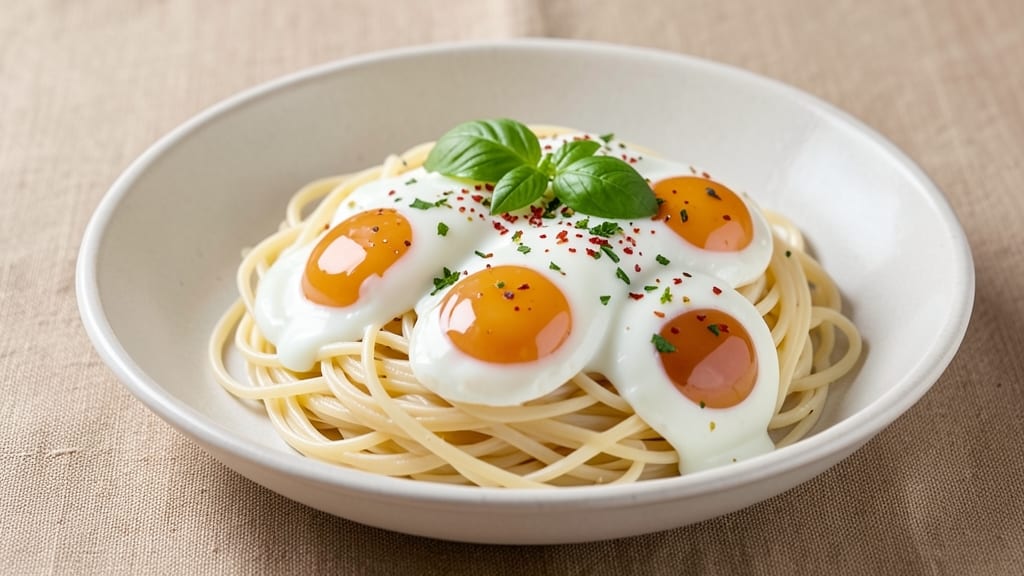
This angel hair pasta recipe transforms delicate ribbons into a luxurious dish when paired with perfectly poached eggs and their golden yolks.
The secret lies in cooking the pasta just shy of al dente—silky strands that cling together like satin—while poaching eggs in a gentle simmer for velvety centers and set yolks. I developed this technique after years of perfecting restaurant-style pasta dishes at home, and the results are always restaurant-quality.
The magic happens in the sauce, where a simple combination of heavy cream, lemon zest, and fresh herbs creates an elegant base that coats each strand without overpowering the eggs.
The dish balances rich and light perfectly—the creamy sauce contrasts beautifully with the tender pasta and runny yolks, while the herbs add a bright, fresh finish. What makes this recipe special is how effortlessly it comes together in just 20 minutes, yet feels like a gourmet creation.
When plated, the dish becomes a visual masterpiece: silky angel hair piled high, crowned with perfectly poached eggs whose golden yolks peek through delicate whites. The sauce clings to every strand, creating a harmonious bite that's both comforting and refined.
This is the kind of dish that elevates simple ingredients into something extraordinary—ideal for brunch, light lunches, or even an elegant dinner when you want to impress.
Pair it with a crisp arugula salad or grilled asparagus to complete the meal. The key to success is patience—especially with the eggs—and using high-quality ingredients that make all the difference. Let's create this dish that's as beautiful as it is delicious.
Ingredients for angel hair pasta and egg
Twelve ingredients transform simple strands into restaurant-quality elegance with velvety eggs and creamy sauce.
| Ingredient | Amount | Notes |
|---|---|---|
| Angel Hair Pasta 🍝 | 8 oz | Dried, high-quality brand preferred |
| Large Eggs 🥚 | 4 whole | Fresh, cold eggs for perfect poaching |
| Heavy Cream 🥛 | ½ cup | Full-fat, cold for best texture |
| Fresh Lemon 🍋 | 1 whole | Zest only, organic preferred |
| Fresh Basil Leaves 🌿 | ¼ cup | Packed, stems removed |
| Fresh Parsley Leaves 🌿 | ⅛ cup | Chopped, for garnish |
| White Vinegar 💧 | 1 tbsp | For egg poaching water |
| Diamond Crystal Kosher Salt 🧂 | 1 ½ tsp | For pasta and poaching water |
| Granulated Sugar 🍚 | 1 tsp | For egg poaching water |
| Extra-Virgin Olive Oil 🫒 | ¼ cup | High quality, fruity |
| Unsalted Butter 🧈 | 2 tbsp | For sauce richness |
| Garlic Cloves 🧄 | 1 whole | Minced, for sauce depth |
| White Wine Vinegar 💧 | 1 tsp | For sauce brightness |
The pasta is non-negotiable—De Cecco or Barilla are my go-tos for that silky texture. Angel hair should be 8 oz per serving for proper ribbon formation. Fresh eggs are essential; cold eggs from the fridge poach beautifully with set whites and runny yolks. For the cream, Whole Foods or Trader Joe's carry excellent full-fat options—never skim. The lemon should be organic if possible, as conventional lemons often have thinner zest. Fresh herbs make all the difference here, so buy them the day you cook and store them properly in damp paper towels.
No angel hair? Capellini or spaghetti work in a pinch, but the dish loses its signature delicate strands. Running short on eggs? Use duck eggs for richer yolks, but chicken eggs are fine too. Substituting heavy cream? Half-and-half with a splash of cream cheese mimics the richness. For the herbs, dried basil at one-third the amount works if fresh isn't available, but the flavor won't be as bright. The vinegar in the poaching water can be swapped for apple cider vinegar if preferred. The butter in the sauce is crucial—don't use margarine or vegetable oil substitutes—it adds that luxurious mouthfeel.
Pasta keeps 2-3 days in the fridge if stored in an airtight container with a splash of olive oil to prevent sticking. Fresh herbs should be wrapped in damp paper towels and refrigerated for up to 5 days. The poached eggs are best served immediately, but you can reheat the sauce separately and add the eggs fresh. For meal prep, cook the pasta and sauce ahead, then poach eggs to order. The dish reheats beautifully—just warm the sauce gently and add the pasta back in. Store any leftovers in the fridge for up to 3 days, though the texture may change slightly.
Why You'll Love This Recipe
- I’ll be real: I never make enough the first time. The next day, those strands are even better—soaked up with all the creamy goodness, slightly firmer but still tender. Pack it for lunch, reheat it gently, and no one will guess it’s a meal you didn’t spend hours on. Budget-friendly? Absolutely. But more importantly, it’s the kind of leftovers I actually want to eat.
- No-Fuss Technique: I swear by this recipe because it’s basically hands-off after boiling the pasta. Toss the drained strands into a warm skillet with the eggs and cream—no tossing, no stirring like a maniac—just let the heat do the work. The eggs poach right into the strands, creating that silky, clingy texture without a single broken yolk in sight.
- Bright & Creamy Magic: That lemon zest and basil? Oh, they’re the stars. The heavy cream makes it rich, but the acidity cuts through it like a cool breeze, while the basil adds that fresh, herby punch. It’s the kind of dish where every bite feels like a little Italian vacation—no heavy sauce, just pure, balanced flavor.
- Weeknight & Weekend Ally: Between us, this is my go-to for lazy Sundays or when I need something impressive for guests who think they’re food critics. The same basic method works for a solo dinner or a shared plate—just double the eggs if you’re feeding a crowd. And honestly? It’s the kind of dish that makes you look like you slaved away when you really just threw a few things together.
Step-by-step instructions for angel hair pasta with poached eggs
This elegant dish combines delicate angel hair with silky poached eggs and bright lemon-infused cream sauce.
Prepare the Poaching Water and Poach the Eggs
Fill a deep saucepan with 4 cups water and bring to a gentle simmer over medium-low heat. Add the 1 tablespoon white vinegar, 1 teaspoon granulated sugar, and 1 teaspoon Diamond Crystal kosher salt, stirring until dissolved. The vinegar lowers the eggs' surface tension while the sugar helps set the whites gently.
Crack each of the 4 whole large eggs into a small bowl or ramekin. Using a slotted spoon, carefully lower one egg at a time into the poaching water. Maintain a gentle simmer—if it boils vigorously, the eggs will scatter. Poach for 3-4 minutes until the whites are set but the yolks remain runny and vibrant. Remove with a slotted spoon and drain on a paper towel-lined plate.
Cook the Angel Hair Pasta to Al Dente Perfection
While the eggs poach, bring a separate pot of 4 quarts salted water (add 1 tablespoon Diamond Crystal kosher salt) to a rolling boil. Add the 8 ounces angel hair pasta and cook for 2-3 minutes less than package instructions—angel hair cooks faster than other pastas. Stir occasionally to prevent sticking.
Drain the pasta immediately and toss with 1 tablespoon extra-virgin olive oil to prevent clumping. Reserve ½ cup pasta water—this starchy liquid will help emulsify the sauce later. The pasta should be tender but still offer slight resistance when bitten (al dente).
Create the Lemon Cream Sauce
In a small saucepan, combine the ½ cup heavy cream, 2 tablespoons unsalted butter, and zest of 1 whole fresh lemon (use a fine grater). Warm over medium-low heat until the butter melts and the mixture reaches 160°F. Remove from heat and stir in 1 teaspoon white wine vinegar and 1 minced garlic clove.
Return the pan to low heat and gradually whisk in 2 tablespoons reserved pasta water until the sauce reaches a velvety consistency. If it thickens too much, add more pasta water 1 tablespoon at a time. The sauce should coat the back of a spoon but remain pourable. Keep warm over low heat.
Assemble and Garnish
Divide the cooked angel hair pasta among 4 plates. Spoon the lemon cream sauce over each serving, then place a poached egg gently on top. The runny yolk should peek through the delicate egg whites, creating a golden crown.
Garnish each plate with 1 tablespoon fresh basil leaves and 1 teaspoon chopped fresh parsley leaves. Drizzle with an additional ½ teaspoon extra-virgin olive oil for shine. Serve immediately while the eggs are warm and the sauce is silky.
Pro Tips For Making Angel Hair Pasta And Egg
- Boil Pasta in Lemon Water: Toss the drained angel hair into a bowl with the juice of half a lemon and a splash of pasta water—this keeps the strands bright and tangy instead of turning mushy. I used to skip this, and the dish always felt flat until I tried it.
- Whisk Eggs Until Thick: Beat the eggs with heavy cream until they’re noticeably thicker and pale yellow—about 30 seconds with a fork. This ensures a silky, rich sauce instead of a watery one clinging to the pasta.
- Reserve Starchy Pasta Water: Save half a cup of the pasta water before draining—it’s the glue that binds the sauce to the noodles. I learned this the hard way when my first batch looked like loose strands instead of a cohesive dish.
- Toast Basil Leaves First: Lightly warm the basil in a dry pan for 10 seconds until fragrant—this intensifies the flavor without wilting it. Skip the chopping until the very end so it stays vibrant in every bite.
Essential equipment for great angel hair pasta and egg
Pasta Pot Essentials
You’ll need a large, deep pot with at least 4 quarts capacity—I use my All-Clad stainless steel stockpot for even heat distribution. The pot should have a tight-fitting lid to maintain a rolling boil for al dente pasta.
A fine-mesh strainer or colander with large holes is critical for draining angel hair without breaking the delicate strands. I keep a small bowl nearby to reserve ½ cup pasta water—this starchy liquid is the secret to a silky sauce. 🍲
Egg Poaching Tools
A deep, narrow saucepan (like a Le Creuset round pot) works best for poaching eggs—it prevents water splatter and keeps yolks centered. A slotted spoon with a long handle makes removing eggs effortless without breaking whites.
For precision, I use ramekins or small bowls to crack eggs into before gently sliding them into the water. A thermometer (like the Thermoworks Thermapen) ensures your poaching water stays at a gentle simmer—never boiling. 🥚
Sauce-Making Gear
A small, heavy-bottomed saucepan (I love my Demeyere saucepan) prevents scorching when heating cream and butter. A whisk with a long handle helps incorporate pasta water smoothly for that velvety texture.
For zesting, a Microplane gives finer, more flavorful lemon zest than a grater. Keep a small ladle handy to transfer sauce to plates without spills. 🧈
Garnish & Plating
Fresh herbs need sharp scissors or a chef’s knife for clean cuts—never tear basil leaves! A small spoon helps arrange delicate angel hair into an elegant pile. For plating, I use white, oval dinner plates (like Corelle Stoneware) to make the dish look even more refined.
A drizzling bottle (like a OXO Good Grips) ensures even olive oil distribution. 🌿
Time-Saving Upgrades
An immersion blender (like Ninja) can quickly emulsify the sauce if you prefer blending over whisking. A pasta maker (like Imperia) lets you customize width if you’re feeling adventurous.
For busy mornings, I pre-measure all ingredients in small ramekins before starting—saves cleanup time. A timer (set for 3 minutes per egg) keeps everything synchronized. ⏰
Nutrition facts
Frequently asked questions
Can I substitute angel hair pasta with another type?
Yes, but results will differ. Capellini or spaghetti work in a pinch, though they're thicker and less delicate. For best texture, stick with angel hair—its thin strands create that signature silky mouthfeel. If you must substitute, reduce cooking time by 1 minute to prevent mushiness.
Why are my poached eggs breaking when I remove them?
This usually happens from sudden temperature changes or overcooking. Maintain a gentle simmer (not a rolling boil) and use a slotted spoon to lift eggs carefully. For extra stability, add 1 teaspoon cornstarch to the poaching water—it helps whites set more firmly.
Can I make this dish ahead of time?
Cook the pasta and sauce first, then store separately in the fridge for up to 2 days. Reheat the sauce gently, then add the pasta back in. Poach eggs fresh when ready to serve—their texture is best when made to order. For a shortcut, use pre-cooked angel hair pasta (found in some grocery stores).
What if I don't have fresh basil or parsley?
No problem! Use dried herbs at one-third the amount (e.g., 1 teaspoon dried basil instead of 1 tablespoon fresh), though flavor won't be as bright. Other garnish options include toasted pine nuts, grated Parmesan, or microgreens. The dish will still taste delicious—herbs just add that fresh pop of color.
How do I adjust this for a vegetarian diet?
This recipe is already vegetarian-friendly! The eggs provide protein, while the pasta and cream sauce offer a balanced meal. For a vegan version, replace eggs with marinated tofu or vegan "eggs" (like Just Egg), and use coconut cream instead of heavy cream. The lemon zest and herbs keep the bright, fresh character intact.