
Breakfast & Brunch
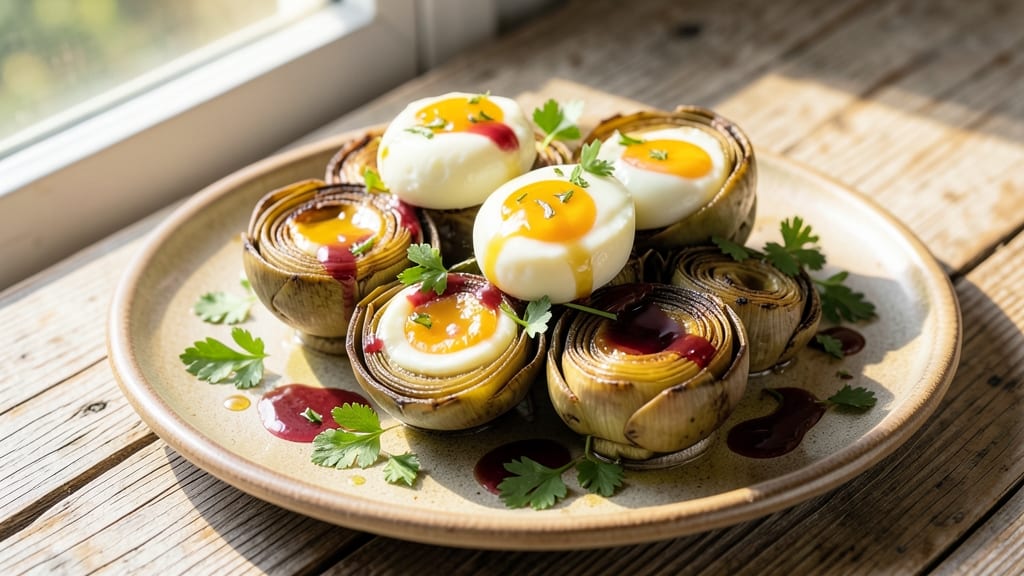
This artichoke and egg recipe transforms humble ingredients into a breakfast masterpiece where crispy artichoke hearts meet silky poached yolks in perfect harmony.
The secret lies in properly prepping the artichokes—steaming until tender yet still holding their shape, then searing them until golden and crispy—while poaching the eggs just long enough to keep their centers runny.
I developed this technique after years of experimenting with Mediterranean-inspired breakfasts, and it never fails to impress even skeptical guests.
The beauty of this dish is its balance: the artichokes bring earthy, slightly bitter depth that's beautifully contrasted by the rich, creamy eggs and bright lemon zest.
We're using a simple white wine and herb sauce to tie everything together, but the real magic happens in the texture—crispy artichokes that hold their shape while the eggs remain velvety and luxurious. This isn't your typical scrambled eggs; it's a restaurant-worthy breakfast that takes just 25 minutes to prepare.
What makes this recipe truly special is how it elevates simple ingredients through technique rather than complexity. The artichokes are prepared ahead and chilled, ensuring they're perfectly crispy when served, while the eggs are poached to order for that restaurant-quality presentation.
The result is a dish that's equal parts elegant and comforting—ideal for weekend brunches or special occasions when you want to impress without spending hours in the kitchen.
Serve this dish with a sprinkle of fresh parsley and a drizzle of that white wine sauce, accompanied by crusty bread to soak up every last drop. The combination of textures and flavors creates a meal that's both satisfying and refined—proof that breakfast can be as sophisticated as dinner.
Let's bring this Mediterranean-inspired dish to your table.
Ingredients for artichoke and egg
These Mediterranean-inspired ingredients create a refined breakfast where crispy artichokes meet velvety poached eggs in perfect harmony.
| Ingredient | Amount | Notes |
|---|---|---|
| Marinated Artichoke Hearts 🍃 | 14 oz | Canned, drained and rinsed |
| Large Eggs 🥚 | 4 whole | Fresh, room temperature |
| Extra-Virgin Olive Oil 🫒 | ½ cup | High quality, fruity |
| Dry White Wine 🍷 | ¼ cup | Sauvignon Blanc preferred |
| Fresh Lemon Zest 🍋 | 1 tbsp | Finely grated, organic |
| Fresh Parsley 🌿 | ¼ cup | Chopped, flat-leaf preferred |
| Fresh Dill 🌿 | 1 tbsp | Chopped, for garnish |
| Diamond Crystal Kosher Salt 🧂 | 1 ½ tsp | Fine grain preferred |
| Freshly Ground Black Pepper 🌶️ | ½ tsp | Cracked peppercorns |
| Unsalted Butter 🧈 | 2 tbsp | Cold, for searing |
| Garlic Cloves 🧄 | 2 cloves | Minced, for sauce |
| Heavy Whipping Cream 🥛 | ¼ cup | Full-fat for sauce |
| Crusty Sourdough Bread 🍞 | 8 slices | For serving |
| White Wine Vinegar 🍶 | 1 tbsp | For artichoke marinade |
The artichoke hearts are the foundation of this dish, so quality matters. Look for canned artichokes packed in water, not oil or saltwater, as they'll be less greasy and more flavorful. Trader Joe's and Whole Foods carry excellent brands like La Tourangelle or Mutti. For the eggs, farm-fresh or organic makes a noticeable difference in texture—room temperature eggs poach more evenly. The olive oil should be extra-virgin with a peppery finish; California Olive Ranch is a reliable choice. Fresh herbs like parsley and dill should be vibrant green with no wilting—store-bought bunches often have stems cut too short, so trim them yourself for longer shelf life.
No white wine on hand? Substitute with an equal amount of dry vermouth or apple cider vinegar, though the flavor profile will differ slightly. Fresh lemon zest can be replaced with bottled lemon juice at double the amount, but the texture and brightness won't be identical. For those avoiding dairy, swap the heavy cream for coconut cream in the sauce, though the sauce will be slightly lighter. The artichokes can be marinated overnight in the white wine vinegar and olive oil, which enhances their flavor dramatically. If using pre-marinated artichokes, simply pat them dry before searing. For the bread, any crusty variety works—baguette or ciabatta are excellent alternatives to sourdough.
Artichoke hearts keep for 5 days in the fridge once opened, but they're best used within 2 days for optimal crispiness. Fresh herbs should be wrapped in damp paper towels and stored in a sealed container for up to 5 days. The white wine sauce can be made ahead and reheated gently—it actually improves in flavor as the ingredients meld. For meal prep, poach the eggs separately and assemble just before serving to maintain their perfect texture. The crispy artichokes can be stored in an airtight container at room temperature for 2 days, though they'll lose some crispness over time.
Why You'll Love This Recipe
- No Chopping Needed: I swear by this recipe when I’m too tired to prep. Just drain those jarred artichoke hearts, crack eggs into a pan, and let the wine and lemon do the rest—no knife skills required.
- Bright & Tangy Magic: That splash of dry white wine and lemon zest? It cuts through the richness of the eggs and makes every bite taste like a sunlit Mediterranean plate. The artichokes soak up all the flavor—no one will guess it’s this simple.
- Weeknight to Weekend: Use it for a lazy Tuesday dinner or a fancy brunch with friends. Serve it over crusty bread, alongside greens, or even stuffed into a crusty baguette—it’s that adaptable.
- Budget-Friendly Luxury: Artichoke hearts in a jar and eggs are my go-to affordable splurge. A single batch feeds four for under $10, and leftovers reheat beautifully—no sad, rubbery eggs here.
Step-by-step instructions for crispy artichoke hearts with silky poached yolks
Here's the method to achieve perfectly crispy artichoke hearts paired with delicate poached yolks.
Prepare the Artichoke Hearts for Crisping
Drain and thoroughly rinse the 14 oz marinated artichoke hearts under cold water to remove excess brine. Pat them completely dry with paper towels—this step is critical for achieving crispy texture. Spread them out on a wire rack and let them air-dry for 10 minutes at room temperature.
While they dry, prepare a marinade by whisking together 1 tablespoon white wine vinegar, 1 tablespoon fresh lemon zest, 1.5 teaspoons kosher salt, and 0.5 teaspoon black pepper. Toss the artichoke hearts in this marinade and let them soak for 15 minutes. This acidulated brine enhances their natural flavor and helps create a perfect sear.
Sear the Artichoke Hearts Until Golden
Heat 0.5 cup extra-virgin olive oil in a large skillet over medium-high heat until it shimmers but doesn't smoke. Add the marinated artichoke hearts in a single layer, being careful not to overcrowd the pan. Cook undisturbed for 3-4 minutes until they develop a deep golden-brown crust on one side.
Flip carefully and cook the other side for another 3-4 minutes, again until golden brown. The artichokes should be crispy to the touch with caramelized edges. Remove them from the pan and set aside on a paper towel-lined plate to drain excess oil. Keep the oil in the pan—it's essential for the next step.
Create the Garlic Wine Sauce
Reduce the heat to medium and add 2 tablespoons cold unsalted butter to the same skillet. Let it melt completely, then add the 2 minced garlic cloves and sauté for 30 seconds until fragrant but not browned. Pour in 0.25 cup dry white wine and scrape up any browned bits from the bottom of the pan with a wooden spoon.
Simmer the wine mixture for 2-3 minutes until it reduces by half. Stir in 0.25 cup heavy whipping cream and cook for another 1-2 minutes until the sauce thickens slightly. Season with an additional pinch of salt and pepper if needed. Remove from heat and keep warm.
Poach the Egg Yolks to Perfection
Bring a small pot of water to a gentle simmer—it should be hot but not rolling. Crack 4 large eggs into small bowls, then carefully lower them into the simmering water using a slotted spoon. Poach for 2-3 minutes until the whites are just set but the yolks remain completely liquid and silky.
Use the slotted spoon to transfer the poached eggs to a paper towel-lined plate to drain excess water. The yolks should remain perfectly round and unbroken. This delicate step requires patience—overcooking will turn the yolks rubbery.
Assemble and Serve
To serve, place 2 crispy artichoke hearts on each of 4 slices crusty sourdough bread. Spoon 2 tablespoons of the garlic wine sauce over the artichokes, then carefully place 1 poached egg on top of each serving. Garnish with 1 tablespoon chopped fresh parsley and 1 teaspoon chopped fresh dill for a pop of color and freshness.
Serve immediately while the artichokes are still crispy and the yolks remain silky. The contrast between the crispy artichokes, rich sauce, and delicate poached yolks creates a harmonious balance of textures and flavors in every bite.
Pro Tips For Making Artichoke And Egg
- Drain and Pat Dry: Marinated artichoke hearts cling to their brine like glue—skip draining, and your dish turns into a soggy mess. After rinsing, lay them on a clean towel and press gently with a second towel to remove excess moisture. Trust me, crispy artichokes make all the difference when they hit the pan.
- Sear Eggs in Stages: High heat first, then low and slow—this is how you get that perfect runny yolk without overcooking the whites. Crack the eggs into a preheated (but not smoking) pan, let them sit for 10 seconds, then gently pour in the wine to deglaze. The residual heat keeps the yolks creamy while the whites firm up just enough.
- Use Room-Temp Eggs: Cold eggs from the fridge make for uneven cooking—one side overdone before the other even starts. Take them out 15 minutes before cooking, or better yet, let them sit in warm water for 5 minutes. This small step guarantees the whites set smoothly while the yolks stay rich and unbroken.
- Zest First, Juice Later: Fresh lemon zest packs way more flavor than juice when it comes to brightening artichokes. Grate it directly into the pan while searing the artichokes—it blooms into the oil and clings to the edges. Save the juice for finishing, or you’ll dilute the punch of that citrus aroma. (Yes, even if you’re impatient like me.)
Dietary considerations for artichoke and egg
Vegetarian-Friendly Adaptations
This dish is naturally vegetarian, but you can easily make it vegan by swapping the eggs for silken tofu or chickpea flour "eggs" (mix 3 tbsp chickpea flour with 2 tbsp water per "egg").
For the sauce, replace the heavy cream with coconut cream or a cashew cream blend—just blend ½ cup soaked cashews with ¼ cup water until smooth. The artichokes and garlic wine sauce remain completely plant-based, making this a fully adaptable vegetarian meal. 🌱
Gluten-Free Considerations
Since the dish relies on artichokes, eggs, and fresh herbs, it's naturally gluten-free—but watch the bread! Use gluten-free sourdough or certified GF baguette (brands like Canyon Bakehouse or Schar work well). For extra security, toast the bread until crispy to prevent any potential crumbling.
The sauce and artichokes contain no gluten, so no additional substitutions are needed beyond the bread. Always double-check labels on canned artichokes for hidden gluten additives. ✨
Dairy-Free Options
The only dairy in this recipe comes from the heavy cream in the sauce and the butter used for searing. Replace the butter with vegan butter (like Miyoko's) or extra olive oil.
For the sauce, use coconut cream or a neutral oil-based cream substitute (mix ¼ cup olive oil with 2 tbsp nutritional yeast for a cheesy flavor). The eggs and artichokes remain dairy-free, so the dish stays rich and satisfying without any compromises. 🥛
Low-Carb Modifications
Skip the bread entirely and serve the artichokes and poached eggs over a bed of roasted Brussels sprouts or a zucchini noodle base for a low-carb twist. The garlic wine sauce pairs beautifully with both.
For extra protein, add crispy chickpeas (toss ½ cup canned chickpeas with 1 tbsp olive oil and ½ tsp smoked paprika, then roast at 400°F for 20 minutes). The artichokes and eggs already provide a satisfying meal without heavy carbs. 💪
Allergen-Friendly Swaps
For nut allergies, avoid cashew cream and use oat cream (blend ½ cup oats with 1 cup water and strain) instead. If you're sensitive to sulfites (common in canned artichokes), opt for fresh artichokes (trimmed, steamed, and chilled) or look for sulfite-free brands like Whole Foods 365.
For egg allergies, use the tofu or chickpea flour "eggs" mentioned earlier—they mimic the texture perfectly when poached. Always check labels for hidden allergens in sauces and broths. 🌿
Nutrition facts
Frequently asked questions
Can I use fresh artichokes instead of canned hearts?
Fresh artichokes require more prep: trim the tough outer leaves, cut off the top third, and pull out the fuzzy choke. Steam for 25-30 minutes until tender, then chill completely before slicing the hearts into ½-inch thick rounds. For best crispiness, pat them very dry and marinate for 30 minutes instead of the 15 minutes needed for canned hearts.
How do I keep the poached eggs from breaking?
Use room temperature eggs and crack them directly into small bowls or ramekins before gently sliding them into simmering water. Add a splash of white vinegar to the water (just 1 tablespoon per quart) to help the whites coagulate faster. Poach for 2-3 minutes max—any longer risks breaking the yolks.
What's the best way to reheat leftovers?
This dish is best served fresh, but if you have leftovers, reheat only the sauce separately in a small saucepan over low heat until warm. Keep the artichokes and eggs at room temperature until serving. If reheating, warm the artichokes in a 200°F oven for 5 minutes to restore crispiness, then add warm sauce and eggs just before eating.
Can I make this dish ahead of time?
Yes! Prep the artichokes up to 2 days ahead: marinate, sear, and store in an airtight container at room temperature. Make the sauce the night before and reheat gently. Poach the eggs fresh—this component doesn't reheat well. Assemble everything just before serving to maintain perfect textures.
What if I don't have white wine for the sauce?
Use dry vermouth or apple cider vinegar as a substitute, though the flavor will differ slightly. For vermouth, use the same amount (¼ cup). For vinegar, reduce to 2 tablespoons and add 1 teaspoon sugar to balance acidity. The sauce will still work beautifully—just expect a slightly different depth of flavor.