
Soups & Stews
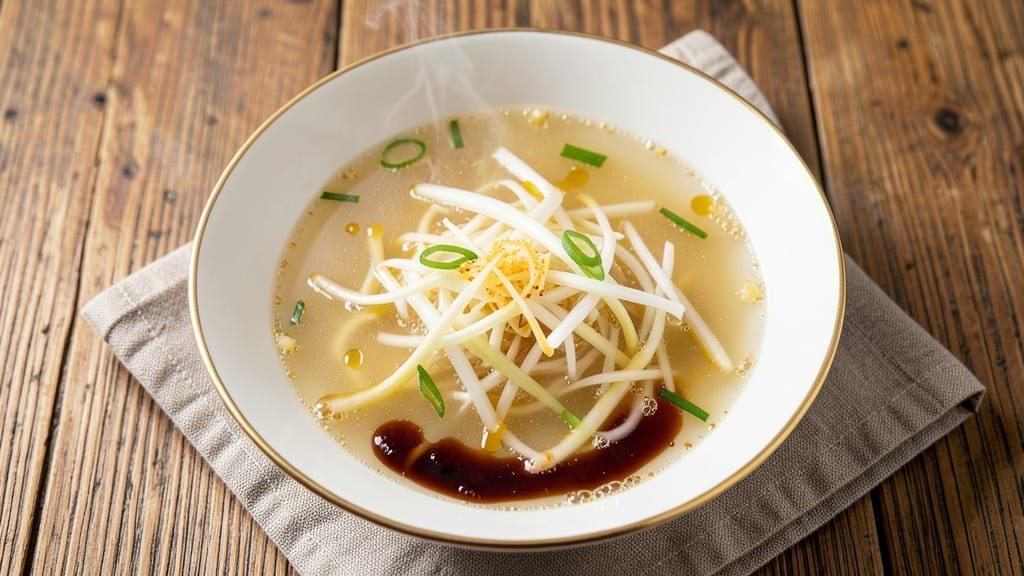
This authentic Chinese egg drop soup recipe captures the essence of a classic Cantonese comfort dish—silky egg ribbons floating in a fragrant, clear broth infused with ginger and scallions.
The secret lies in the technique: gentle heat, minimal stirring, and the right balance of ingredients to create that signature delicate texture. I've perfected this version after years of studying traditional methods, ensuring every spoonful delivers the perfect harmony of flavors and textures.
The foundation of great egg drop soup begins with a rich, clear chicken broth that forms the base, while fresh ginger and scallions add aromatic depth. The egg is the star—whisked to perfection and dropped in ribbons that dissolve into the broth, creating a luxurious mouthfeel.
Unlike many Western adaptations, this recipe avoids heavy seasoning or thickeners, staying true to its roots while still being approachable for home cooks.
What sets this recipe apart is the attention to detail in the cooking process: the broth must simmer gently to maintain clarity, and the egg must be added at the right temperature to create those signature silky strands.
The result is a soup that's light yet satisfying, with each bite offering a balance of savory, aromatic, and slightly sweet notes. It's the kind of dish that feels both nostalgic and fresh, perfect for a quick lunch or a comforting meal.
Serve it alongside steamed dumplings or buns for an authentic Chinese dining experience, or enjoy it on its own as a soothing, flavorful bowl of comfort. The simplicity of the ingredients belies the sophistication of the technique—once you master it, you'll never go back to store-bought versions.
Let's get started on creating this timeless classic.
Ingredients for authentic chinese egg drop soup
Eleven essential ingredients transform into a delicate, aromatic Cantonese classic.
| Ingredient | Amount | Notes |
|---|---|---|
| Chicken Broth 🍲 | 4 cups | Homemade or high-quality store-bought |
| Large Eggs 🥚 | 4 whole | Fresh, room temperature preferred |
| Fresh Ginger 🧄 | 1 tbsp | Finely minced, aromatic variety |
| Scallions 🧅 | 3 whole | Thinly sliced, white and green parts |
| Soy Sauce 🍶 | 1 tbsp | Light or all-purpose variety |
| Sesame Oil 🫒 | ½ tbsp | Toasted, for aroma |
| Cornstarch 🌾 | ¼ tsp | For egg ribbon clarity |
| White Pepper 🌶️ | ⅛ tsp | Freshly ground, subtle heat |
| Salt 🧂 | ½ tsp | Adjust to taste |
| Sesame Seeds 🌱 | ½ tsp | Toasted, for garnish |
| Green Onions 🧅 | 2 whole | Chopped, optional garnish |
The chicken broth is non-negotiable—homemade yields the best clarity and depth, but Kitchen Basics or Swanson brands deliver reliable quality when time is short. Look for low-sodium options to control seasoning precision. Fresh ginger should be vibrant yellow inside with no soft spots; Whole Foods or Asian markets carry the most aromatic varieties. Scallions should be crisp with tightly wrapped layers—avoid wilted stems. For soy sauce, opt for light or all-purpose rather than dark, which can overpower the delicate broth. Sesame oil must be toasted—check the label for 'toasted' or 'flavored' varieties, not the raw kind.
No fresh ginger? Two teaspoons of ground ginger works in a pinch, though it lacks the same aromatic complexity. Substitute scallions with 1 tbsp finely chopped regular onion if needed, but the flavor profile shifts slightly. For soy sauce, coconut aminos offer a lighter alternative, though the umami depth differs. The cornstarch is crucial—it prevents the egg from curdling and creates those signature silky ribbons. If unavailable, arrowroot powder functions identically. White pepper is traditional, but black pepper at half the amount suffices. When whisking eggs, room temperature eggs blend more smoothly—remove them from the fridge 30 minutes before cooking.
Broth can be prepped 2 days ahead and stored in the fridge; reheat gently before use. Whisked eggs should be used immediately or refrigerated for up to 4 hours—they thicken when cold. Garnishes like sesame seeds and green onions keep best in the fridge for 5-7 days when stored in airtight containers. For longer storage, freeze broth in ice cube trays—thaw as needed for future batches. The complete soup reheats beautifully but should be eaten within 3 days for optimal texture and flavor.
Why You'll Love This Recipe
- Five-Ingredient Magic: I swear, this recipe lives up to its name—just broth, eggs, ginger, scallions, and soy sauce. No fancy prep, no hidden pantry raids, and honestly? The hardest part is waiting for the water to boil.
- Silky Perfection: That first swirl of egg into the broth? Pure satisfaction. The way the raw egg ribbons dissolve into delicate strands while keeping a just-right set—it’s like a warm hug in a bowl, especially when you sprinkle in those bright green scallions at the end.
- Sick Day Hero: Between us, this is my go-to when I’m under the weather or just need something light but filling. The ginger adds a gentle kick, the soy sauce rounds it out, and the broth? It’s basically liquid comfort. (Yes, even on a Tuesday night.)
- Leftovers That Don’t Suck: Most soups turn sad after day two, but not this one. The broth only gets richer, and I’ll reheat a cup with a splash of water and a crack of black pepper—still tastes fresh. Plus, it’s cheap enough to make double batches without guilt.
Step-by-step instructions for authentic Chinese egg drop soup
Master the delicate art of creating silky egg ribbons and aromatic broth with these precise techniques.
Prepare the Ginger-Scented Broth Base
In a clean, medium-sized pot, combine the 4 cups chicken broth with the 1 tablespoon finely minced fresh ginger. Bring to a gentle simmer over medium heat, then reduce to low heat and let it steep for 5 minutes. This infuses the broth with bright, aromatic ginger notes that form the foundation of authentic flavor.
While the broth heats, slice the 3 whole scallions thinly, separating the white and green parts. Keep the whites for the broth and reserve the greens for garnish later. You'll notice the broth should have a subtle golden hue and emit a delicate ginger fragrance—this is your signal that the aromatics are properly infused.
Season and Clarify the Broth
Add the 1 tablespoon soy sauce, 0.5 teaspoon salt, and 0.125 teaspoon freshly ground white pepper to the simmering broth. Stir gently to combine, being careful not to create foam. The soy sauce should dissolve completely, adding depth of umami flavor that balances the ginger's brightness.
In a small bowl, whisk together the 4 whole large eggs with the 0.25 teaspoon cornstarch. The cornstarch creates a subtle thickening that helps form those signature silky ribbons. Keep this mixture at room temperature—cold eggs will create broken ribbons instead of smooth strands.
Create the Signature Egg Ribbons
With the broth gently simmering (small bubbles breaking the surface but not vigorously boiling), slowly drizzle the egg mixture into the center of the pot. Use a fork to gently stir the broth in small circles, creating gentle currents that form the characteristic ribbons. The key is patience—don't rush the process or the eggs will break into chunks rather than delicate strands.
Watch closely as the egg ribbons form. They should appear translucent and delicate, floating just below the surface. If you see any large clumps forming, use a chopstick to gently break them apart. The broth should remain clear with just the faintest hint of egg cloudiness—this is what gives authentic egg drop soup its elegant appearance.
Finish with Aromatic Touches
Once the egg ribbons are fully formed (about 2-3 minutes after adding the eggs), remove the pot from heat. Add the 0.5 tablespoon toasted sesame oil and stir gently. The sesame oil adds a nutty aroma that enhances the overall complexity of the soup. Let it sit off heat for 1 minute to allow the flavors to meld.
Chop the 2 whole green onions and sprinkle them over the surface along with the 0.5 teaspoon toasted sesame seeds. These final garnishes add both visual contrast and subtle crunch. Serve immediately in small bowls, ensuring each serving contains both broth and egg ribbons for the complete experience.
Pro Tips For Making Authentic Chinese Egg Drop Soup
- Boil Broth to a Rolling Simmer: I learned this the hard way—skipping a proper simmer means your eggs won’t ribbon properly. Heat the chicken broth until it’s actually bubbling hard, then lower the heat to maintain that rolling simmer (not just a gentle bubble). This creates the right tension for those delicate egg strands.
- Beat Eggs with a Fork, Not Whisk: Sounds weird, but it works: beat the eggs with a fork until just combined—no need to make them frothy. Over-whisking makes them too light and breaks the silky texture when they hit the broth. Think "lightly stirred," not "fluffy."
- Slice Ginger Paper-Thin: Skip the grater—use a sharp knife to shave the ginger into paper-thin slices (yes, even if it looks ridiculous). This way, it infuses the broth without turning it bitter or leaving chunks. Toss the slices in at the end so they don’t overpower the soup.
- Add Soy Sauce Last: I used to mix it in early, but the flavor gets muddy. Instead, stir in just ½–1 tsp of soy sauce after the eggs are mostly set—this keeps the broth bright and the egg strands clean. Taste first; you can always add more, but you can’t take it out.
Storing and reheating this authentic chinese egg drop soup
Broth Storage Secrets
The chicken broth is the soul of your egg drop soup, so treat it right. Store homemade broth in airtight glass containers (like Pyrex) in the fridge for up to 4 days, or freeze in ice cube trays for 3 months—thaw only what you need.
For store-bought broth, opt for low-sodium brands like Kitchen Basics or Swanson to control seasoning better. Always reheat broth gently over low heat to preserve its clarity and aroma. 🍲
Egg Prep Timing
Whisked eggs should be used immediately or refrigerated for no more than 4 hours—they thicken when cold, ruining those delicate ribbons. Keep the egg mixture at room temperature while cooking, and never reheat it after whisking.
For best results, remove eggs from the fridge 30 minutes before cooking. If you must prep ahead, store unwhisked eggs in their shells in the fridge, then whisk just before adding to the broth. 🥚
Reheating Perfection
If you need to reheat your soup, do it slowly over low heat to prevent the egg ribbons from breaking. Add 1-2 tablespoons of hot water to maintain consistency, and stir gently. For microwave reheating, use 50% power in 30-second intervals, stirring between each.
The soup should reach 165°F internally—never let it boil. Garnish fresh after reheating to keep those sesame seeds and green onions crisp. ⏰
Garnish Freshness
Toasted sesame seeds and chopped green onions are best used within 5-7 days of storage. Keep them in airtight containers in the fridge to preserve their crunch and aroma. For extra flavor, toast the sesame seeds in a dry pan over medium heat for 1-2 minutes until fragrant before using.
Freshly chopped scallions should be stored in the fridge with their roots submerged in water to maintain crispness. 🌱
Freezer-Friendly Tips
For long-term storage, freeze the completed soup (without garnishes) in freezer-safe containers for up to 2 months. Leave 1-inch headspace for expansion, and thaw overnight in the fridge. When reheating from frozen, use low heat and add 2 tablespoons of water per cup of soup to prevent thickening.
The egg ribbons may separate slightly after freezing, but gentle stirring restores their delicate texture. ❄️
Portion Control
Egg drop soup is best enjoyed fresh, but if you must store leftovers, divide into small portions (like 1-cup servings) before refrigerating. This prevents the egg ribbons from overcooking or breaking during reheating.
For meal prep, consider making a double batch of broth and freezing it separately—then you can quickly assemble fresh soup whenever you need it. The key is minimal reheating to preserve that restaurant-quality texture. 💡
Nutrition facts
Frequently asked questions
Why does my egg drop soup have broken egg chunks instead of silky ribbons?
The key is temperature control! The broth must simmer gently (small bubbles, not boiling) when adding eggs. Cold eggs or vigorous stirring create chunks. Always use room-temperature eggs and drizzle them slowly into the center of the pot while stirring in small circles with a fork.
Can I use store-bought chicken broth for an authentic flavor?
Yes, but choose high-quality, low-sodium brands like Kitchen Basics or Swanson for the clear, clean base authentic versions need. For deeper flavor, simmer the broth with a ginger slice for 5 minutes before seasoning. Never use instant powdered broth—it lacks the delicate clarity needed.
What's the difference between egg drop soup and egg flower soup?
Egg drop soup features delicate ribbons formed by gentle stirring, while egg flower soup creates larger, defined "flowers" by carefully dropping egg into hot water first, then transferring to broth. The texture is completely different—egg drop is silky and integrated, while egg flower has distinct floral shapes.
How do I make this soup spicier?
Add ½ teaspoon chili crisp or 1 teaspoon chili oil at the end, or include ½ teaspoon doubanjiang (fermented chili bean paste) when seasoning the broth. For heat without spice, increase white pepper to ¼ teaspoon—it provides subtle warmth. Always taste first!
Can I add protein like shrimp or chicken?
Traditional versions are broth and egg only, but you can add ½ pound shrimp or poached chicken for heartier servings. Cook protein separately and add to individual bowls before serving—it shouldn't sit in the hot broth or turn rubbery.