
Sauces & Condiments
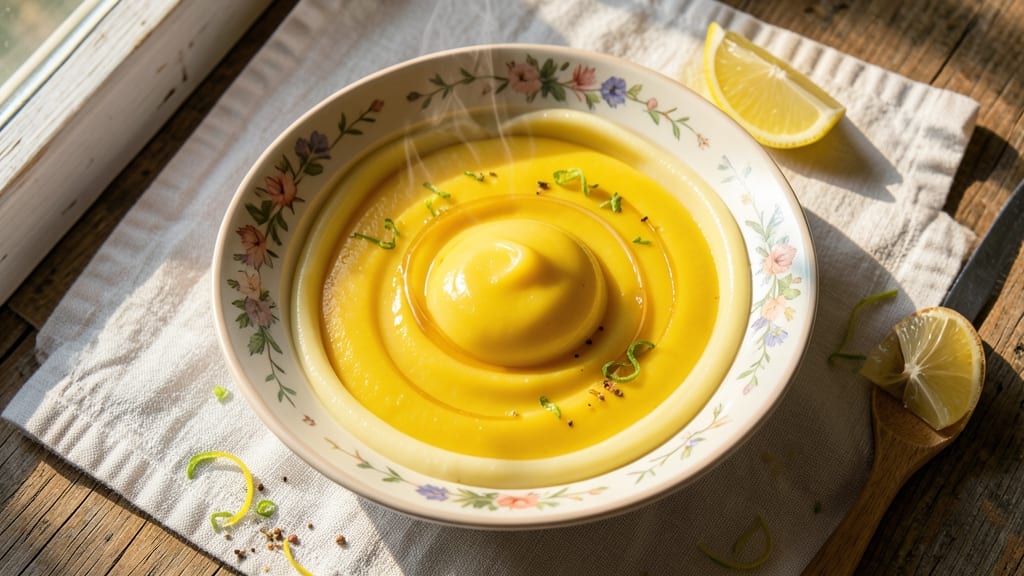
This lemon curd recipe using egg yolks only delivers that signature ultra-smooth, tangy citrus shine in just 15 minutes—no whole eggs, no fuss. The secret lies in tempering those yolks properly, transforming them into a silky, velvety filling that's perfect for pastries, toast, or even swirled into yogurt.
I've made this version countless times for clients who want restaurant-quality results without the wait, and it never fails to impress.
What makes this recipe special is the balance: bright lemon juice cuts through the richness of the butter, while the sugar gently caramelizes to round out the tartness. The yolks, tempered slowly over a double boiler, create that signature glossy texture that sets this curd apart from store-bought versions.
No one will guess you skipped the whites—this is all about maximizing flavor with minimal ingredients.
Once cooled, this curd transforms into a versatile condiment—spread it on scones, drizzle it over pancakes, or use it as a filling for tarts. It keeps beautifully in the fridge for up to a week, making it perfect for meal prep.
The method is foolproof, but the key is patience during the tempering stage—rushing leads to scrambled yolks, not silky curd.
For those who prefer plant-based options, I'll show you how to adapt this with aquafaba or coconut cream in the variations section. But for now, let's focus on the classic version that's been a staple in professional kitchens for decades. Here's everything you need to make it.
Ingredients for lemon curd recipe using egg yolks only
Six yolks, bright citrus, and rich butter create this velvety lemon curd in minutes.
| Ingredient | Amount | Notes |
|---|---|---|
| Large Egg Yolks 🥚 | 6 whole | Fresh, room temperature preferred |
| Fresh Lemon Juice 🍋 | ¾ cup | From 3-4 medium lemons |
| Granulated Sugar 🍚 | 1 cup | White or light brown preferred |
| Unsalted Butter 🧈 | ¾ cup | Cold, cubed for even melting |
| Zest of 2 Lemons 🍋 | 1 tbsp | Fine, bright yellow zest only |
| Vanilla Extract 🌿 | ½ tsp | Pure vanilla for depth |
| Salt 🧂 | ¼ tsp | Fine sea salt preferred |
| Pinch of Turmeric 🌶️ | ⅛ tsp | For vibrant color (optional) |
The yolks are non-negotiable here—fresh, room-temperature eggs temper best. Trader Joe's or Whole Foods carry high-quality eggs, but any store's large eggs work. For lemons, organic Meyer lemons add subtle sweetness, but regular lemons give classic tartness. The butter should be cold and cubed—this prevents overheating. If you're using salted butter, reduce the added salt by half. For the zest, use a microplane to avoid bitter white pith. Penzeys vanilla extract adds depth if you want to splurge, but any pure extract works.
No vanilla? A pinch of cinnamon adds warmth. Short on butter? Coconut oil works in a pinch, though it alters flavor slightly. The turmeric is optional but gives that signature golden hue—skip it if you prefer pure yellow. For the sugar, turbinado or demerara adds subtle caramel notes. If your curd thickens too fast, whisk in 1 tsp water at a time. The key is patience—low heat and constant stirring prevent scrambling. If you accidentally overcook, strain through a fine-mesh sieve to salvage the texture.
This curd thickens as it cools, so don't overmix. For best results, spread a thin layer of butter on parchment paper before pouring—prevents sticking. Keeps in an airtight jar in the fridge for 1 week or frozen for 3 months. The flavor deepens over time. For a restaurant-quality finish, strain through a fine-mesh sieve before chilling. Portion into small jars for easy use—perfect for pastries, toast, or desserts.
Why You'll Love This Recipe
- Here’s what sold me: that first bite where the lemon zest sings against the creamy butter base. The sugar cuts the acid just right, so it’s never too sharp or too sweet—just right. The yolks add richness without overpowering, and honestly? It’s the kind of bright, tangy flavor that makes me reach for more, even when I’m not supposed to be snacking.
- No Whisk Arm Fatigue: I’ll admit—whipping egg yolks until they’re pale and thick feels like a workout at first. But once you get the hang of it, those yolks transform into something silky and bright, all thanks to the butter and sugar melting together. No food processor? No problem. A hand mixer does the job just fine, and I’ve made this on a camping stove with a whisk—it’s that unfussy.
- Tart Perfection: Here’s what sold me: that first bite where the lemon zest sings against the creamy butter base. The sugar cuts the acid just right, so it’s never too sharp or too sweet—just right. The yolks add richness without overpowering, and honestly? It’s the kind of bright, tangy flavor that makes me reach for more, even when I’m not supposed to be snacking.
- Weeknight Hero: Between us, I keep a jar of this in the fridge for lazy mornings. Spread it on toast with a sprinkle of flaky salt, dollop it onto pancakes, or stir it into yogurt for a breakfast that feels fancy but takes zero effort. It’s my go-to when I’m too tired to think, but still want something that tastes like I put in work.
Step-by-step instructions for ultra-smooth lemon curd
Here's the method for silky, vibrant lemon curd that delivers perfect texture and bright flavor every time.
Whisk Egg Yolks and Sugar Until Pale and Thickened
In a medium heatproof bowl, whisk together the 6 whole large egg yolks and 1 cup granulated sugar over a double boiler. The bowl should sit directly on top of a pot of simmering water—never let the bottom touch the water. Whisk constantly for 5-7 minutes until the mixture thickens noticeably and becomes pale yellow in color.
This step is critical for creating the curd's signature smooth texture. You'll know it's ready when the mixture coats the back of a spoon and leaves a clear path when you run your finger through it. The sugar helps stabilize the eggs and prevent curdling, while the gentle heat ensures even cooking without scrambling the yolks.
Add Lemon Juice, Zest, and Vanilla
Remove the bowl from the heat and whisk in the 0.75 cup fresh lemon juice, 1 tablespoon lemon zest, 0.5 teaspoon vanilla extract, and 0.25 teaspoon salt. The mixture will become slightly thinner as the acid from the lemon juice reacts with the eggs. Stir well to fully incorporate all ingredients, including the turmeric if using.
Here's the thing—don't skip the zest. It contains the essential oils that give lemon curd its bright, complex flavor. The turmeric, while optional, adds that vibrant yellow color that makes lemon curd so visually appealing. If you're using it, make sure it's a very small pinch—just enough to color without overpowering the citrus flavor.
Cook Over Low Heat Until Thickened
Return the bowl to the double boiler and continue whisking constantly over low heat for 8-10 minutes. The curd will gradually thicken as it cooks. You're looking for a consistency where it coats the back of a spoon smoothly and leaves a distinct trail when you drag your finger through it.
This is where patience pays off. The curd should thicken to a pudding-like consistency but not so much that it becomes grainy. If you see any signs of curdling or separation, immediately remove from heat and whisk vigorously to smooth it out. The temperature should never exceed 160°F—if it gets hotter, you risk scrambling the eggs.
Incorporate Butter for Richness
Remove the bowl from heat and reduce the heat to its lowest setting. Add the 0.75 cup cold cubed unsalted butter all at once and whisk vigorously until fully melted and incorporated. The curd will become glossy and thick as the butter emulsifies with the egg mixture.
This is the moment that matters: the butter adds richness and prevents the curd from becoming too tart. If you add the butter too quickly, the mixture might separate. Work patiently to fully incorporate it, and you'll end up with a beautifully smooth texture. Strain the curd through a fine-mesh sieve into a clean bowl to remove any cooked egg bits for an ultra-smooth finish.
Cool and Set for Perfect Texture
Press plastic wrap directly onto the surface of the curd to prevent a skin from forming. Let it cool to room temperature, then refrigerate for at least 2 hours (or up to 3 days) until fully set. The curd should be thick but still spreadable, with a glossy sheen and vibrant yellow color.
Real talk: don't rush this cooling step. The longer it chills, the smoother and more stable the curd becomes. If you can't wait, you can speed it up by placing the bowl in an ice bath for 30-45 minutes, but be sure to stir occasionally to prevent the bottom from getting too cold while the top remains warm.
Pro Tips For Making Lemon Curd Recipe Using Egg Yolks Only
- Whisk Like a Maniac: Start with a wire whisk and arm strength—no blender shortcuts here. The yolks and sugar need to dissolve completely before heat hits, or you’ll end up with scrambled eggs instead of silky curd. I learned this the hard way after a batch that looked suspiciously like custard pudding.
- Measure Juice Precisely: Use a kitchen scale for lemon juice—100g is your target, not "a splash." Too little and it’s sweet; too much and the curd turns bitter. Freshly squeezed is non-negotiable; bottled juice has additives that ruin the texture.
- Temper the Yolks Slowly: Heat the sugar-butter mix to 170°F (77°C) before drizzling it into the yolks, a tablespoon at a time. Rushing this step curdles the eggs—trust me, I’ve turned lemon curd into a sad, lumpy mess. A heatproof bowl over simmering water works best.
- Strain Twice, Strain Right: After cooking, strain through a fine-mesh sieve twice—once to catch any stray lumps, then again through a chinois for ultra-smoothness. The second strain is where the magic happens; it’s the difference between "good" and "showstopper." (Yes, even if you’re impatient like me.)
Perfect pairings for this lemon curd recipe using egg yolks only
Breakfast Brilliance
This lemon curd shines brightest in the morning—drizzle it over fluffy pancakes or buttermilk waffles for a zesty kick that cuts through richness. I love pairing it with crispy bacon or sautéed apples for a balanced plate.
For an extra touch, sprinkle toasted pecans over the top to add crunch and warmth. The acidity in the curd balances the sweetness perfectly, making it a breakfast game-changer. 🥞
Pastry Perfection
Use this curd as a filling for mini tart shells or scones—just spread a thin layer before baking for a burst of citrus flavor. I often make lemon curd thumbprint cookies by pressing the curd into the center of dough before baking.
For a restaurant-worthy touch, top vanilla custard tarts with a dollop of curd and a sprinkle of powdered sugar. The contrast of warm pastry and bright curd is pure magic.
Savory Surprises
Don’t limit this curd to sweet dishes—it’s fantastic on grilled chicken or seared fish as a tangy glaze. Brush it lightly on roasted vegetables like Brussels sprouts or asparagus for a bright, herby finish.
Even crispy prosciutto gets an unexpected lift when drizzled with a thin layer of curd. The acidity cuts through fatty meats beautifully, making it a versatile condiment beyond desserts. 🍗
Dessert Dazzlers
Elevate store-bought pound cake or cheesecake by swirling this curd into the batter before baking. For a no-bake option, layer it with whipped cream and berries in a trifle.
I also use it as a filling for crepes or pancakes—just fold the curd inside with a sprinkle of powdered sugar for a showstopper dessert. The vibrant color makes it perfect for plating, too.
Drink Pairings
Serve lemon curd with sparkling water and a squeeze of fresh lemon for a refreshing non-alcoholic drink. For cocktails, mix it into gin fizzes or whiskey sours—the citrus notes complement the booze beautifully.
Even iced tea gets a bright upgrade with a dollop of curd on top. The acidity in the curd enhances the flavors of both sweet and savory beverages, making it a versatile pairing. 🍹
Global Twists
In French patisseries, lemon curd is often used in éclairs or macarons, while British scones get a citrusy boost with a dollop of curd. For a Middle Eastern touch, pair it with labneh and pomegranate seeds on toast.
Even Asian-inspired dishes like steamed buns can benefit from a drizzle of curd—its brightness contrasts perfectly with savory fillings like pork or mushrooms. 🌍
Nutrition facts
Frequently asked questions
Why use only egg yolks instead of whole eggs in lemon curd?
Yolks create a richer, smoother texture without adding extra moisture from egg whites. The fat content in yolks helps emulsify the butter beautifully, while whites can make the curd too light and prone to water separation. This method delivers that signature velvety consistency that's perfect for spreading or filling.
Can I make this lemon curd without a double boiler?
Yes! Use a heatproof bowl placed over a pot of simmering water with the pot lid slightly askew. Keep the heat at medium-low to prevent the bottom of the bowl from touching the water. A metal bowl works best—glass can crack from sudden temperature changes. Just monitor the heat closely to avoid scrambling the yolks.
What if my lemon curd gets too thick or grainy?
If it thickens too fast, whisk in 1 teaspoon of water at a time until smooth. For graininess, strain through a fine-mesh sieve or blend briefly with an immersion blender. The key is patience—low heat and constant whisking prevent these issues. If all else fails, thin with a splash of warm milk or cream to restore silky texture.
How do I store homemade lemon curd?
Transfer to an airtight container and refrigerate for up to 1 week. For longer storage, freeze in small portions for 3 months. Thaw overnight in the fridge—never at room temperature. The flavor actually improves after 24 hours of chilling, so don't rush the cooling process.
Can I make this curd vegan?
Yes! Replace the yolks with 6 tablespoons aquafaba (chickpea brine) or ½ cup coconut cream, and use vegan butter. Add 1 tablespoon cornstarch to help thicken. The texture will be slightly different but still delicious. For best results, strain through a sieve to remove any lumps.