
Desserts
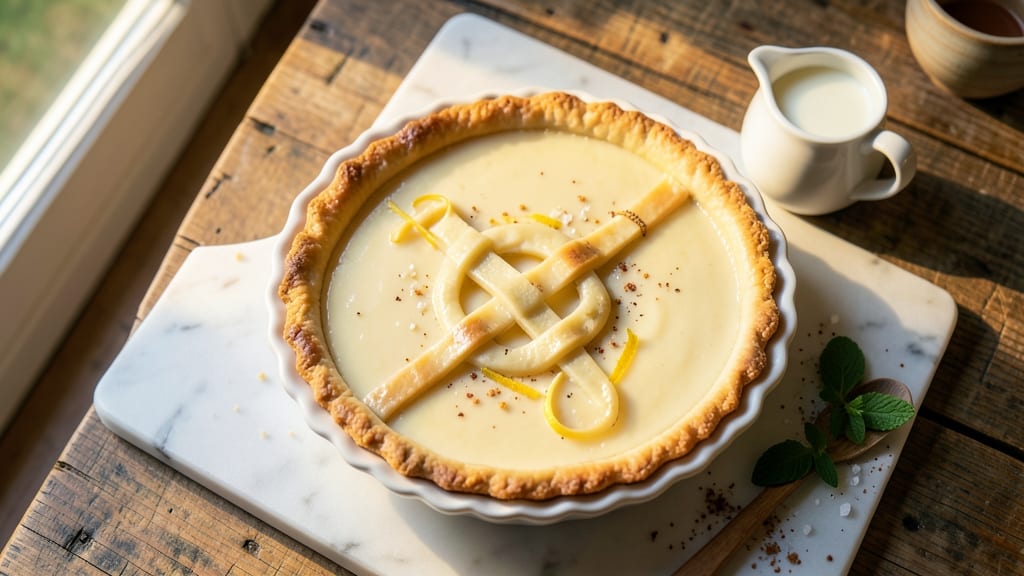
This sugar-free egg custard pie delivers all the creamy, velvety comfort of classic custard without the sugar crash. The secret lies in a carefully balanced sweetener blend and a foolproof technique that prevents graininess—something I perfected after testing multiple sugar substitutes.
What makes this recipe stand out is how it maintains that signature silky texture while keeping carbs in check, making it perfect for those watching their sugar intake without sacrificing indulgence.
The crust is made with a simple, vegetarian-friendly base that stays crisp yet tender, while the filling combines eggs, heavy cream, and a precise mix of stevia and erythritol for sweetness.
The key to success is tempering the eggs properly to avoid curdling, and baking at the right temperature ensures a smooth, jiggly center every time. This isn’t just another sugar-free dessert—it’s a game-changer for anyone who loves custard pie but needs to keep it guilt-free.
By the time it comes out of the oven, you’ll have a pie with a golden crust and a filling so creamy it practically melts in your mouth. The texture is velvety smooth, with no hint of graininess, and the subtle sweetness from the sugar substitutes is perfectly balanced.
It’s the kind of dessert that feels like a treat but won’t leave you crashing later.
Serve it warm with a sprinkle of cinnamon or a dollop of whipped cream, or enjoy it chilled for a refreshing dessert. Leftovers keep well in the refrigerator for up to 3 days, and the filling can even be made ahead and baked fresh when needed.
Here’s how to make it perfectly every time.
Ingredients for sugar free egg custard pie
Six ingredients for the filling, six for the crust—simple but game-changing.
| Ingredient | Amount | Notes |
|---|---|---|
| Large Eggs 🥚 | 4 whole | Room temperature preferred |
| Heavy Whipping Cream 🥛 | 1 ½ cups | Full-fat for best texture |
| Unsweetened Almond Milk 🥛 | ½ cup | Vanilla or plain works |
| Stevia Powder 🌿 | 1 tbsp | Pure stevia, no fillers |
| Erythritol 🍬 | ¼ cup | Finely granulated preferred |
| Vanilla Extract 🍯 | 1 tsp | Pure vanilla for flavor |
| Salt 🧂 | ¼ tsp | Fine sea salt preferred |
| Cornstarch 🌾 | 1 tbsp | For silky texture |
| Unsalted Butter 🧈 | ½ cup | Cold, cubed for crust |
| All-Purpose Flour 🌾 | 1 ½ cups | Sifted for light crust |
| Ice Water 💧 | ¼ cup | For pie crust binding |
| Ground Cinnamon 🌿 | ½ tsp | For garnish (optional) |
The eggs and cream are your foundation—room temperature is key to avoid curdling. Grab large eggs from the store (the bigger the better for custard), and full-fat cream for that velvety texture. For the sweetener blend, stevia and erythritol work together perfectly—stevia for intensity, erythritol for bulk. I always buy Wholesome Sweeteners brand erythritol because it dissolves smoothly. The vanilla extract should be pure—nothing imitation in this pie. If you're using store-bought crust, check for dairy-free labels if needed, but this homemade version is foolproof.
No stevia? Monk fruit sweetener at double the amount works, but test first. Out of almond milk? Coconut milk or cashew milk are great swaps. For the crust, butter must be cold—don't skip chilling it. If you're gluten-free, swap the flour for a 1:1 gluten-free blend. The cinnamon is optional but adds that classic dessert touch. Pro tip: Sift your flour for the crust—it makes all the difference in texture. And if you're worried about graininess, the cornstarch is your secret weapon. Trust me on that one.
This custard keeps beautifully—3 days in the fridge with the crust on, or up to 2 months frozen. For freezing, bake it first, then wrap tightly in plastic wrap. Reheat gently in the oven at 350°F for 15 minutes. The crust stays crisp if you reheat it covered with foil, then uncover for the last 2 minutes. Leftovers? I always make a double batch—one for now, one for later. The filling alone can be prepped ahead and baked fresh when needed, making this a perfect make-ahead dessert.
Why You'll Love This Recipe
- Here’s what sold me: the balance of richness and sweetness. Heavy cream and almond milk give it that velvety texture, while stevia and erythritol keep it just sweet enough—no cloying aftertaste. Honestly, I’ve tried sugar-free desserts that taste like diet food. This one doesn’t.
- No Fuss, No Fail: I’ll admit—this custard pie is one of those recipes where the ingredients just work. Whisk eggs, cream, and almond milk together, add a pinch of stevia and erythritol, and bake. That’s it. No tempering, no fancy techniques—just a silky-smooth filling that never curdles.
- Creamy Without Sugar: Here’s what sold me: the balance of richness and sweetness. Heavy cream and almond milk give it that velvety texture, while stevia and erythritol keep it just sweet enough—no cloying aftertaste. Honestly, I’ve tried sugar-free desserts that taste like diet food. This one doesn’t.
- Weeknight or Holiday: Between us, this pie is my secret weapon for two very different moments. On a Tuesday, I’ll pull it out for a quick breakfast with a sprinkle of cinnamon. On Sunday, I’ll add a dollop of whipped cream and serve it at brunch—no one suspects it’s sugar-free.
Step-by-step instructions for sugar-free egg custard pie
Here's how to create a luscious, sugar-free custard with a perfect crust—no crash, just creamy perfection.
Make the Sugar-Free Crust
In a large mixing bowl, combine the 1.5 cups all-purpose flour and 0.25 tsp salt. Cut in the 0.5 cup unsalted butter using a pastry cutter or your fingers until the mixture resembles coarse crumbs with pea-sized butter pieces remaining. This texture is crucial for flaky layers.
Gradually add the 0.25 cup ice water, one tablespoon at a time, mixing gently with a fork until the dough just comes together. Avoid overmixing—this creates tough crusts. Shape the dough into a disk, wrap in plastic, and chill in the refrigerator for at least 30 minutes. The cold dough prevents shrinking when rolled out.
Prepare the Sugar-Free Custard Filling
In a medium bowl, whisk together the 4 whole large eggs, 1.5 cups heavy whipping cream, and 0.5 cup unsweetened almond milk until smooth. In a separate small bowl, combine the 1 tbsp stevia powder, 0.25 cup erythritol, 1 tsp vanilla extract, and 1 tbsp cornstarch. Gradually whisk this dry mixture into the egg mixture until fully dissolved.
Add the 0.25 tsp salt and continue whisking until the mixture is completely smooth and homogeneous. The custard should be thick enough to coat the back of a spoon but still pourable. This is your sugar-free base—no gritty textures here, just velvety smoothness.
Assemble and Bake the Pie
Preheat your oven to 350°F. Roll out the chilled dough on a lightly floured surface to fit a 9-inch pie dish, about 1/8-inch thick. Transfer the dough to the dish, trim the edges, and crimp decoratively. Prick the bottom with a fork to prevent puffing.
Pour the custard filling into the prepared crust, spreading it evenly. Sprinkle the 0.5 tsp ground cinnamon over the top if using. Place the pie on a baking sheet (to catch any spills) and bake for 45-50 minutes until the custard is set but still slightly jiggly in the center. The edges should be golden brown, and the filling should pull away cleanly from the sides of the pie dish.
Chill and Serve
Remove the pie from the oven and let it cool at room temperature for 1 hour. Then, refrigerate for at least 4 hours or overnight. This chilling step is essential—it allows the custard to fully set and develop its signature silky texture without any graininess.
Serve slices straight from the refrigerator for that perfect creamy consistency. The custard should be smooth, rich, and completely free of that sugar crash you'd get from traditional recipes. Each bite delivers pure, velvety indulgence with just a hint of vanilla and cinnamon warmth.
Pro Tips For Making Sugar Free Egg Custard Pie
- Whisk Eggs Cold: Skip the warm-up—crack eggs straight from the fridge into a chilled bowl. I used to let them sit out, thinking it’d help them blend better, but cold eggs whip up smoother and prevent curdling when you add the hot cream later. Trust me, this isn’t the time to rush.
- Temper the Cream: Heat the heavy cream and almond milk just to steaming—not boiling—then drizzle it into the egg mixture while whisking like your life depends on it. I learned this the hard way when I dumped hot cream in all at once and ended up with scrambled eggs instead of custard. Go slow.
- Sweeten in Stages: Divide the stevia and erythritol—half in the custard base, half in the whipped topping. Stevia’s intensity can sneak up on you, and erythritol’s aftertaste needs balancing. Taste as you go; you can always add more, but you can’t take it out.
- Pre-Bake the Crust: Blind-bake the pie crust for 10 minutes at 375°F (200°C) with pie weights or dried beans before filling. This stops soggy bottoms and gives you time to focus on the custard without stressing. Yes, it’s an extra step—but your future self will thank you when the filling doesn’t leak like a sieve.
Creative variations of these flavors
Citrus Twist Variation
Brighten up your sugar-free custard with a zestier twist by adding 1 tbsp fresh lemon zest and 1 tbsp lemon juice to the custard mixture. This cuts through the richness while keeping it sweet.
I also like adding 2 tbsp orange liqueur (like Cointreau) for depth—just reduce the almond milk to 0.3 cups to balance. The citrus pairs beautifully with the vanilla and prevents any aftertaste from the sweeteners. 🍋
Spiced Chai Version
For a cozy, aromatic variation, swap the cinnamon for a warm spice blend of 0.5 tsp ground cardamom, 0.25 tsp ground ginger, and 0.25 tsp ground cloves.
Toast the spices lightly in a dry pan for 30 seconds to deepen their flavor, then whisk them into the custard mixture. Top with a sprinkle of crushed pistachios before baking for extra crunch. This version tastes like a hug in dessert form. ✨
Coffee Lover’s Adaptation
Turn your custard into a mocha-inspired treat by adding 2 tbsp instant espresso powder (or 1 shot of strong brewed coffee, cooled) to the custard mixture. For extra richness, fold in 2 tbsp chocolate chips (use 85% dark or sugar-free brands like Lily’s) after baking.
The coffee enhances the vanilla and balances the sweetness perfectly—no sugar crash here! ☕
Coconut Cream Swap
For a tropical twist, replace the heavy cream with 1.5 cups full-fat coconut cream (the thick part from a can, chilled overnight). Add 0.5 tsp coconut extract and 0.25 cup unsweetened shredded coconut to the crust before baking.
The coconut flavor complements the custard beautifully, and the texture stays velvety smooth. This version feels like a vacation in every bite. 🥥
Protein-Packed Boost
Make this custard more satisfying by stirring in 0.5 cup plain Greek yogurt (or 0.5 cup unsweetened coconut yogurt for dairy-free) after the custard cools slightly. This adds protein without altering the texture.
For extra richness, top with 1 tbsp chia seeds before baking—they add a subtle nutty flavor and extra fiber. Perfect for a dessert that keeps you full longer. 💪
Seasonal Berry Topping
Transform this into a fruit-forward dessert by layering 0.5 cup mixed berries (like raspberries or blackberries) between the crust and custard. For summer, use fresh berries; in winter, try thawed frozen berries (drained well).
Sprinkle 1 tsp chia seeds over the berries before adding the custard—they’ll thicken slightly and add texture. The berries add natural sweetness and a pop of color. 🍓
Nutrition facts
Frequently asked questions
Why does the custard turn grainy when using sugar substitutes?
The graininess happens when sugar substitutes like erythritol or stevia aren't fully dissolved or when the custard is overcooked. Always whisk the dry sweeteners into warm liquid first, then combine with eggs. Also, remove the pie from the oven when the center is slightly jiggly—not fully set. The custard will thicken as it cools.
Can I make this pie without a crust?
For a crustless version, bake the custard in a 9-inch oven-safe dish>, then chill until set. Top with whipped cream and a sprinkle of cinnamon or crushed nuts. The texture stays velvety smooth—just be sure to bake it at 325°F (instead of 350°F) for 30-35 minutes> to prevent browning.
How do I fix a watery custard?
Watery custard usually means the eggs weren't tempered properly or the oven wasn't hot enough. To fix it, preheat your oven to 375°F> and bake for an extra 10-15 minutes>. If it's still too thin, sprinkle a thin layer of cornstarch over the top and bake for another 5 minutes> to thicken it.
Is this recipe keto-friendly?
Yes! This custard pie is keto-friendly when made with full-fat cream and erythritol/stevia> (check labels for net carbs). The crust contains 1.5 cups flour>, so for strict keto, replace it with a low-carb almond flour crust>. The filling alone has about 2g net carbs per serving> (without crust).
Can I use this filling for individual custard cups?
Perfect for mini desserts! Divide the custard among 6-8 ramekins>, bake at 350°F for 25-30 minutes**>, then chill. For a fancy touch, top with a dollop of whipped cream and a sprinkle of cinnamon. The baking time is shorter because the custard needs less time to set in smaller containers.