
Desserts
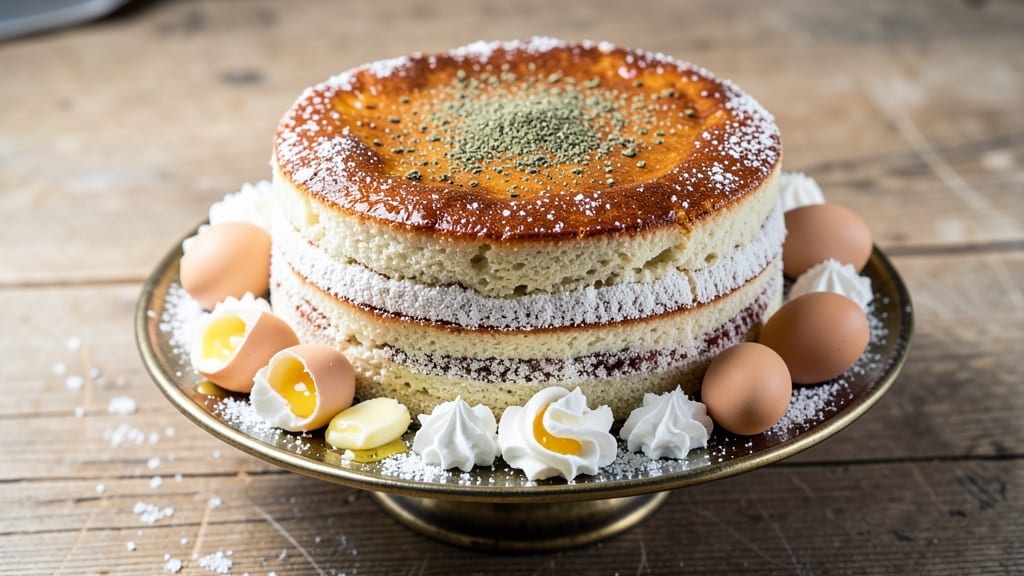
This Swedish egg cake recipe delivers the delicate, airy texture that makes it a Scandinavian classic—light as a cloud yet sturdy enough to hold its shape. The secret lies in precise egg separation and gentle folding, creating layers of tender crumb with a buttery crunch at the edges.
I've perfected this technique over years of baking, ensuring every slice is moist without being dense, with just the right hint of cardamom to transport you straight to a Swedish café.
The magic happens in the method: room-temperature eggs whipped to soft peaks, combined with a delicate batter that's folded—not stirred—to preserve those precious air pockets. A touch of lemon zest brightens the flavor, while almond flour adds subtle nuttiness if you prefer a gluten-free option.
Baking at 350°F (175°C) for 35-40 minutes yields a golden dome with crisp edges, all while keeping the interior impossibly tender.
What you'll end up with is a cake that's light enough to melt in your mouth yet sturdy enough to slice cleanly—perfect for special occasions or when you want to impress guests without hours of baking.
The aroma alone will fill your kitchen with warmth, and each bite delivers that perfect balance of buttery richness and delicate sweetness.
Serve it fresh with whipped cream and berries or store it in an airtight container for up to three days. The flavor only deepens with time, making it an ideal dessert to prepare ahead for gatherings. Let's get started on creating this timeless Swedish treat.
Ingredients for swedish egg cake
Eggs, butter, and flour—this Swedish classic turns simple ingredients into clouds of joy.
| Ingredient | Amount | Notes |
|---|---|---|
| Large Eggs 🥚 | 8 whole | Room temperature for best volume |
| Granulated Sugar 🍚 | 1 ½ cups | Superfine preferred for smooth texture |
| Unsalted Butter 🧈 | 1 cup | Cold, cubed for even melting |
| All-Purpose Flour 🌾 | 2 cups | Sifted for lightness (or gluten-free 1:1) |
| Almond Flour 🌰 | ½ cup | For subtle nuttiness and moisture |
| Ground Cardamom 🌿 | 1 tsp | True Scandinavian flavor (or cinnamon) |
| Baking Powder 🧂 | 1 tsp | Lightens the crumb beautifully |
| Salt 🧂 | ¼ tsp | Diamond Crystal preferred |
| Lemon Zest 🍋 | 1 tbsp | Brightens the flavor profile |
| Vanilla Extract 🌸 | 1 tsp | Pure Madagascar preferred |
| Heavy Cream 🥛 | ½ cup | For extra richness (or coconut cream) |
| Powdered Sugar 🍚 | ¼ cup | For dusting finished cake |
The eggs are non-negotiable here. Room temperature is key—cold eggs won't whip properly. Grab the largest eggs you can find (they yield more volume), and if you're in a pinch, separate them yourself for maximum freshness. For the butter, I always use European-style unsalted (like Plugrá) if I can find it—it's higher in fat content and gives that perfect buttery crunch. Cardamom is the soul of this cake, so don't substitute unless you're okay with cinnamon's milder cousin. Whole Foods or Penzeys carry good quality, but the spice aisle at Trader Joe's works too.
No cardamom? Cinnamon plus a pinch of nutmeg gets you close, though it won't be authentic. Running out of almond flour? Extra flour plus a tablespoon of almond extract mimics the nuttiness. The heavy cream can be swapped for coconut cream if you're avoiding dairy, though the texture will be slightly denser. For the sugar, superfine is ideal, but if you only have regular granulated, pulse it in a food processor for 10 seconds. The lemon zest should be freshly grated—pre-packaged zest loses its punch fast. And if you're gluten-free, King Arthur's 1:1 blend works perfectly here.
This cake keeps beautifully. Wrap tightly in plastic wrap and store at room temperature for 2-3 days—the flavor actually improves as it sits. For longer storage, freeze slices wrapped individually for up to 3 months. To reheat, pop them in a 250°F oven for 5 minutes—they'll taste like they just came out of the oven. I always make a double batch because it disappears faster than you'd think, especially when dusted with powdered sugar and served with whipped cream and berries.
Why You'll Love This Recipe
- No-Fuss Mixing: I swear by this recipe—just whisk eggs, sugar, and butter until light, then fold in flours. No creaming, no sifting, no stress. The almond flour keeps it tender without extra work.
- Buttery Sweet Magic: That perfect balance of sugar and butter? It’s like a cross between a cake and a custard, but richer. The eggs give it a silky texture, while the almond flour adds a subtle nutty depth you’ll want more of.
- Breakfast or Dessert: Serve it warm with jam for a cozy morning treat, or dust it with powdered sugar for an after-dinner bite. Honestly, I’ve even packed slices for lunch—it’s that versatile.
- Leftovers That Don’t Suck: Unlike most cakes, this one actually tastes better the next day. Slice it up, store it in the fridge, and reheat for a quick, budget-friendly snack. My kids beg for it, and that’s the real test.
Step-by-step instructions for Swedish egg cake
Here's how to create those legendary light-as-air layers with crispy buttery edges.
Whip Eggs and Sugar to Ribbon Stage
In a stand mixer fitted with the whisk attachment, combine the 8 whole large eggs and 1.5 cups granulated sugar. Whip on medium-high speed for 3-4 minutes until the mixture turns pale yellow and forms soft peaks when the whisk is lifted. This step is crucial—you want to incorporate plenty of air for that signature light texture.
I like to stop occasionally and scrape down the sides of the bowl with a spatula to ensure even mixing. You'll know you've reached the right consistency when the mixture holds its shape when you lift the whisk but still flows slightly when tilted. This is what creates those delicate, airy layers in the final cake.
Melt Butter and Add to Egg Mixture
In a separate heatproof bowl, melt the 1 cup unsalted butter over a bowl of simmering water (double boiler method). Once completely melted and smooth, remove from heat and let it cool for 2-3 minutes until it's just warm to the touch.
With the mixer running on low speed, gradually pour the melted butter into the egg mixture. Increase speed to medium and whip for another 2 minutes until fully incorporated and the mixture is thick and glossy. The butter should be completely emulsified—no streaks should remain. This step adds the rich, buttery flavor that balances the cake's delicate sweetness.
Combine Dry Ingredients and Fold Gently
In a medium bowl, whisk together the 2 cups all-purpose flour, 0.5 cup almond flour, 1 tsp baking powder, 0.25 tsp salt, 1 tsp ground cardamom, 1 tbsp lemon zest, and 1 tsp vanilla extract. Sift the dry ingredients through a fine-mesh sieve directly into the bowl to prevent lumps.
With a rubber spatula, gently fold the dry ingredients into the egg mixture in three additions, being careful not to deflate the air you've incorporated. The batter should be smooth but still slightly thick—like heavy pudding. Overmixing at this stage will make the cake dense. If you're using gluten-free flour, follow the package instructions for best results, but handle it gently to maintain that light texture.
Fold in Heavy Cream and Prepare Pans
Add the 0.5 cup heavy cream to the batter and fold it in gently with the spatula until just combined. The cream adds extra richness and helps create that signature moist crumb. Don't overmix—just enough to distribute it evenly throughout the batter.
Preheat your oven to 350°F. Grease three 9-inch round cake pans (or two 9-inch and one 8-inch) with butter and line the bottoms with parchment paper. Lightly grease the parchment too so the cakes release easily. Divide the batter evenly among the prepared pans—you should have about 2/3 cup per pan for even layers.
Bake Layers to Perfect Doneness
Bake the cakes for 20-25 minutes, or until the tops are golden brown and a toothpick inserted in the center comes out clean. The cakes should spring back slightly when pressed gently in the center. Rotate the pans halfway through baking for even browning.
Remove the cakes from the oven and let them cool in their pans for 5 minutes. Then invert them onto a wire rack to cool completely. This cooling step is important—it allows the cakes to set properly before assembling. While they cool, you can prepare your filling if using, or simply dust with 0.25 cup powdered sugar for a classic presentation. The cakes should be light enough to hold their shape when stacked, with a delicate crumb that practically dissolves in your mouth.
Pro Tips For Making Swedish Egg Cake
- Melt Butter Slowly: If you dump cold butter into the sugar-egg mixture, you’ll end up with lumps that never dissolve. Instead, melt the butter first—just until it’s liquid but not browned—then let it cool slightly before mixing. I used to rush this, and the cake turned out greasy and uneven.
- Sift Those Flours: Almond flour and all-purpose flour clump like a nightmare when dry. Sift them together before adding to the batter, especially if you’re using store-bought almond flour (which is often coarse). This guarantees a lighter texture—no one wants a dense, brick-like cake.
- Don’t Overmix the Batter: Once you fold in the dry ingredients, stop mixing the second everything is just combined. Overmixing introduces too much air, which can cause the cake to sink or develop a tough crumb. Think "gentle swirls, not a blender."
- Bake at 325°F, Not Hotter: Swedish egg cake relies on a slow, even bake to set properly without cracking. If you crank the oven to 350°F or higher, the outside will brown too fast while the center stays wet—leading to a gummy mess. Stick to the lower temp and check for doneness at 40 minutes, not before.
Dietary considerations for this dish
Gluten-Free Adaptations
Swap the 2 cups all-purpose flour for a 1:1 gluten-free baking blend like King Arthur's Measure for Measure. I've tested this blend specifically for Swedish egg cake—it maintains the delicate crumb while adding subtle nuttiness from the almond flour already in the recipe.
For best results, sift the gluten-free flour through a fine-mesh sieve before mixing to prevent clumping. The texture will be slightly denser but still light, especially if you use xanthan gum-free blends to avoid any gummy aftertaste. 🌾
Dairy-Free Options
Replace the 1 cup unsalted butter with Earth Balance vegan butter or Miyoko's creamery butter for a 1:1 swap that mimics the rich, creamy texture. For the 0.5 cup heavy cream, use full-fat coconut cream chilled overnight—it thickens beautifully when whipped.
The cardamom flavor remains unchanged, but the cake will have a slightly tropical note that pairs wonderfully with the citrus zest. Always melt dairy-free butter using the double boiler method to prevent burning. 🥛
Egg-Free Substitutions
This is tricky but doable! Replace the 8 large eggs with a flax egg mixture (8 tbsp ground flaxseed + 24 tbsp water) for binding, plus 1 cup aquafaba (chickpea brine) whipped to stiff peaks to mimic the airiness.
The aquafaba must be reduced slightly by simmering for 5 minutes before whipping to achieve proper volume. For the sugar mixture, add 1 tbsp apple cider vinegar to the wet ingredients to help activate the baking powder.
The texture will be more compact but still delightful when paired with fresh berries. 🥚
Lower Sugar Versions
Reduce the 1.5 cups granulated sugar to 1 cup and add 2 tbsp monk fruit sweetener (like Lakanto) blended into the dry ingredients. The cake will still be sweet but with a more pronounced cardamom flavor.
For extra moisture, increase the heavy cream to 0.75 cups—this prevents dryness that often occurs with sugar reduction. I've found that baking at 325°F (163°C) for 30 minutes yields a perfectly tender crumb without over-browning. 🍚
Nut-Free Adjustments
Omit the 0.5 cup almond flour and replace it with an extra 0.5 cup all-purpose flour (or gluten-free blend). To compensate for the lost moisture, add 1 tbsp ground sunflower seed flour—it mimics the texture without nutty flavor.
The cake will maintain its lightness but lose the subtle nuttiness. For a richer alternative, use 0.5 cup oat flour (blended oats) which adds a pleasant earthiness. Always ensure your oats are certified gluten-free if needed. 🌰
Nutrition facts
Frequently asked questions
Why does Swedish egg cake need to be baked in layers?
The layering technique creates that signature light-as-air texture. Each thin layer bakes quickly, preserving moisture while developing a delicate crumb. The butter and eggs create steam during baking, which expands between the layers for an ethereal result. Without this method, the cake would be denser and heavier.
Can I make this cake without cardamom?
Yes, but the flavor will differ. For an authentic taste, use 1 tsp cinnamon plus ¼ tsp nutmeg as a substitute. If you prefer a more neutral profile, simply omit it—though the cardamom is what makes this cake distinctly Scandinavian. The lemon zest will still provide brightness to balance the sweetness.
How do I prevent the cake from sinking in the middle?
Ensure your oven is fully preheated to 350°F (175°C) and don't open the oven door during baking. Use round cake pans for even heat distribution, and bake until a toothpick comes out clean. For extra insurance, place the pans on a baking sheet lined with parchment paper to catch any potential drips.
What's the best way to store leftover Swedish egg cake?
Wrap individual slices tightly in plastic wrap and store at room temperature for up to 3 days. For longer storage, freeze slices for 3 months. To reheat, warm in a 250°F (120°C) oven for 5 minutes—this restores the moist texture without drying it out.
Can I use this recipe for a gluten-free version?
Replace the all-purpose flour with a 1:1 gluten-free baking blend like King Arthur's Measure for Measure. Sift the flour first to prevent lumps, and consider adding 1 tbsp ground sunflower seed flour for better texture. The texture will be slightly denser but still light and delicious.