
Breakfast & Brunch
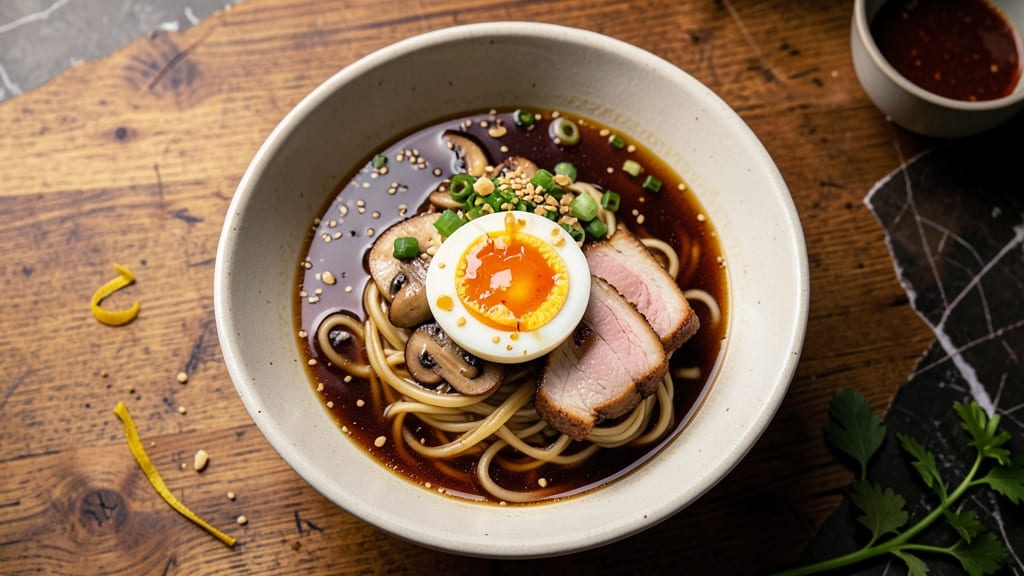
This tamago ramen egg recipe transforms a simple egg into a luxurious centerpiece for your bowl—silky yolk ribbons that melt into rich broth with every spoonful. 💛 The secret lies in marination and gentle cooking, creating an egg with a delicate custard texture and deep umami flavor that elevates every bite of ramen.
Traditional tamago uses a precise balance of soy sauce, mirin, and dashi to infuse the egg with layers of savory-sweet complexity. I’ve refined the method to ensure the egg stays tender and the yolk remains velvety, never dry or rubbery.
The key is steaming or simmering just until set, preserving that signature cloud-like texture.
What you’ll end up with is an egg that practically dissolves into your broth, releasing ribbons of golden yolk that coat each noodle with luxurious richness.
The marination process is straightforward—just a few hours in the refrigerator—but the reward is an egg that tastes like it belongs in a high-end ramen shop.
Serve it nestled in a hot bowl of ramen, where the contrast of cool egg and steaming broth creates the ultimate dining experience. Whether you’re making classic shoyu ramen or experimenting with spicy miso, this tamago will take your bowl to the next level. Let’s get started!
Ingredients for tamago ramen egg
Four eggs, a few pantry staples, and a touch of Japanese magic transform into silky tamago.
| Ingredient | Amount | Notes |
|---|---|---|
| Large Eggs 🥚 | 4 whole | Fresh, room temperature |
| Soy Sauce 🍶 | ½ cup | High-quality, like Kikkoman |
| Mirin 🍶 | ¼ cup | Sweet cooking rice wine |
| Dashi Stock 🍲 | ½ cup | Homemade or quality bottle |
| Sugar 🍚 | 1 tbsp | White granulated |
| Sesame Oil 🫒 | 1 tsp | Toasted, for aroma |
| Water 💧 | ¼ cup | Room temperature |
| Kombu Seaweed 🍃 | 1 piece | Dried, for dashi infusion |
| Bonito Flakes 🐟 | 1 tbsp | For dashi depth |
| Ramen Broth 🍜 | 2 cups | Homemade or store-bought |
| Salt 🧂 | ½ tsp | Fine sea salt |
| Vegetable Oil 🫒 | 1 tbsp | For greasing ramekins |
| Rice Vinegar 🍶 | 1 tsp | Optional, for brightness |
The eggs are the star, so freshness matters. Grab the largest eggs you can find—they’ll have more yolk for those signature ribbons. For the soy sauce and mirin, Kikkoman and Otafuku are my go-tos, but any quality brands work. If you’re making dashi from scratch, kombu and bonito flakes are essential—don’t skip them. The broth you use (store-bought or homemade) should be rich and flavorful. If you’re using instant ramen packets, boost it with a splash of soy sauce and a pinch of miso for depth. For the sesame oil, toasted is a must—it adds that nutty aroma that elevates everything.
No mirin? Substitute with 1 tbsp sugar + 1 tbsp dry sherry. Short on dashi? Use kombu alone in water for 10 minutes, then strain. The sugar can be swapped for honey if you prefer, but white granulated keeps it classic. If you’re making a big batch, double the marinade and use larger ramekins. For the rice vinegar, it’s optional but adds a bright contrast to the rich flavors. And if you’re worried about the eggs breaking during cooking, chill the ramekins for 10 minutes before steaming—it helps them hold together better.
Marinated eggs keep for up to 3 days in the fridge, but the texture is best within 24 hours. To reheat, steam for 8-10 minutes—no boiling! For the marinade leftovers, reduce it by half and drizzle over noodles. The dashi stock can be frozen for up to 3 months, and the kombu piece can be reused once. Store the sesame oil in a dark place to preserve its flavor. And if you’re making a crowd-friendly version, scale up the marinade and use a larger steamer—just keep the egg-to-marinade ratio the same.
Why You'll Love This Recipe
- Five-Ingredient Magic: I swear by this combo—just eggs, soy sauce, mirin, dashi, and sugar. That’s it. No chopping, no fuss, just crack, whisk, and pour. The hardest part is waiting for the eggs to set.
- Umami Bomb: The moment that rich dashi stock meets the silky egg? Pure flavor payoff. The mirin adds that sweet-savory depth, and the soy sauce ties it all together like a cozy blanket on a cold day.
- Leftover Goldmine: Tamago ramen eggs reheat like a dream—just a quick dip in hot broth or microwave, and they’re back to creamy perfection. I’ve fed a crowd with these for days, and no one complains.
- Budget Chef’s Secret: Dashi stock might sound fancy, but it’s just kombu and bonito flakes—cheap, easy, and packs more flavor than half the takeout menus I’ve tried. Eggs and soy sauce? Pantry staples. This is cooking on a dime.
Step-by-step instructions for tamago ramen eggs
Here's how to make restaurant-quality tamago ramen eggs with perfectly silky yolks.
🍳 Step 1: Prepare the Dashi Base
In a small saucepan, combine the 1 piece kombu seaweed, 1 tbsp bonito flakes, and 0.25 cup water. Bring to a gentle simmer over medium heat for 5 minutes—you'll see delicate bubbles forming and a subtle aroma rise. This is your dashi foundation, where the kombu and bonito release their umami depth.
Strain through a fine-mesh sieve into a clean bowl, pressing gently on the seaweed to extract every bit of flavor. Discard the kombu and bonito. To this strained dashi, add the 0.5 cup dashi stock, 0.5 cup soy sauce, 0.25 cup mirin, and 1 tbsp sugar. Stir until the sugar dissolves completely—this sweet-savory broth will be the marinade for your eggs.
👨🍳 Step 2: Marinate the Eggs
Crack all 4 whole large eggs into a bowl, being careful not to break the yolks. Whisk gently just until the whites are slightly blended—you want to maintain some texture for the final set. Pour the warm dashi mixture over the eggs and stir gently to combine. Let this marinate at room temperature for 30 minutes.
Here's the thing—this marinade does more than flavor. The mirin tenderizes the eggs slightly while the soy sauce adds depth, and the sugar helps create that signature glossy sheen. Don't skip this step; it's what transforms ordinary eggs into silky, ribbon-like tamago.
🔥 Step 3: Steam the Eggs to Perfection
Grease four 4-ounce ramekins with 1 tbsp vegetable oil—this prevents sticking and helps create that beautiful dome shape. Divide the marinated egg mixture evenly among the ramekins, filling each about ¾ full. Cover each ramekin with aluminum foil, then place them in a steamer basket over 1 inch of boiling water.
Steam for 12-15 minutes until the eggs are just set but still slightly jiggly in the center. You'll know they're ready when the tops spring back when gently pressed—this gives you that perfect custard-like texture. Don't overcook; you want those silky ribbons, not a firm egg.
🥘 Step 4: Finish with Sesame Oil and Vinegar
Remove the ramekins from the steamer and let them cool for 5 minutes. Invert each egg onto a plate, tapping gently to release. Drizzle each with ½ tsp sesame oil and a pinch of 0.5 tsp salt, then finish with a tiny splash of 1 tsp rice vinegar. The sesame oil adds aroma, the salt enhances flavor, and the vinegar brings brightness.
For serving, gently reheat 2 cups ramen broth until steaming. Place one tamago egg in each bowl, then ladle the hot broth over it. Watch as the silky yolk ribbons melt into the broth with each spoonful—this is the moment that makes tamago ramen so special.
Pro Tips For Making Tamago Ramen Egg
- Use Room-Temp Eggs: Cold eggs from the fridge will fight you—whisking them into the hot broth makes for lumpy, uneven curds. Take them out 20 minutes before cooking and let them sit in warm water for 5 minutes first. Trust me, the difference in smoothness is night and day.
- Simmer, Don’t Boil: I used to crank the heat and end up with rubbery eggs every time. Keep the broth at a gentle simmer—tiny bubbles at the edges, not a rolling boil. If it’s too hot, the eggs will cook unevenly and lose that silky texture we’re after.
- Balance Mirin to Sugar: Skip measuring the sugar if you’re using cheap mirin—it’s already got sugar in it. For good mirin, use half the sugar called for in the recipe. After burning through three batches of overly sweet tamago, I learned to taste the mirin first.
- Slip the Egg In: Don’t pour the egg mixture straight into the broth—it’ll break apart. Use a spoon to gently slide it underneath the surface, then let it float. This keeps the yolk intact and gives you that perfect marbled look when you flip it. (Yes, even if you’re impatient like me.)
Wine and beer pairings for these flavors
Light Japanese Sake
For tamago ramen, a dry junmai ginjo sake like Suntory Tokkuri is my go-to pairing. Its crisp, clean profile cuts through the richness of the egg and broth without overpowering the delicate flavors.
Serve slightly chilled (45-50°F) to enhance the umami notes in the tamago. The subtle sweetness of junmai ginjo complements the soy-mirin marinade beautifully—it’s like a sip of Japanese comfort. 🍶
Hoppy IPA Contrast
If you prefer beer, a West Coast-style IPA (like Stone Ruination) brings an exciting contrast. The citrusy hops balance the egg’s richness, while the malty backbone stands up to the ramen broth.
I recommend pouring it slightly warmer than usual (50-55°F) to let the hop aromas shine alongside the tamago’s silky texture. It’s an unexpected but delicious pairing that surprised even my skeptical ramen-loving friends. 🍺
Umami-Rich Miso Beer
For a more traditional Japanese beer pairing, try a lacto-fermented miso beer like Kirin Ichiban. The funky, fermented notes mirror the dashi and soy sauce in the tamago, creating a harmonious flavor bridge.
Serve at cellar temperature (55°F) to let the beer’s complexity complement rather than compete with the egg’s delicate custard texture. This is my secret weapon for impressing guests who think beer and ramen don’t mix. 🍻
Sweet White Wine
A dry Riesling from Germany’s Mosel region adds a refreshing acidity that cleanses your palate between bites. The mineral notes in the wine echo the kombu in the dashi, while its slight sweetness balances the soy sauce.
I like Dr. Loosen Blue Slate, which has enough body to stand up to the rich broth. Chill it to 48-50°F for the perfect sip alongside tamago ramen. 🍷
Spiced Sake Cocktail
For something special, mix 2 oz junmai sake, ½ oz yuzu juice, and a pinch of shichimi togarashi for a spicy-sweet cocktail. The citrus brightens the tamago’s richness, while the chili adds a subtle kick that pairs wonderfully with the egg’s custardy texture.
Serve over ice with a yuzu peel garnish—this is my favorite way to elevate a tamago ramen night into a memorable experience. ✨
Nutrition facts
Frequently asked questions about tamago ramen eggs
Why do tamago ramen eggs have silky ribbons instead of firm yolks?
The secret is in the gentle cooking method! Steaming (not boiling) creates a custard-like texture that melts into delicate ribbons when hot broth touches it. The marinade with mirin and sugar also tenderizes the eggs, preventing them from becoming rubbery.
Can I make tamago ramen eggs without a steamer?
Use a double boiler with 1 inch of simmering water below the ramekins. Or try a water bath in a baking dish—just ensure the water doesn't touch the ramekins. The key is gentle, indirect heat for 12-15 minutes to avoid overcooking.
How do I fix eggs that came out too firm?
If your tamago turned out more like a regular egg, try reheating gently in the microwave for 10-15 seconds with a splash of water. The moisture helps restore some of that silky texture. For next time, check doneness by pressing gently—they should jiggle slightly in the center.
Can I use this tamago recipe with other broths?
Yes! The marinade works beautifully with miso, tonkotsu, or even spicy broths. Just adjust the seasoning—add ½ tsp gochugaru for spicy ramen or 1 tsp miso paste for deeper umami. The technique stays the same, but the flavor profile changes dramatically.
How long can I store tamago ramen eggs?
They're best eaten fresh, but you can refrigerate them for up to 3 days in an airtight container. For longer storage, freeze the marinated eggs in ramekins (before cooking) for up to 1 month. Thaw overnight in the fridge, then steam as directed. The texture won't be identical, but it's still delicious!