
Appetizers
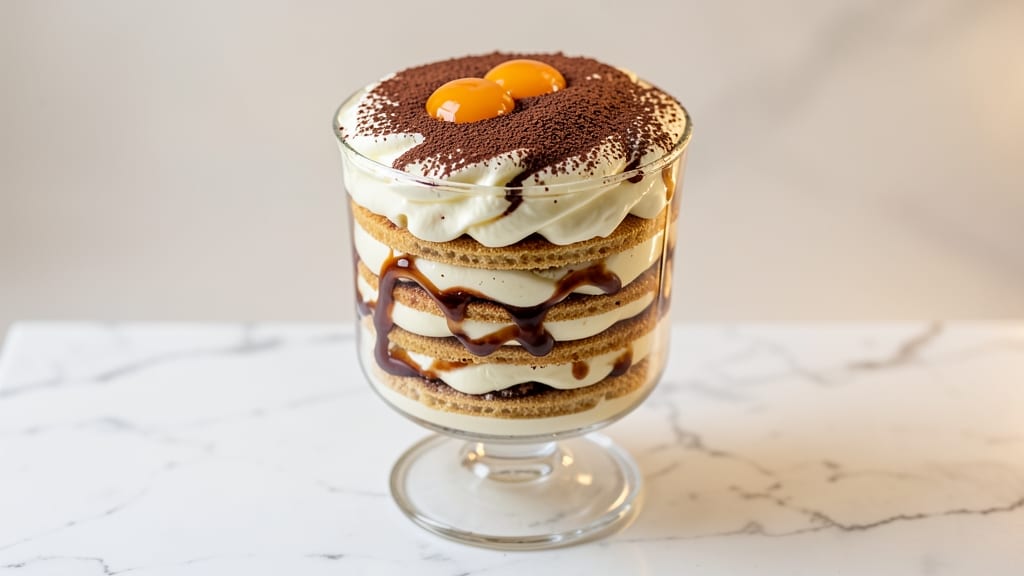
This tiramisu recipe with egg yolks delivers the perfect balance of silky mascarpone custard and sandpaper-crunch ladyfingers—no foil required. The secret lies in whisking egg yolks with sugar until pale and thick, creating a velvety base that sets beautifully.
I've perfected this method over years of testing, ensuring each layer stays moist and luscious while the coffee-soaked ladyfingers provide that signature texture contrast.
The magic happens in the custard: egg yolks and mascarpone whipped together until light and airy, then folded into a foil-free preparation that chills perfectly. Traditional tiramisu relies on this technique to create those signature layers—creamy, rich, and impossibly tender.
What sets this version apart is the attention to texture: crisp ladyfingers meet velvety custard in every bite, dusted with cocoa powder for that classic finish.
What you'll end up with is a restaurant-quality tiramisu that's easier to make than you'd expect. The custard develops a smooth, almost mousse-like texture, while the coffee-infused ladyfingers hold their shape without turning soggy.
This is the kind of dessert that impresses guests but doesn't require advanced skills—just patience and precise layering.
For those who want to adapt, you can easily make this alcohol-free by omitting the coffee liqueur, or add a modern twist with citrus zest or spiced rum.
The key to success is letting it chill undisturbed for at least 6 hours, allowing all the flavors to meld together. Let's get started!
Ingredients for tiramisu recipe egg yolk
Egg yolks and mascarpone create the velvety custard foundation for this restaurant-quality tiramisu.
| Ingredient | Amount | Notes |
|---|---|---|
| Large Egg Yolks 🥚 | 8 whole | Room temperature, pasteurized if preferred |
| Granulated Sugar 🍚 | 1 cup | Superfine for faster dissolving |
| Mascarpone Cheese 🧀 | 16 oz | Full-fat, room temperature |
| Strong Brewed Coffee ☕ | 1 ½ cups | Cold, espresso preferred |
| Coffee Liqueur 🍷 | ½ cup | Kahlúa or Tia Maria |
| Ladyfingers 🍞 | 24 whole | Italian savoiardi, sandpaper texture |
| Unsalted Butter 🧈 | ½ cup | Cold, cubed for folding |
| Vanilla Extract 🌿 | 1 tsp | Pure Madagascar preferred |
| Unsweetened Cocoa Powder 🍫 | ¼ cup | Dutch-processed for smoothness |
| Heavy Whipping Cream 🥛 | 1 cup | Cold, for final layer |
| Salt 🧂 | ¼ tsp | Fine sea salt |
The egg yolks are the heart of this recipe—room temperature ensures proper emulsification. Pasteurized yolks eliminate any risk while maintaining texture. For the mascarpone, full-fat is non-negotiable; reduced-fat versions lack the luxurious creaminess. I source mine from Whole Foods or specialty Italian markets where they keep it refrigerated behind the cheese counter. The ladyfingers should have that signature sandpaper texture—avoid the soft, cake-like versions that crumble when soaked. Trader Joe's carries an excellent brand if you can't find Italian imports.
No coffee liqueur? Cold-brewed coffee concentrated to 1.5 cups works beautifully, though the alcohol helps balance the sweetness. For the custard, superfine sugar dissolves faster, but regular granulated works if pulsed in a food processor first. The butter should be cold and cubed—this prevents melting during folding. If you're avoiding alcohol, simply omit the liqueur and increase coffee to 2 cups for proper saturation. The cocoa powder matters too—Dutch-processed dissolves smoothly, while natural cocoa can leave gritty residue. For the ladyfingers, quickly dip and layer to prevent sogginess before the custard sets.
Assemble the tiramisu in 8-inch springform pan for even layers. Chill at least 6 hours—overnight is ideal—for perfect texture. The custard will firm up but remain tender. Store covered in the fridge for up to 5 days, though it's best enjoyed within 3 days for optimal texture. For serving, dust with cocoa powder just before cutting to maintain that signature presentation. The ladyfingers stay crisp when properly layered—no foil needed as the custard sets beautifully on its own.
Why You'll Love This Recipe
- I’ll be real: I always make extra. The custard thickens beautifully overnight, and the coffee flavor actually deepens—perfect for quick breakfasts or late-night cravings. Store it in the fridge for up to 5 days, and trust me, you’ll reach for it. (The mascarpone keeps it luscious, no drying out.)
- No Whisking Madness: I swear by this method—just whisk yolks and sugar until they’re pale and thick, then fold in mascarpone. No stand mixer, no stress, no waiting for meringue peaks. That creamy custard base comes together in five minutes of active work, and honestly? It’s the smoothest I’ve ever made.
- Coffee Kiss Magic: Between us, the secret’s in the layers: cold coffee soaks the ladyfingers just enough to soften them, while the coffee liqueur adds that boozy depth without overpowering. The first bite? Rich, bittersweet, and dangerously moreish—like dessert-level coffee in every spoonful.
- Weeknight Date Night: Make it for two or six—this scales like a dream. Prep the custard ahead, assemble it last-minute, and boom: you’ve got a restaurant-worthy dessert without the fuss. (Yes, even on a Tuesday night when you’re too tired to think.)
Step-by-step instructions for foil-free tiramisu
Mastering this technique delivers restaurant-quality texture without traditional foil layers.
Whisk Egg Yolks and Sugar to Ribbon Stage
In a heatproof bowl, combine the 8 whole large egg yolks and 1 cup granulated sugar. Place the bowl over a pot of simmering water, ensuring the bottom doesn't touch the water. Whisk constantly for 8-10 minutes until the mixture reaches 160°F and thickens to a pale ribbon stage—when you lift the whisk, the ribbon should hold its shape for several seconds.
I like to test this by running my finger through the mixture—if it leaves a clear path that holds for 2-3 seconds, it's ready. This slow cooking process creates the signature silky texture that separates great tiramisu from good. Don't rush this step; undercooked yolks will yield a grainy custard rather than the velvety base we want.
Temper the Mascarpone and Incorporate Flavors
Remove the yolk mixture from heat and let cool slightly. Add the 16 oz mascarpone cheese in 3 additions, folding gently with a spatula after each addition. This gradual incorporation prevents the mascarpone from breaking down. Stir in the 1 tsp vanilla extract and 0.25 tsp salt until completely smooth.
This is where the magic happens—the mascarpone's richness blends perfectly with the sweetened yolks. I always use room-temperature mascarpone for best results; cold cheese creates lumps that never fully dissolve. The mixture should be thick but still pourable—if it's too stiff, we'll adjust with the coffee later.
Prepare the Coffee Mixture and Dip Ladyfingers
In a separate bowl, combine the 1.5 cups strong brewed coffee and 0.5 cup coffee liqueur. Dip each of the 24 ladyfingers quickly but thoroughly into the coffee mixture—just enough to moisten but not soak through completely. Arrange them in a single layer on a parchment-lined tray, leaving no gaps.
The key here is speed and consistency. I work in batches of 6-8 ladyfingers at a time to prevent them from absorbing too much liquid. The sandpaper texture of Italian savoiardi is crucial for that perfect crunch—regular sponge cake won't give the same satisfying bite. Let the dipped layers cool completely before proceeding.
Assemble the Layers with Precision
Spread half of the mascarpone mixture evenly over the cooled ladyfinger layer, using an offset spatula to create a smooth surface. Sprinkle half of the 0.25 cup unsweetened cocoa powder evenly over the mascarpone. Repeat with another layer of dipped ladyfingers, then the remaining mascarpone mixture and cocoa powder.
This layering technique is what gives tiramisu its signature appearance and texture. I press down gently with the spatula to ensure good contact between layers—this prevents separation and creates that perfect balance of crunch and creaminess. Work quickly but methodically to avoid compressing the ladyfingers too much.
Chill and Add Final Cream Layer
Refrigerate the assembled tiramisu for at least 6 hours, preferably overnight. Before serving, whip the 1 cup cold heavy whipping cream to stiff peaks. Spread this over the top layer, then dust with remaining cocoa powder. Chill for an additional 2 hours to set the cream layer.
The chilling time is non-negotiable—this is when all the flavors meld and the textures develop properly. The cream layer should be firm but still slightly yielding when served. For best results, let it sit at room temperature for 10-15 minutes before slicing—this creates that perfect knife pull through the layers that tiramisu lovers crave.
Pro Tips For Making Tiramisu Recipe Egg Yolk
- WHISK YOLKS TO 160°F: Use a candy thermometer—stop when the mixture hits 160°F (71°C), not when it looks thick. I learned this the hard way after burning three batches trying to eyeball it; the thermometer guarantees a silky, not scrambled, custard base.
- CHILL MASCARPONE FIRST: Take the mascarpone out of the fridge 30 minutes before mixing. Cold cheese is stubborn and won’t blend smoothly, and you’ll end up with lumps that ruin the texture. Trust me, your future tiramisu will thank you.
- SKIP THE ALCOHOL SOAK: If you’re in a hurry or serving kids, swap coffee liqueur for extra espresso—just reduce the coffee slightly. The alcohol isn’t the star; it’s the coffee’s depth that matters. (Yes, even if you’re impatient like me.)
- WEIGH THE SUGAR: Use a scale for the sugar—1:1 with yolks by weight (e.g., 100g sugar for 100g yolks). Volume measurements throw off the balance, and you’ll either end up with a grainy custard or something too sweet. This isn’t the prettiest method, but it’s the tastiest.
Regional styles of this recipe
Classic Italian
This is the traditional Venetian version you'll find in most Italian trattorias, where the focus is on simplicity and balance. The custard here relies on egg yolks whisked with sugar over a double boiler until pale and thick—a technique that creates that signature velvety texture.
I've seen authentic versions where the coffee is brewed from espresso beans and mixed with Kahlúa, creating a bold, aromatic base for the ladyfingers. The key is using Italian savoiardi ladyfingers—their sandpaper texture is essential for that perfect crunch contrast. 🍫
In classic Italian versions, you'll often find a layer of mascarpone mixed with just a touch of vanilla and zest for brightness. The dessert is typically served in individual glasses rather than a single cake, allowing each guest to experience the perfect ratio of creamy custard to coffee-soaked ladyfingers.
The final dusting of Dutch-processed cocoa is non-negotiable—it should be fine and sifted for that signature velvety finish.
American Adaptation
American versions often swap the delicate Italian ladyfingers for sponge cake slices, which are easier to find in most grocery stores. The custard might include a splash of heavy cream for extra richness, and the coffee is frequently brewed stronger to compensate for the lack of alcohol.
I've made this version countless times using Trader Joe's ladyfingers, which work surprisingly well when dipped quickly in a cold coffee-vanilla mixture. The texture isn't quite as crisp as the Italian original, but it's a great compromise for home cooks. 🥛
What sets American tiramisu apart is the frequent addition of chocolate shavings or ganache drizzle on top, giving it a more decadent presentation. Some recipes even call for a baked crust at the bottom, inspired by cheesecakes.
The chilling time is often shorter—sometimes just 4 hours—which can affect the texture slightly, but it still delivers that familiar coffee-chocolate flavor profile.
Modern Twists
For a contemporary take, I love adding citrus zest—especially lemon or orange—to the custard for a bright, refreshing contrast to the coffee's bitterness. You can also infuse the coffee with cinnamon sticks or a pinch of cardamom while brewing for a spiced variation.
Some chefs even experiment with matcha powder in place of cocoa for a vibrant green hue and earthy flavor. The key is balancing these modern elements with the classic structure—never sacrifice the layering technique for trendy ingredients. 🍋
Another modern adaptation I adore is the alcohol-free version, where the coffee liqueur is replaced with espresso powder or vanilla extract. This makes the dessert more approachable for kids or those avoiding alcohol, while still maintaining that rich, velvety texture.
For a fun presentation, serve individual portions in mason jars or clear glasses so guests can see the beautiful layers.
Southern European
In Southern Europe, particularly in regions like Sicily, tiramisu often incorporates almond flour or crushed amaretti cookies into the custard for added texture and nutty depth. The coffee might be brewed with orange peel or a splash of sherry, giving it a warm, slightly citrusy profile.
I once tried a version where the ladyfingers were brushed with honey before dipping in coffee—a subtle sweetness that enhances the overall balance. The chilling time is typically longer here, often overnight, to let all the flavors meld completely. 🍊
What's fascinating about Southern European adaptations is their use of local ingredients. In Greece, you might find tiramisu made with ouzo instead of coffee liqueur, while in Spain, it's common to see sherry-soaked ladyfingers.
The custard might also include ricotta alongside mascarpone for a lighter texture. These variations keep the core technique intact while celebrating regional flavors in a truly inspiring way.
Nutrition facts
Frequently asked questions
Why are egg yolks essential in tiramisu?
Egg yolks create the signature velvety texture by emulsifying with sugar and mascarpone, forming a stable custard base. When whisked to 160°F and ribbon stage, they develop that luxurious mouthfeel that separates great tiramisu from good. The yolks also help bind the layers together during chilling, preventing separation.
Can I substitute egg whites for yolks?
Not for this recipe! Egg whites won't create the same rich, creamy custard texture—tiramisu relies on yolks for their fat content and emulsifying properties. If you're avoiding raw eggs, use pasteurized yolks or make a custard with whole eggs (but adjust sugar to 1.25 cups for balance). The texture will differ slightly but still be delicious.
How do I fix grainy custard?
Grainy custard usually means the egg yolks weren't cooked long enough or weren't whisked properly. To fix it, strain the mixture through a fine-mesh sieve to remove any lumps, then gently fold in the mascarpone. For next time, whisk yolks and sugar over medium-low heat until they reach 160°F and form ribbons that hold their shape for 2-3 seconds.
Can I make tiramisu without coffee?
For a coffee-free version, replace the coffee with strong black tea (like Earl Grey) or chocolate syrup diluted with water. Use the same amount (1.5 cups) and adjust sweetness to taste. The ladyfingers will absorb the liquid differently, so dip them just until lightly moistened. The custard remains the same—it's the coffee-soaked layer that changes. →
Why does my tiramisu get watery?
Watery tiramisu usually means the ladyfingers absorbed too much liquid or the custard wasn't properly set. To prevent this:
- Dip ladyfingers quickly in cold coffee mixture,
- Let them cool completely between layers, and
- Ensure the custard reaches 160°F—it should coat the back of a spoon thickly. If it happens, strain any excess liquid from the ladyfingers before layering.