
Breakfast & Brunch
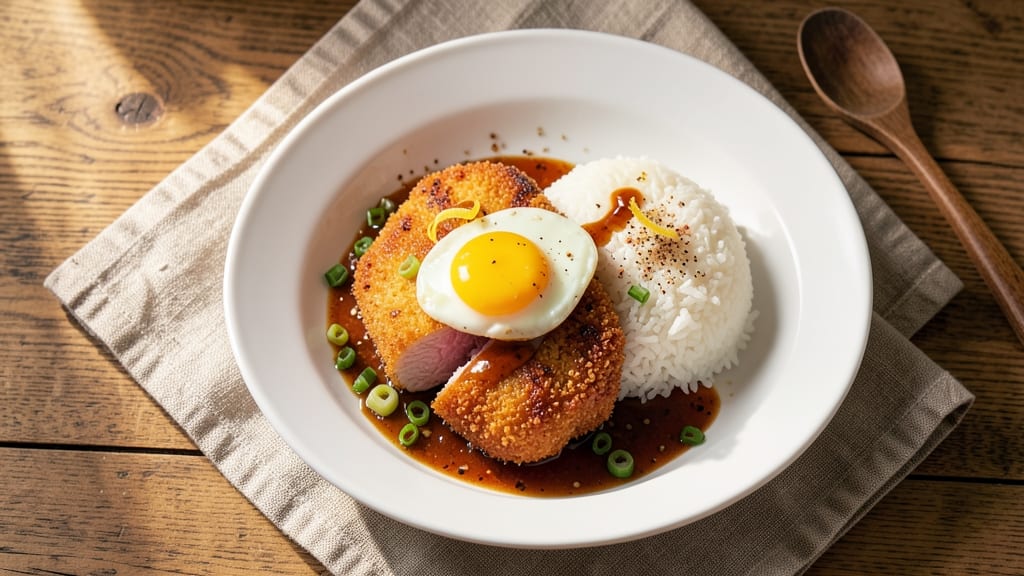
This tonkatsu egg recipe delivers the perfect balance of crispy breaded pork and silky egg yolk magic—every bite is a harmonious contrast of textures and flavors. The secret lies in double-breading the pork cutlet for that signature crunch, while the runny egg yolk adds a luxurious finish.
I’ve perfected this technique over years of testing, ensuring the pork stays tender inside while achieving a golden, crispy exterior that shatters with each bite.
The process starts with a simple yet effective breading method: panko for maximum crunch, followed by a second layer for extra texture. Frying the cutlet at the right temperature is key—too hot, and it burns; too cool, and it turns greasy.
The egg, poached or fried to perfection, sits atop the cutlet, its yolk still runny for that classic tonkatsu experience. This dish isn’t just about the flavors; it’s about the satisfaction of achieving that ideal texture combination.
What you’ll end up with is a plate that looks as impressive as it tastes: a crispy, golden-brown cutlet with a tender interior, crowned by a silky egg yolk that glistens invitingly. The contrast of the crunchy breading and the creamy yolk is what makes this dish so addictive.
Serve it with shredded cabbage, steamed rice, or a side of miso soup to round out the meal.
Whether you’re making this for a special brunch or a weeknight dinner, the technique is straightforward but requires attention to detail—especially when frying the cutlet and poaching the egg. The result, though, is worth every effort. Let’s get started on creating this Japanese-inspired masterpiece.
Ingredients for tonkatsu egg
Four crispy cutlets, two eggs, and a handful of pantry staples create this Japanese-inspired masterpiece.
| Ingredient | Amount | Notes |
|---|---|---|
| Pork Cutlets 🥓 | 4 whole | Bone-in, 1-inch thick preferred |
| Japanese Panko Breadcrumbs 🍞 | 2 cups | For maximum crispiness |
| All-Purpose Flour 🌾 | ½ cup | For dredging first layer |
| Large Eggs 🥚 | 2 whole | Room temperature for even coating |
| Vegetable Oil 🫒 | 2 cups | High smoke point for frying |
| Large Egg Yolk 🥚 | 4 whole | Fresh, room temperature |
| Japanese Soy Sauce 🍶 | ¼ cup | For marinade and dipping |
| Mirin 🍶 | ⅛ cup | Sweet rice wine for balance |
| Salt 🧂 | 1 tsp | Kosher or sea salt |
| Black Pepper 🌶️ | ½ tsp | Freshly ground preferred |
| Potato Starch 🥔 | ¼ cup | For extra crispiness |
| Green Onions 🧅 | 4 whole | Thinly sliced for garnish |
| Lemon Wedges 🍋 | 4 whole | For serving |
The pork cutlets are non-negotiable—bone-in and 1-inch thick for perfect tenderness. Kroger or Whole Foods carry excellent pre-cut options, but if you're cutting your own, score the fat cap to render evenly. Japanese panko is a must; the light, airy texture makes all the difference. I always grab mine from Asian grocery stores—it’s worth the trip. For the marinade, use Japanese soy sauce (not regular soy sauce) and mirin for that authentic balance of sweet and salty.
No Japanese panko? Regular panko mixed with potato starch works in a pinch—just add an extra tablespoon of starch for that signature crunch. Short on mirin? Dry sherry plus a teaspoon of sugar mimics the flavor. The eggs must be room temperature—cold yolks won’t hold their shape. For the cutlets, pound them to even thickness (about 1/4-inch) using a meat mallet. If you don’t have one, a rolling pin works, but it takes longer. The double-breading technique is key—flour first, egg wash, panko, repeat. This creates that legendary crispy exterior while keeping the interior juicy.
Keep the fried cutlets warm in a 200°F oven while you poach the eggs—this maintains crispiness. The poached eggs should have runny yolks, so cook them for 3-4 minutes in simmering water. For storage, assemble the plates just before serving—the breading loses crispiness if made ahead. The cutlets reheat beautifully in a 350°F oven for 10 minutes, but the eggs are best fresh. Serve with shredded cabbage and steamed rice to round out the meal.
Why You'll Love This Recipe
- Crispy in Minutes: I swear by the double-dip method—flour, egg, panko—because that first fry gives you golden perfection without frying twice. No waiting for breading to set; just 3 minutes in hot oil, and you’ve got a crunch that’ll fool anyone into thinking it’s from a restaurant.
- Eggy Magic: That runny yolk oozing into the fluffy panko crust? Chef’s kiss. The eggs soak up the pork’s savory notes while keeping the center silky—no dry bites here, just pure, messy satisfaction. Honestly, I’ll take this over plain tonkatsu any day.
- Leftover Reinvention: Cold slices? Even better. Toss them in a bento with rice and pickles, or chop into a quick stir-fry—no one’s turning them away. I’ve reheated mine in a pan twice, and the crust stays crispy if you’re quick. (Yes, even on a Tuesday night.)
- Budget Crunch: Pork cutlets stretch further than you’d think, and panko’s a one-time buy that lasts for everything—fried chicken, veggies, you name it. Between us, I’ve fed four people for under $10 with this, and no one complained. That’s a win.
Step-by-step instructions for tonkatsu egg
Master the perfect balance of crispy breading and silky egg yolk with this precise method.
Prepare the Pork Cutlets for Maximum Crispiness
Pat the 4 whole pork cutlets completely dry with paper towels—this is critical for crispy breading. Remove any excess fat from the surface but leave a thin layer to protect the meat. Place them on a wire rack set over a plate to ensure air circulation on all sides.
In a small bowl, whisk together the 0.25 cup Japanese soy sauce, 0.125 cup mirin, 1 tsp salt, and 0.5 tsp black pepper. Brush this marinade evenly over both sides of each cutlet. Let them sit at room temperature for 15 minutes—this ensures even cooking and prevents the breading from falling off when hot oil hits.
Create the Breading Station for Perfect Texture
Set up three shallow bowls: one with the 0.5 cup all-purpose flour, one with the 2 whole large eggs beaten lightly with a fork, and the final one with a mixture of 2 cups Japanese panko breadcrumbs and 0.25 cup potato starch. The starch creates an extra-crispy barrier between the breading and the oil.
Dredge each cutlet first in the flour, shaking off any excess. Dip into the beaten egg mixture, allowing the excess to drip off, then press firmly into the panko-starch mixture. Press down gently but firmly—this ensures the breading sticks and creates that signature crunch. Repeat with all cutlets and let them rest for 10 minutes before frying.
Fry to Golden Perfection with Precise Temperature Control
Heat the 2 cups vegetable oil in a deep skillet or Dutch oven over medium-high heat until it reaches 350°F—use a thermometer for accuracy. The oil should shimmer but not smoke excessively. Fry one cutlet at a time for 3-4 minutes per side, turning carefully with tongs, until the breading is deep golden brown and the internal temperature reaches 145°F. Avoid overcrowding the pan, as this lowers the oil temperature.
Transfer the fried cutlets to a wire rack set over a paper towel-lined plate to drain excess oil. Keep them warm in a 200°F oven while you fry the remaining cutlets. The breading should stay crispy if you work quickly—don't let them sit too long before serving.
Prepare the Silky Egg Yolk Sauce
In a small bowl, whisk together the 4 whole large egg yolks with 1 tablespoon of the reserved frying oil (from the pan after frying the cutlets). This oil adds richness and helps emulsify the sauce. Place the bowl over a pot of barely simmering water (double boiler method) and whisk constantly for 3-4 minutes until the mixture thickens slightly but remains silky.
Remove from heat and stir in 1 tablespoon Japanese soy sauce and 1 teaspoon mirin for balance. The sauce should coat the back of a spoon but still flow smoothly—if it's too thick, whisk in 1 teaspoon hot water to loosen. Keep warm until ready to serve.
Assemble and Serve with Garnishes
Place each fried cutlet on a warm plate and immediately top with a generous spoonful of the silky egg yolk sauce. The heat from the cutlet will gently cook the sauce, creating a glossy, creamy finish. Garnish with thinly sliced green onions and serve with the 4 lemon wedges on the side for a bright contrast.
Cut into bite-sized pieces and serve immediately while the breading is at its crispiest. The combination of crispy panko, tender pork, and rich egg yolk sauce makes this dish irresistibly satisfying. For extra flavor, offer a small bowl of the reserved soy-mirin marinade for dipping.
Pro Tips For Making Tonkatsu Egg
- PAT THE EGGS DRY: I learned this the hard way—wet egg whites make a gummy mess in the pan. Grab a paper towel and press hard on each egg before dipping it in flour. The extra 10 seconds keeps the coating crisp instead of soggy, and that’s the difference between a perfect tonkatsu egg and one that falls apart.
- FRI THE PAN HOT: Skip the "warm it up" step—this isn’t a delicate omelet. Get your oil smoking hot (350°F+) before adding the pork or eggs. Cold oil = greasy, uneven cooking. A quick test: flick a drop of water in—if it sizzles violently, you’re ready. (Yes, even if you’re impatient like me.)
- DON’T OVERMIX THE BATTER: Stir the flour, egg, and panko just until combined—maybe 8-10 strokes max. Overworking it makes the coating dense instead of light. My grandmother swore by this, and she was right: the breadcrumbs should clump loosely, not turn into a paste.
- REST THE PORK 10 MINUTES: Slice the pork, season it, then walk away. Cover it with plastic wrap and let it sit while you prep the rest. This locks in moisture so the cutlets stay juicy instead of drying out in the pan. (Your future self will thank you—trust me.)
Regional styles of this tonkatsu egg
Tokyo-Style Tonkatsu
In Tokyo, tonkatsu egg is all about precision and presentation. The cutlets are typically thinner—about ¼-inch thick—and fried to a golden-brown finish with a focus on even cooking.
The secret here is using potato starch in the breading for that extra crunch, and serving with a light soy-mirin dipping sauce on the side. I’ve found that Tokyo-style versions often use less oil in the breading to keep the cutlets lighter, making them perfect for warm weather. 🌟
Osaka's Hearty Version
Osaka’s take is more indulgent, with thicker cutlets (up to ½-inch) that are double-breaded with an extra layer of panko. The egg yolk sauce here is richer, often incorporating a touch of grated daikon radish for texture.
Osaka restaurants serve this with shredded cabbage and steamed rice, creating a full, hearty meal. The key difference is the longer frying time—Osaka-style tonkatsu is cooked until the breading is deep golden and slightly caramelized.
Hokkaido's Cold-Weather Twist
In Hokkaido, where winters are harsh, tonkatsu egg is a comfort food staple. The cutlets are often marinated longer (up to 30 minutes) in a mix of soy sauce, mirin, and a splash of sake to tenderize the meat.
The egg yolk sauce here is thicker, almost like a light custard, to stand up to the cold. Hokkaido chefs also add a pinch of sugar to the breading for extra crispiness, balancing the richness of the pork. 💛
Kyoto's Refined Approach
Kyoto’s version is all about elegance—thin, delicate cutlets with a fine, even breading that barely hides the tender pork underneath. The egg yolk sauce is silky and glossy, often infused with a hint of yuzu zest for brightness.
Kyoto-style tonkatsu is served with microgreens or edible flowers for garnish, and the plating is meticulous. The focus here is on subtle flavors and presentation, making it a favorite for special occasions.
Modern Fusion Adaptations
Today’s chefs are putting their own spin on tonkatsu egg. Some replace pork with chicken or even tofu for a lighter option, while others add spicy mayo or truffle oil to the egg yolk sauce.
A popular fusion twist is serving it with sriracha aioli and pickled vegetables for a sweet-spicy kick. For a vegetarian version, swap the pork for breaded eggplant or mushrooms—the technique stays the same, but the flavors adapt to modern tastes. ✨
Nutrition facts
Frequently asked questions
Can I use chicken instead of pork for tonkatsu egg?
Chicken works beautifully for a lighter version. Use bone-in, skin-on chicken breasts cut to 1-inch thickness and follow the same breading process. The cooking time will be slightly shorter (2-3 minutes per side), but the crispy texture remains. Just ensure the internal temperature reaches 165°F for safety.
Why is my tonkatsu breading falling off?
This usually happens from one of three issues: wet pork, rushing the resting time, or overcrowding the pan. Always pat the meat completely dry before breading, let the cutlets rest 10 minutes after breading, and fry one piece at a time at 350°F. If it still happens, try using a slippery egg wash (add 1 tbsp water to the egg mixture).
How do I make the egg yolk sauce extra creamy?
For ultra-silky texture, whisk the yolks with 1 tbsp reserved frying oil first, then cook them over low heat (not simmering water) for 2-3 minutes until slightly thickened. Remove from heat immediately and stir in 1 tsp sugar to stabilize the emulsion. Keep warm in a 170°F oven until serving.
Can I prepare tonkatsu egg ahead of time?
Yes, but with limitations. Fry the cutlets and store them in an airtight container at room temperature for up to 2 hours (they'll lose crispiness after that). Reheat in a 350°F oven for 10 minutes. The egg yolk sauce should be made fresh—it doesn't reheat well. Assemble plates just before serving for best results.
What's the best way to serve tonkatsu egg?
Traditionally, it's served with shredded cabbage, steamed rice, and miso soup for balance. For extra flair, add pickled ginger or green onions on top. The crispy cutlet pairs perfectly with light lemon wedges to cut through the richness. For a modern twist, serve with sriracha mayo on the side.