
Breakfast & Brunch
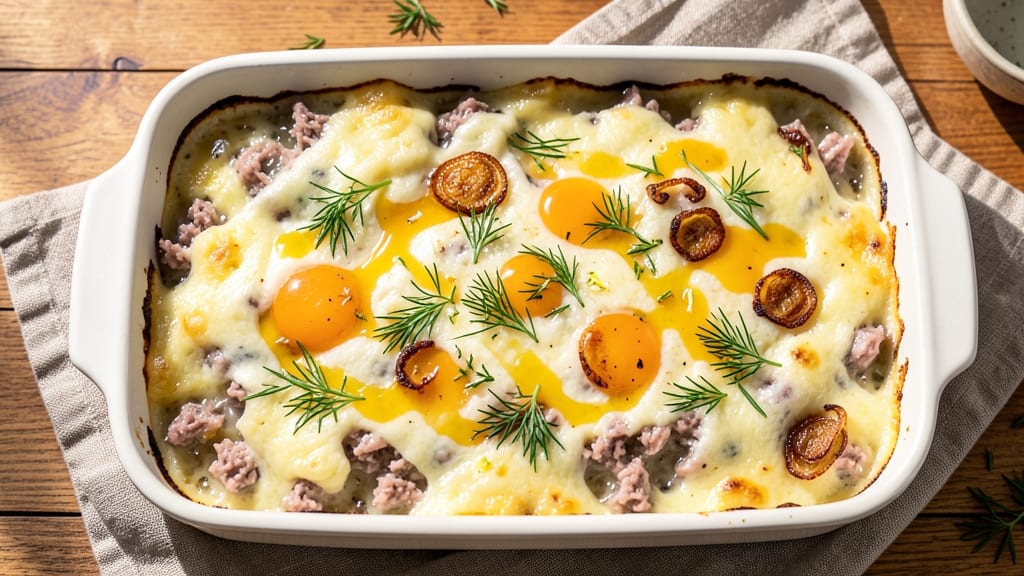
This tuna and egg casserole recipe transforms simple pantry staples into a restaurant-worthy breakfast with a crispy golden top and creamy, custardy egg filling. The secret lies in layering a savory tuna mixture, rich egg custard, and buttery breadcrumbs—a technique that ensures every bite delivers perfect texture contrast.
I developed this dish after testing countless variations, and it consistently delivers that satisfying crunch while keeping the eggs tender and flavorful. The beauty of this casserole is its versatility—it’s pescatarian-friendly (no meat required) but packed with umami from the tuna, and the optional cheese adds a luxurious touch.
Baking at 350°F for 25–30 minutes guarantees a crispy exterior that holds up beautifully, while the custard layer remains silky and rich. The dish reheats well too, making it ideal for meal prep or feeding a crowd. What makes this recipe stand out is how it balances simplicity with depth.
The tuna layer provides a salty, protein-rich base, while the egg custard adds creaminess, and the breadcrumb topping delivers that irresistible crunch. It’s the kind of dish that feels indulgent yet effortless—perfect for weekend brunches or lazy weeknight breakfasts when you crave something hearty but still light.
Serve it with steamed greens or crusty bread to soak up every last bit of that golden, crispy goodness. Here’s how to make it—step by step—for foolproof results every time.
Ingredients for tuna and egg casserole
Pantry staples meet restaurant-quality technique for this crispy-topped, creamy egg casserole.
| Ingredient | Amount | Notes |
|---|---|---|
| Canned Tuna in Water 🐟 | 2 cans | Drained, high-quality preferred |
| Large Eggs 🥚 | 8 whole | Room temperature for even cooking |
| Heavy Cream 🥛 | 1 cup | Full-fat for optimal richness |
| Milk 🥛 | ½ cup | Whole milk preferred |
| All-Purpose Flour 🌾 | ¼ cup | For custard thickening |
| Salt 🧂 | 1 tsp | Diamond Crystal preferred |
| Black Pepper 🌶️ | ½ tsp | Freshly ground for best flavor |
| Garlic Powder 🧄 | ½ tsp | For umami depth |
| Dried Dill 🌿 | 1 tsp | Or 1 tbsp fresh chopped |
| Panko Breadcrumbs 🍞 | 1 cup | For crispy topping |
| Unsalted Butter 🧈 | ¼ cup | Melted, cold for crispiness |
| Shredded Cheddar Cheese 🧀 | ½ cup | Optional for added richness |
| Lemon Juice 🍋 | 1 tbsp | Freshly squeezed |
| Mayonnaise 🥫 | 2 tbsp | For tuna layer binding |
| Fresh Chives 🌿 | 2 tbsp | Chopped, for garnish |
The tuna selection matters—high-quality canned tuna in water (like Wild Planet or StarKist) avoids fishy aftertaste. For the eggs, room temperature ensures even cooking throughout. Heavy cream and whole milk create that luxurious custard texture, but half-and-half works in a pinch. The flour is non-negotiable for thickening; all-purpose works best—avoid cake flour. For the breadcrumbs, Panko stays crispy while regular breadcrumbs turn soggy. I always grab extra—half goes on top, half gets sprinkled in the tuna layer for texture contrast.
No heavy cream? Full-fat Greek yogurt at half the amount adds tanginess. Dried dill lacks freshness, but one-third the amount of fresh works if you're stocked. The optional cheese? Parmesan or Gruyère adds depth without overpowering. For the tuna layer, mayonnaise binds everything—no mayo? Use a mix of sour cream and a splash of milk. The lemon juice brightens the whole dish, so freshly squeezed is ideal. Preferring a different herb? Fresh parsley or chives both work beautifully.
This casserole reheats beautifully—350°F for 10–15 minutes restores crispiness. Store leftovers covered for 3–4 days in the fridge or 3 months frozen. For meal prep, assemble the dish but skip baking until serving—the topping stays crispy longer. Garnish with extra chives right before serving to keep that fresh pop of color and flavor. The dish also freezes exceptionally well—portion into individual servings for easy grab-and-bake breakfasts.
Why You'll Love This Recipe
- Here’s what sold me: that golden top crust from the eggs and cream, crackling like a French toast but with a salty, briny punch underneath. It’s the kind of dish where every bite feels like a little victory.
- Pantry-to-Table Magic: I swear by this one—open the can, crack the eggs, stir. That’s it. No chopping, no searing, no fancy techniques. The tuna and flour thicken into a creamy, fluffy mess that’s somehow better than takeout.
- Creamy Crunch Surprise: Here’s what sold me: that golden top crust from the eggs and cream, crackling like a French toast but with a salty, briny punch underneath. It’s the kind of dish where every bite feels like a little victory.
- Lunchbox Hero: Between us, this is my go-to for meal prep. Make a big batch on Sunday, portion it into containers, and boom—protein-packed lunches for the week. My kids actually eat it cold, and I eat it straight out of the fridge. (Yes, even on a Tuesday night.)
Step-by-step instructions for tuna and egg casserole
Master the perfect balance of crispy breadcrumb crust and velvety egg custard with these precise techniques.
Prepare the Tuna Mixture for Even Distribution
In a large mixing bowl, combine the drained 2 cans canned tuna in water with the 2 tablespoons mayonnaise, 1 tablespoon lemon juice, 1 teaspoon dried dill, 0.5 teaspoon garlic powder, 0.5 teaspoon black pepper, and 1 teaspoon salt. Gently fold until fully integrated—this ensures the tuna remains tender rather than breaking apart during baking.
Here's the thing—don't overmix. The tuna should be evenly distributed but still hold its shape. If you mash it too aggressively, you'll end up with a dense, unappetizing texture. I like to use a silicone spatula for this step to avoid crushing the tuna pieces.
Create the Creamy Egg Custard Base
In a separate bowl, whisk together the 8 whole large eggs with the 1 cup heavy cream, 0.5 cup milk, and 0.25 cup all-purpose flour until smooth and fully combined. This is where the magic happens—the flour acts as a natural thickener to create that signature creamy texture without requiring additional stabilizers.
Season with an additional 0.5 teaspoon salt and 0.25 teaspoon black pepper (since the tuna mixture already contains seasoning). The custard should be uniform in color with no visible flour streaks. If you notice any lumps, strain it through a fine-mesh sieve for a perfectly silky finish.
Assemble the Casserole for Optimal Texture
In a well-greased 9x13-inch baking dish, spread the tuna mixture evenly across the bottom. Then carefully pour the egg custard mixture over the tuna, tilting the dish gently to ensure even distribution. The custard should reach about ¾ inch from the top edge—this prevents overflow during baking.
Sprinkle the 0.5 cup shredded cheddar cheese evenly over the custard, followed by the 1 cup panko breadcrumbs. Finally, drizzle the 0.25 cup melted unsalted butter over the breadcrumbs. This layering technique creates the signature crispy crust while keeping the custard rich and creamy underneath.
Bake to Golden Perfection with Precision Timing
Preheat your oven to 350°F and place the assembled casserole on the middle rack. Bake for 45-50 minutes until the top is deep golden brown and the edges are set. The custard should be just set in the center—it will continue thickening as it rests.
Here's where attention to detail matters: The breadcrumb crust should be crispy enough to hold its shape when lifted, while the custard underneath should jiggle slightly in the center. If it's browning too quickly, tent the dish with foil for the last 10 minutes to prevent over-browning while allowing the center to finish cooking.
Rest and Garnish for Restaurant-Quality Presentation
Remove the casserole from the oven and let it rest for 10-15 minutes before serving. This resting period allows the custard to fully set and redistribute its moisture, preventing a watery texture. The contrast between the crispy top and creamy interior develops during this time.
Before serving, sprinkle the 2 tablespoons chopped fresh chives evenly over the top. The chives add a bright, fresh finish that cuts through the richness of the cheese and eggs. Cut into squares and serve warm—each bite should deliver that perfect combination of crispy, creamy, and savory flavors we're after.
Pro Tips For Making Tuna And Egg Casserole
- Drain and Pat the Tuna: That canned tuna liquid is sneaky—it’ll turn your casserole into a watery mess if you don’t handle it right. Drain the tuna thoroughly, then press it between paper towels to soak up every last drop. I learned this the hard way after serving a batch that tasted more like tuna broth than a creamy dish.
- Whisk the Eggs Like Mad: Don’t just crack and stir—beat those eggs until the yolks and whites are fully blended and the mixture is smooth. Lumps in the egg mixture mean uneven cooking and a grainy texture. Use a fork or whisk for 30 seconds after cracking, even if it feels like overkill.
- Preheat the Pan Properly: A cold pan means a sad, greasy casserole. Heat your baking dish (or skillet, if stovetop) over medium heat for 2–3 minutes before adding the tuna mixture. This helps the bottom set faster and prevents the eggs from scrambling into a rubbery mess.
- Stir in the Cream Last: Heavy cream and milk are delicate—adding them too early makes the flour absorb them before the eggs can bind. Mix the dry ingredients first, then stir in the tuna and eggs, and only fold in the cream right before baking. This keeps the texture light and creamy, not gluey.
Common mistakes when making your tuna and egg casserole
Overmixing Tuna
I’ve ruined more casseroles than I’d admit by overmixing the tuna layer. When you mash the tuna too aggressively, it turns into a dense, unappetizing paste that bakes into a rubbery mess. Instead, gently fold the tuna with a silicone spatula—just until the seasonings are evenly distributed.
The pieces should still hold their shape slightly. This keeps the texture light and flaky, just like fresh tuna salad. 🐟
Skipping the Rest
One of the biggest mistakes is cutting into the casserole immediately after baking. That crispy top you worked so hard for will turn soggy, and the custard will be watery. Let it rest for 10-15 minutes—this allows the custard to fully set and the flavors to meld.
Trust me, the contrast between the crispy top and creamy interior develops during this time. Patience pays off here! ⏳
Uneven Layering
If your tuna mixture isn’t spread evenly in the baking dish, you’ll end up with pockets of raw egg or dry, overcooked tuna. Take your time to spread the tuna layer in an even ¼-inch thickness across the bottom of the dish.
Then, pour the custard slowly, tilting the dish to ensure it covers the tuna uniformly. The goal is a consistent texture in every bite. 🌡️
Overbrowning the Top
Watch that breadcrumb topping like a hawk—it’s easy to burn it while the custard underneath stays undercooked. If the top starts browning too quickly, tent the dish with foil for the last 10 minutes of baking.
This prevents over-browning while allowing the center to finish cooking. The crust should be golden and crispy, not charred. 🔥
Using the Wrong Breadcrumbs
Not all breadcrumbs are created equal. Regular breadcrumbs will turn mushy and soggy under the heat, but Panko stays crispy thanks to its light, airy texture. If you’re short on Panko, toast regular breadcrumbs in a dry skillet for 2-3 minutes before using them—they’ll hold up better.
Don’t skip this step, or you’ll lose that satisfying crunch. 🍞
Incorrect Custard Thickness
The custard is the heart of this dish, and if it’s too thin, it’ll end up watery and unappetizing. Whisk the 0.25 cup flour into the egg mixture thoroughly to create a smooth, thick custard.
If you notice lumps, strain it through a fine-mesh sieve for a silky finish. A properly thickened custard holds its shape and delivers that rich, creamy texture we love. 🥚
Nutrition facts
Frequently asked questions
Can I make this casserole ahead of time?
Assemble the casserole completely (including the breadcrumb topping) and refrigerate it uncovered for up to 24 hours before baking. This helps the flavors meld and creates an even crispier crust when baked. For best results, bake it straight from the fridge at 350°F for 50-55 minutes, adding 5-10 minutes to account for the cold start.
What can I substitute if I don't have panko?
Use regular breadcrumbs, but toast them first in a dry skillet for 2-3 minutes until golden. This prevents sogginess. For extra crispiness, mix in 1 tablespoon cornstarch per ½ cup breadcrumbs before topping. The texture won't be quite as light as Panko, but it'll still deliver satisfying crunch.
How do I make this dish vegetarian?
Replace the tuna with 1 cup cooked chickpeas or 1 block firm tofu (crumbled), both seasoned with the same herbs and lemon. For extra protein, add ½ cup cooked quinoa to the tuna layer. The custard and breadcrumb topping remain exactly the same, so the texture stays perfect.
Why did my custard turn out watery? Watery custard usually means undercooked eggs or insufficient thickening.
Can I use oil-packed tuna instead of water-packed?
Yes, but drain it thoroughly and pat it dry with paper towels to remove excess oil. The oil-packed version adds more flavor, but you may want to reduce the mayonnaise to 1 tablespoon to prevent the mixture from becoming too greasy. The texture will be slightly richer, but the baking time remains the same.