
Breakfast & Brunch
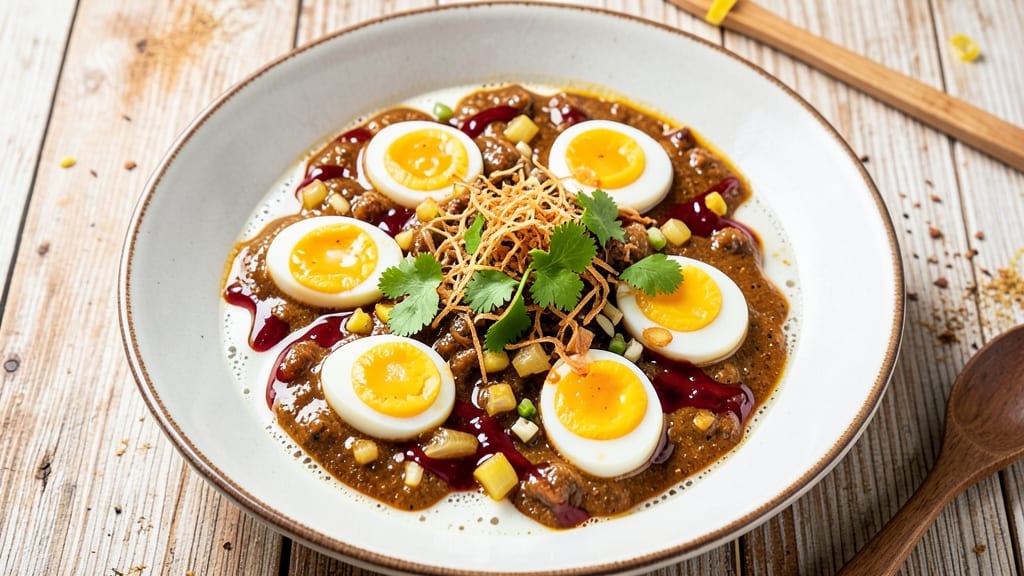
This veg egg curry recipe transforms simple ingredients into a rich, velvety coconut milk curry with tender eggs in just 25 minutes. The secret lies in tempering whole spices for deep aroma and balancing tangy tamarind with sweet coconut milk—creating a dish that’s both comforting and restaurant-worthy.
I developed this recipe after craving a hearty vegetarian curry that still felt indulgent, and it never fails to impress.
The process starts with gently sautéing onions and garlic until golden, then blooming warm spices like cumin and coriander for that signature Indian warmth. Eggs are added last to keep them perfectly tender, while the coconut milk simmers into a silky, fragrant gravy that coats every bite.
The tamarind adds a subtle tang that brightens the richness, and a final touch of cilantro lifts the flavors without overpowering them.
What you’ll end up with is a satisfying, one-pot meal that’s creamy yet light, spiced but not overpowering—ideal for a cozy dinner or lunch with steamed rice or crusty naan.
The eggs absorb the flavors beautifully, making this dish both filling and elegant. Perfect for weeknight cooking or when you want to serve something special without the fuss.
Serve with a side of fluffy basmati rice or warm flatbread to soak up every last drop of that luscious coconut curry. The recipe scales easily, so you can double it for leftovers or a crowd. Let’s get cooking!
Ingredients for veg egg curry
Fifteen ingredients blend into a restaurant-worthy curry with tender eggs and velvety coconut milk.
| Ingredient | Amount | Notes |
|---|---|---|
| Large Eggs 🥚 | 6 whole | Hard-boiled or poached for texture |
| Yellow Onions 🧅 | 1 whole | Medium-sized, finely chopped |
| Garlic Cloves 🧄 | 4 cloves | Peeled, minced for aroma |
| Ginger Root 🌿 | 1 ½ tbsp | Freshly grated, aromatic |
| Coconut Milk 🥥 | 1 can (13.5 oz) | Full-fat for creaminess |
| Tamarind Paste 🍈 | 1 ½ tbsp | For tangy balance |
| Tomato Paste 🍅 | 2 tbsp | Concentrated for depth |
| Ground Cumin 🌶️ | ½ tsp | Toasted for warmth |
| Ground Coriander 🌿 | ½ tsp | Freshly ground preferred |
| Turmeric Powder 🌶️ | ¼ tsp | For vibrant color |
| Garam Masala 🌶️ | ½ tsp | Warm spice blend |
| Fresh Cilantro 🌿 | ¼ cup | Chopped, for garnish |
| Vegetable Oil 🫒 | 2 tbsp | High smoke point |
| Salt 🧂 | ¾ tsp | Adjust to taste |
| Red Chili Flakes 🔥 | ¼ tsp | Optional for heat |
The coconut milk is non-negotiable for that signature velvety texture—full-fat canned coconut milk from brands like Thai Kitchen or Goya delivers the best creaminess. Tamarind paste can be tricky to find; Asian markets or specialty stores usually carry it, or sub with a mix of lime juice and sugar if needed. Fresh ginger and garlic are essential for authentic aroma, but if you're short on time, jarred minced garlic works in a pinch. The garam masala blend should contain cardamom, cinnamon, and cloves for depth—MDH or Everest are reliable brands, but any quality blend will do.
No tamarind? A mix of lime juice (1 tbsp) and sugar (1 tsp) mimics the tang. Short on coconut milk? Cashew cream (blend soaked cashews with water) works beautifully, though the texture will differ slightly. The eggs should be added last to prevent overcooking—poached or hard-boiled both work, but poached gives a more elegant presentation. For extra richness, stir in 1 tbsp of vegan butter at the end. The tomato paste can be skipped entirely if you prefer a less tangy curry, but it adds a lovely depth of flavor.
The curry reheats beautifully, though the texture may separate slightly—stir in a splash of water or coconut milk to restore creaminess. Store in an airtight container for up to 4 days in the fridge, or freeze for 3 months. For meal prep, double the batch and portion into containers with rice for easy grab-and-go lunches. The spices lose potency over time, so if you're not using the garam masala quickly, store it in a dark, airtight container away from light and heat.
Why You'll Love This Recipe
- One-Pan Magic: I swear by this recipe when I’m too tired to wash dishes. Sauté onions and garlic until golden, toss in ginger, then crack those eggs right into the pan—no extra bowls, no fuss. The coconut milk ties everything together while you’re still chopping the veggies.
- Creamy Crisp Contrast: That first bite? The eggs get this perfect set—firm edges, runny centers—while the coconut milk makes the sauce velvety smooth. Honestly, the garlic-ginger base alone makes it taste like you slaved over it for hours.
- Lunchbox Hero: Pack it for work or school—it reheats beautifully and keeps its texture. My kids actually eat their veggies when it’s hidden in this curry (yes, even the picky ones). Bonus: it’s the only thing I make that survives a lunchbox all day.
- Budget Breakthrough: Eggs are cheap, coconut milk stretches far, and onions/garlic last forever. I make this twice a week and never feel guilty about the grocery bill. Plus, it’s one of those meals that tastes expensive but costs pennies.
Step-by-step instructions for velvety coconut egg curry
Here's how to craft a restaurant-worthy veg egg curry with rich coconut milk and aromatic spices.
Prepare the Eggs for Texture
Begin by preparing the 6 whole large eggs either hard-boiled or poached for ideal texture. For hard-boiling, place eggs in boiling water for exactly 9 minutes, then transfer to an ice bath to stop cooking. For poaching, simmer water with 1 tablespoon white vinegar and gently lower eggs in for 3 minutes. The eggs should be fully cooked but still tender enough to break apart easily with a fork.
Once cooled, peel the eggs (if hard-boiled) and set aside. I prefer poached eggs for this curry—they absorb the flavors beautifully while maintaining their delicate structure. Keep them whole until ready to add to the sauce, as breaking them too early can make the curry watery.
Build the Spiced Base
Heat 2 tablespoons vegetable oil in a heavy-bottomed pot over medium heat. Add the finely chopped 1 whole yellow onion and cook for 5-6 minutes until softened and golden. Add the minced 4 cloves garlic, 1.5 tablespoons freshly grated ginger root, and cook for another 2 minutes until fragrant.
Stir in the 2 tablespoons tomato paste and cook for 1 minute to develop its rich flavor. Add the 0.5 teaspoon ground cumin, 0.5 teaspoon ground coriander, 0.25 teaspoon turmeric powder, and 0.25 teaspoon red chili flakes. Toast the spices for 30 seconds until aromatic—this releases their full potential.
Create the Tangy Coconut Sauce
Pour in the 1 can (13.5 oz) full-fat coconut milk and stir to combine with the spiced base. Add the 1.5 tablespoons tamarind paste and 0.5 teaspoon garam masala, then bring to a gentle simmer over medium-low heat. Let it cook for 5 minutes while stirring occasionally to prevent scorching.
The sauce should thicken slightly as it simmers, developing a velvety consistency. Taste and adjust seasoning with 0.75 teaspoon salt—the tamarind provides natural tanginess, but you may need to balance it with more salt depending on your preference. Here's the moment that matters: the sauce should smell like a perfect blend of coconut, spices, and tang.
Finish with Eggs and Garnish
Gently add the prepared eggs to the simmering sauce. If using whole eggs, carefully place them in the sauce and let them cook for 3-4 minutes until heated through. For a more elegant presentation, break the eggs into the sauce and stir gently for 2 minutes** to create a creamy egg curry texture.
Remove from heat and stir in the 0.25 cup chopped fresh cilantro. The herbs add a bright contrast to the rich coconut sauce. Serve immediately with steamed basmati rice or warm naan bread. Each bite should deliver a perfect balance of creamy coconut, spiced aromatics, and tender eggs.
Adjust Consistency and Serve
If the curry is too thick, thin it with 2-3 tablespoons warm water or reserved coconut milk. For extra richness, you can add a splash of the coconut cream from the top of the can. The curry should coat the back of a spoon but remain velvety, not gluey.
This curry keeps well in the refrigerator for up to 3 days, though it's best enjoyed fresh. The flavors deepen as it sits, making it perfect for meal prep. For an extra layer of complexity, finish with a drizzle of toasted coconut oil and a sprinkle of fried shallots just before serving.
Pro Tips For Making Veg Egg Curry
- Fry Eggs First: Crack the eggs into a separate hot pan with a splash of oil and cook them sunny-side-up until just set—about 2 minutes per side. Adding them raw to the curry makes the sauce turn grainy and dull. Trust me, the extra 3 minutes now means a cleaner, creamier sauce later.
- Blend Ginger-Garlic Paste: Skip the minced jarred stuff—grate fresh ginger and garlic, then pulse in a food processor with a tablespoon of water until smooth. This releases more flavor and prevents the curry from tasting like you microwaved pre-chopped garlic. (Yes, even if you’re impatient like me.)
- Simmer Coconut Milk Low: After adding coconut milk, reduce heat to the lowest setting and let it bubble gently. Boiling it too hard splits the milk into a greasy, curdled mess. Think "barely there" simmer—not "rolling boil" energy.
- Use Onions as Base: Cook onions until they’re deep golden, almost caramelized, before adding spices. This builds sweetness that cuts through the richness of the coconut milk. I learned this the hard way—skipping this step just makes the curry taste flat.
Make-ahead tips for this dish
Prep Ahead for Efficiency
Start by prepping all your ingredients the night before to save time. Chop the 1 whole yellow onion and mince the 4 cloves garlic—store in airtight containers in the fridge. Grate the 1.5 tbsp ginger root and mix it with the 1.5 tbsp tamarind paste in a small bowl.
This pre-mixed spice paste can be refrigerated for up to 3 days, making your morning cooking a breeze. 🌿
Egg Prep Shortcut
Save time by hard-boiling all 6 eggs in advance and storing them peeled in the fridge. If you prefer poached eggs, you can prep them up to 2 days ahead—just store them in an ice bath until ready to use.
I like to keep them whole in the sauce until the last minute so they stay tender and absorb the flavors perfectly.
Spice Toasting in Advance
Toast your spices the night before and store them in a small jar.
Mix the 0.5 tsp ground cumin, 0.5 tsp ground coriander, 0.25 tsp turmeric powder, and 0.25 tsp red chili flakes together in a bowl, then toast them in a dry pan over low heat for 2 minutes until fragrant.
Let them cool completely before storing in an airtight container for up to 1 week. This prepped spice blend cuts your cooking time significantly. 🌶️
Coconut Sauce Base
Make the coconut sauce base ahead of time to simplify assembly. In a pot, combine 1 can (13.5 oz) coconut milk, 2 tbsp tomato paste, and the prepped spice blend.
Simmer for 5 minutes, then let it cool and store it in the fridge for up to 2 days. When ready to cook, just reheat it gently and add the eggs and cilantro at the end.
This step ensures your curry stays creamy and flavorful without extra effort. 🥥
Portioning for Meal Prep
Double the recipe and portion it into airtight containers with steamed rice for easy grab-and-go lunches. Store the curry in the fridge for up to 4 days or freeze for 3 months. When reheating, add a splash of water or coconut milk to restore creaminess.
I love packing this curry in mason jars—it reheats beautifully and keeps all the layers intact. Perfect for busy weekdays! ❄️
Garnish Freshness
Keep your fresh 0.25 cup cilantro in a sealed container with a damp paper towel to maintain its vibrancy. Chop it just before serving to preserve its bright flavor. If you're prepping ahead, store the cilantro separately and add it fresh when ready to eat.
A final sprinkle of cilantro elevates the dish, so don’t skip this step! 🌿
Nutrition facts
Frequently asked questions
Can I use scrambled eggs instead of hard-boiled or poached?
For a creamy texture, gently scramble the eggs in a separate pan first, then stir them into the warm curry sauce for 1-2 minutes just until heated through. This creates a richer, thicker curry with a different but equally delicious consistency.
What can I substitute for tamarind paste if I can't find it?
Mix 1 tablespoon lime juice with 1 teaspoon sugar for a similar tangy balance. For extra depth, add ½ teaspoon vinegar (apple cider or white). This combo mimics tamarind's acidity while keeping the curry's vibrant flavor profile.
How do I make this curry spicier?
Add ½ teaspoon cayenne pepper or 1 teaspoon Kashmiri red chili powder with the other spices. For heat without color, stir in 1 tablespoon gochujang (Korean chili paste) at the end. Always taste first—the coconut milk mellows spice intensity.
Can I make this curry dairy-free?
Yes! This recipe is already dairy-free, but verify your coconut milk brand (some contain additives). For extra richness, use cashew cream (blend soaked cashews with water) instead of coconut milk. The texture will be slightly lighter but still creamy.
Why did my curry separate when reheating?
Coconut milk naturally separates when chilled. Stir in 1-2 tablespoons warm water or reserved coconut cream while reheating. For prevention, store the curry in a shallow container and refrigerate uncovered for 1 hour before sealing to let the top layer harden.