
Breakfast & Brunch
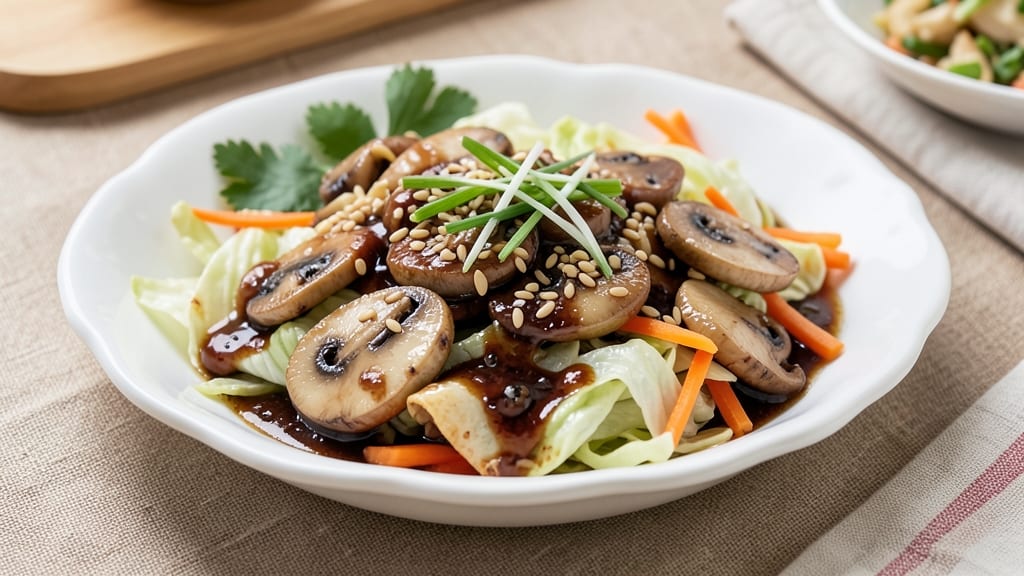
This vegetarian egg roll filling recipe delivers the perfect balance of crisp-tender cabbage, earthy mushrooms, and savory seasoning—without any meat. The secret lies in proper prep: thinly slicing cabbage for quick cooking and using a light egg wash to bind the filling while keeping it light and crispy.
I developed this version after years of testing vegetarian alternatives that actually hold their texture through frying or baking.
The filling starts with a simple aromatic base of garlic, ginger, and soy sauce, then builds layers of flavor through high-heat sautéing. Carrots add natural sweetness while mushrooms contribute umami depth, creating a filling that's satisfying on its own or wrapped in crispy egg roll skins.
The key technique is cooking the vegetables just until tender-crisp—overcooking turns them mushy, and that's the one mistake I see most often.
What you'll end up with is a filling that's packed with texture and flavor—crisp edges from the egg wash, tender vegetables, and a seasoning blend that's perfectly balanced. This recipe works equally well for traditional fried egg rolls, baked egg roll cups, or even as a filling for lettuce wraps.
The beauty of this vegetarian version is its adaptability: swap tofu for extra protein or add water chestnuts for crunch.
Ready in about 20 minutes, this filling delivers restaurant-quality results with simple ingredients and a foolproof method. Whether you're making egg rolls for a party or just craving takeout flavors at home, this recipe will become your new go-to. Let's get started with the ingredients.
Ingredients for vegetarian egg roll filling
These fresh vegetables and simple seasonings create the perfect vegetarian egg roll harmony.
| Ingredient | Amount | Notes |
|---|---|---|
| Green Cabbage 🥬 | 4 cups | Shredded thinly for crisp texture |
| White Mushrooms 🍄 | 8 oz | Sliced thin for even cooking |
| Carrots 🥕 | 1 medium | Julienned into matchsticks |
| Garlic Cloves 🧄 | 4 cloves | Minced for aromatic base |
| Fresh Ginger 🌿 | 1 tbsp | Grated finely for zing |
| Soy Sauce 🥢 | 2 tbsp | Light or regular preferred |
| Sesame Oil 🫒 | 1 tbsp | Toasted for nutty aroma |
| Cornstarch 🌾 | 1 tbsp | For crispy texture |
| Vegetable Oil 🫒 | 2 tbsp | High smoke point preferred |
| Large Eggs 🥚 | 1 whole | Beaten for egg wash |
| Salt 🧂 | ½ tsp | Kosher or sea salt |
| Black Pepper 🌶️ | ¼ tsp | Freshly ground preferred |
| Oyster Sauce 🍲 | 1 tbsp | Vegetarian version preferred |
| Sugar 🍯 | 1 tsp | Balances flavors |
The cabbage is non-negotiable—green cabbage has the right crunch, and shredding it thinly ensures it cooks quickly without turning soggy. I grab the pre-shredded bags at Trader Joe's when I'm in a hurry, but fresh is always better. For mushrooms, white or shiitake work best—their meaty texture holds up to the high heat. Carrots? Julienne them yourself—pre-shredded gets watery. The garlic and ginger should be freshly grated or minced—jarred versions lack punch. Soy sauce matters too: light soy for subtlety, regular for bold flavor.
No sesame oil? Toasted sesame seeds at half the amount work in a pinch, though they won't give the same aroma. Short on oyster sauce? Vegetable broth plus a splash of soy sauce gets you close. The egg wash is key for crispiness—don't skip it. If you're avoiding eggs, flax egg (1 tbsp ground flax + 3 tbsp water) works surprisingly well. For the cornstarch, arrowroot powder is a 1:1 substitute. And if your mushrooms are watery, pat them dry before cooking—this makes all the difference.
Prep everything before you start cooking—this filling comes together in 20 minutes. Store cooked filling in an airtight container for up to 3 days in the fridge, or freeze for 3 months. For best texture, reheat gently in a skillet with a splash of water. I always make extra because it's perfect for egg roll cups or lettuce wraps too. The filling reheats beautifully—just add a little oil to the pan and warm through on medium heat.
Why You'll Love This Recipe
- No-Waste Chopping: I swear by this recipe because even the scraps work—shredded cabbage cores, mushroom stems, carrot peelings? All go in. That ginger and garlic? Just two cloves and a thumb-sized piece, but they punch up the whole batch like magic.
- Umami Bomb: The mushrooms and ginger caramelize so fast, they turn this into something ridiculously flavorful. No soy sauce? A splash of hoisin or a pinch of miso does the trick—crispy, savory, and addictive in the best way.
- Party in a Box: Freeze half the filling and boom—you’ve got a last-minute appetizer for game night or a potluck. Wrap it in store-bought wrappers or use it stuffed in dumplings, and suddenly you’re the hero who brought the crowd-pleaser.
- Pocketbook Hero: Green cabbage and carrots last forever, and mushrooms? They stretch further than you’d think. Honestly, I’ve made this for under $5 a batch and still felt like I was eating at a fancy spot. (Yes, even on a Tuesday night.)
Step-by-step instructions for vegetarian egg roll filling
Transform fresh vegetables into a flavorful, crispy filling perfect for egg rolls.
Prep the Vegetables for Even Cooking
Start by shredding the 4 cups green cabbage into thin strips using a mandoline or sharp knife. The thinner the shreds, the more they'll crisp up during cooking. Next, slice the 8 oz white mushrooms into thin strips—this ensures they cook quickly and evenly. Julienne the 1 medium carrot into matchstick-sized pieces for a satisfying crunch.
Mince the 4 cloves garlic and grate the 1 tbsp fresh ginger finely. The garlic should be almost paste-like, while the ginger should resemble tiny grains. Set all prepped vegetables aside in separate bowls—keeping them separate prevents premature wilting and ensures even cooking later.
Sauté the Aromatics and Vegetables
Heat 2 tbsp vegetable oil in a large wok or skillet over medium-high heat until shimmering. Add the minced garlic and grated ginger, stirring constantly for 30 seconds until fragrant—this prevents burning and unlocks their full flavor. Add the mushrooms first and cook for 3 minutes until they release their moisture and begin to brown.
Push the mushrooms to one side of the pan and add the carrots and cabbage. Stir-fry for 4 minutes until the carrots soften slightly and the cabbage begins to wilt but still holds its shape. Here's the thing—you want the cabbage to stay crisp, so avoid overcrowding the pan. If needed, work in batches to maintain high heat.
Season and Thicken the Filling
In a small bowl, whisk together 2 tbsp soy sauce, 1 tbsp oyster sauce, 1 tbsp sesame oil, 1 tsp sugar, 0.5 tsp salt, and 0.25 tsp black pepper. Pour this mixture over the vegetables and stir well to coat everything evenly. Let the filling cook for another 2 minutes to allow the flavors to meld.
Sprinkle the 1 tbsp cornstarch over the mixture and toss vigorously for 1 minute. The cornstarch will absorb the excess moisture, creating a slightly crispy texture that's perfect for egg rolls. You'll know it's ready when the filling looks glossy and the vegetables are tender-crisp with just a slight bite.
Finish with the Egg Wash
In a separate bowl, beat the 1 whole large egg until frothy. Remove the vegetable mixture from heat and let it cool slightly for 2 minutes. This prevents the egg from scrambling when you add it. Pour the beaten egg over the filling and toss gently until every piece is lightly coated.
The egg wash will create a delicate, crispy layer when the egg rolls are fried later. Spread the filling on a plate and let it cool completely before using. The filling should be cool to the touch but still hold its shape when handled. This step ensures your egg rolls will have that signature crispy exterior and flavorful interior.
Pro Tips For Making Vegetarian Egg Roll Filling
- CHOP CABBAGE THIN: I learned this the hard way—thick cabbage slices stay crunchy and fight blending. Aim for paper-thin shreds (about 1/8-inch) so they soften evenly without turning mushy. A mandoline makes this faster, but a sharp knife works if you take your time.
- SAUTE MUSHROOMS FIRST: Skip tossing everything in the pan at once—mushrooms release water like crazy. Cook them alone for 3-4 minutes until they’ve lost most of their moisture, then add the rest. This keeps your filling from turning into a soggy mess.
- SALT THE GINGER: Fresh ginger’s bite fades fast when raw. Lightly salt the grated pieces and let them sit for 5 minutes before cooking—it mellows the sharpness and makes the flavor sing. (Yes, even if you’re impatient like me.)
- STIR-FRY IN BATCHES: Overcrowding the pan steams the veggies instead of searing them. Work in two batches if needed—start with mushrooms and carrots, then add cabbage and garlic. High heat is non-negotiable here; you want char, not steam.
Essential equipment for perfect results
Wok Essentials
A carbon steel wok is my go-to for this recipe—it heats up quickly and distributes heat evenly, which is crucial for stir-frying. Look for a 14-inch wok with a flat bottom if you don’t have a traditional round-bottomed wok.
I swear by the De Buyer 14-inch wok—it’s a splurge, but the even heat distribution makes all the difference. For a budget-friendly option, a stainless steel wok from Made In works well, though it may take a few minutes longer to heat up.
If you don’t own a wok, a large non-stick skillet (like All-Clad Stainless) is a great alternative. Just avoid overcrowding the pan, as non-stick coatings can’t handle the same volume as a wok.
For high-volume cooking, a heavy-bottomed stainless steel pan (such as Calphalon) will work, but you’ll need to monitor the heat closely to prevent burning.
Knife and Cutting Tools
A sharp chef’s knife is non-negotiable for this recipe—dull knives crush vegetables instead of cleanly slicing them, leading to uneven cooking. I use a Wüsthof 8-inch chef’s knife for everything, but any high-quality knife (like Shun Premier or Mac Knife) will do.
For thinly shredding cabbage, a mandoline (such as the Julienne Mandoline from Oxo) speeds up the process and ensures even slices.
If you’re julienning carrots, a vegetable peeler can help create long, thin strips quickly. For mushrooms, a serrated knife works best to avoid tearing the delicate slices. Investing in a sharpener (like the Work Sharp Whetstone) will keep your knives in top condition for years.
Mixing and Tossing Tools
A pair of silicone spatulas (like OXO Good Grips) is essential for tossing the filling without tearing the vegetables. I also keep a wooden spoon handy for stirring the aromatics at the start.
For the egg wash, a small whisk ensures the egg is fully frothy before coating the filling. If you’re making a large batch, a large mixing bowl (like Le Creuset Stoneware) helps contain the filling while tossing.
For the cornstarch step, a fine-mesh strainer (such as OXO Good Grips) can help sift the cornstarch evenly over the filling, ensuring a consistent texture. A small bowl for mixing the sauce and a measuring spoon set (like OXO Stainless Steel) keep your prep organized and precise.
Heat Control Tools
A high-quality thermometer (like the Thermoworks Smoke) helps monitor oil and pan temperatures, ensuring your vegetables cook evenly without burning. For a wok, I aim for medium-high heat (around 375°F)—too low, and the cabbage will steam instead of crisp up.
If you’re frying egg rolls later, a deep-fry thermometer (such as Taylor Precision) keeps oil at the ideal 350-375°F for crispy results.
For stovetop control, I recommend an induction burner if possible—it heats up faster and gives you precise temperature adjustments. Gas stoves work well too, but you’ll need to monitor the flame closely to avoid hot spots. Avoid electric coil burners, as they can create uneven heat distribution.
Nutrition facts
Frequently asked questions
Can I make this vegetarian egg roll filling without eggs?
Yes! Use a flax egg (1 tbsp ground flaxseed + 3 tbsp water) or chickpea flour slurry (2 tbsp flour + 3 tbsp water) as an egg substitute. These binders work surprisingly well for the egg wash, though the texture will be slightly less crisp. For extra cohesion, toss the filling with 1 tbsp extra cornstarch before using.
How do I prevent the cabbage from getting soggy?
Keep cabbage slices thin and uniform (about 1/8-inch thick) and cook in batches if needed to avoid overcrowding. High heat is key—maintain medium-high and stir constantly. Also, pat mushrooms dry before cooking to remove excess moisture. The cornstarch step is crucial for absorbing any lingering dampness.
Can I use frozen vegetables instead of fresh?
Frozen veggies work in a pinch, but they'll release more moisture during cooking. Thaw them first, then drain and pat completely dry before stir-frying. For best results, use fresh cabbage and carrots—they hold their texture better. If using frozen mushrooms, squeeze them in a clean towel to remove excess water before cooking.
What's the best way to store leftover filling?
Store in an airtight container in the fridge for 3-4 days or freeze for up to 3 months. To reheat, warm in a skillet with 1 tsp oil over medium heat for 3-4 minutes, stirring occasionally. Add 1 tsp water if it seems dry. For egg rolls, reheated filling works best when wrapped fresh and fried immediately.
Can I add protein to this filling?
Tofu (cubed and pan-fried) or extra-firm tofu (pressed and sliced) adds great texture. For a meaty alternative, try tempeh (crumbled) or seitan (diced). Add protein at the same time as mushrooms—it should cook for 3-4 minutes until lightly browned before adding other veggies. Start with ½ cup and adjust to taste.