
Breakfast & Brunch
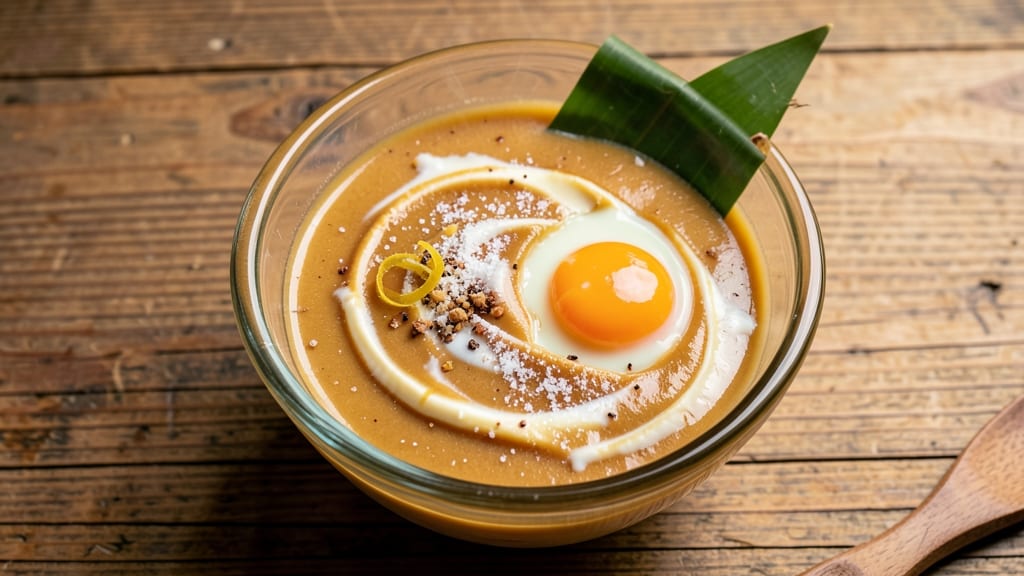
This Vietnamese egg butter recipe transforms simple eggs and butter into a silky, fragrant spread that bridges breakfast and dessert with effortless elegance.
The technique involves tempering eggs with butter and sugar until the yolks emulsify into a velvety, golden paste—rich enough for toast but delicate enough to balance sweet and savory flavors.
I first discovered this method while exploring Vietnamese baking traditions, where egg butter serves as both a filling for pastries and a luxurious topping for pandan-infused treats.
The magic lies in precise heat control and gradual incorporation, ensuring the eggs cook without scrambling while the butter melts into a smooth, cohesive texture.
Unlike traditional butter, this version incorporates a touch of pandan extract or coconut milk for that signature Southeast Asian aroma, though vanilla or citrus zest work beautifully for modern twists. With just five core ingredients and 15 minutes of active time, it delivers restaurant-quality results that taste homemade.
What you’ll end up with is a versatile spread that’s equally at home on buttery croissants, steamed buns, or even drizzled over fresh fruit. The finished product has a glossy sheen and a melt-in-your-mouth consistency, with subtle sweetness that enhances any dish.
It keeps well in the fridge for up to a week, making it perfect for meal prep or gifting.
This recipe isn’t just about technique—it’s about adaptability. Use it as a filling for Vietnamese-style egg tarts, a topping for chè (sweet bean pudding), or simply spread it on warm baguettes.
The possibilities are limited only by your creativity, and the process itself is surprisingly foolproof once you master the tempering step.
Ingredients for vietnamese egg butter
Five core ingredients transform into a luxurious Vietnamese spread with restaurant-quality silkiness.
| Ingredient | Amount | Notes |
|---|---|---|
| Large Eggs 🥚 | 4 whole | Room temperature, separated yolks and whites |
| Unsalted Butter 🧈 | 1 cup | European-style preferred for higher fat content |
| Granulated Sugar 🍚 | ½ cup | Fine granulation for even dissolving |
| Pandan Extract 🌿 | ½ tsp | Or substitute 1 tsp vanilla extract |
| Salt 🧂 | ¼ tsp | Fine sea salt for delicate seasoning |
| Coconut Milk 🥥 | ¼ cup | Full-fat for creaminess (optional for aroma) |
| Vanilla Bean Paste 🌸 | ½ tsp | For depth (optional alternative to pandan) |
| Lemon Juice 🍋 | 1 tsp | Freshly squeezed for brightness |
The eggs are the foundation—use large, fresh eggs for optimal emulsification. European-style butter with its higher fat content (82-86%) ensures a richer texture compared to standard American butter (80%). For pandan extract, Asian markets or specialty stores carry the best quality, but Trader Joe's often stocks it at a reasonable price. If you can't find pandan, vanilla bean paste or even a splash of coconut milk provides that signature aromatic depth. The sugar should be fine-grained to dissolve smoothly—avoid raw sugar or turbinado for this delicate balance.
No pandan? Vanilla extract or citrus zest works beautifully, though the floral notes differ slightly. For a dairy-free version, substitute butter with vegan butter or coconut oil, though the texture will be slightly firmer. The coconut milk adds subtle richness and can be omitted if you prefer a purer butter flavor. Lemon juice brightens the final product—freshly squeezed is ideal, but bottled works in a pinch. When separating eggs, ensure no yolk fragments remain in the whites, as they can cause scrambling during the tempering process.
This spread keeps beautifully in an airtight container in the fridge for up to 1 week, though it often lasts longer if properly sealed. For longer storage, portion into small jars and freeze for up to 3 months. The texture remains stable when thawed, though it may soften slightly. Use it as a filling for Vietnamese egg tarts, a topping for chè, or simply spread on warm baguettes. The versatility makes it perfect for both breakfast and dessert applications, with a delicate sweetness that enhances any dish.
Why You'll Love This Recipe
- Five-Ingredient Magic: I swear by this recipe because it’s that simple—just eggs, butter, sugar, a splash of pandan, and salt. No chopping, no waiting for marinades, no fancy gadgets. Honestly, I’ve made it while scrolling through my phone and still ended up with golden, creamy perfection.
- Pandan Kiss Delight: That first whiff of pandan extract—it’s like a tropical hug in your kitchen. The eggs get this subtle, fragrant sweetness that’s not too overpowering, just enough to make everything taste like a little vacation. (Yes, even on a Tuesday night.)
- Breakfast to Dessert: This butter isn’t just for toast—slather it on warm bánh mì, mix it into oatmeal, or drizzle it over fresh fruit. I’ve even used it to glaze roasted chicken, and suddenly, everything feels a little more special. It’s my secret weapon for lazy mornings and impressing guests.
- Lasts All Week: A jar of this stuff stays fresh for days, and I always have it on hand. Spread a little on crackers when I’m craving something sweet, or toss it into a quick stir-fry for instant richness. Between us, I’ve saved more money than I can count by not buying store-bought flavored butters anymore.
Step-by-step instructions for Vietnamese egg butter
This delicate fusion of rich butter and silky egg yolks requires precision timing and gentle technique.
Prepare the Egg Yolks and Butter Base
In a medium heatproof bowl, whisk together the 4 whole Large Eggs (room temperature) and the 0.5 cup Granulated Sugar until fully combined and slightly thickened. This mixture should be smooth with no visible streaks of sugar. Place the bowl over a pot of simmering water, ensuring the bottom of the bowl doesn't touch the water—this creates a gentle double boiler.
In a separate saucepan, melt the 1 cup Unsalted Butter over low heat, stirring occasionally until completely smooth. Remove from heat and stir in the 0.5 tsp Pandan Extract and 0.5 tsp Vanilla Bean Paste until fully incorporated. Keep both mixtures warm—you'll need them at the same temperature for the next step. The butter should be melted but not hot, and the egg mixture should be warm but not cooked.
Temper and Emulsify the Mixtures
Slowly pour the melted butter into the warm egg mixture while whisking constantly. This gradual addition prevents the eggs from scrambling. After incorporating about half the butter, you'll notice the mixture begin to thicken slightly—this is the emulsification process starting. Continue whisking vigorously for 2-3 minutes until the mixture becomes smooth and satiny.
Return the bowl to the double boiler and continue whisking for another 5-7 minutes until the mixture reaches 160°F on an instant-read thermometer. You'll see it transform from a thin custard to a thick, glossy paste that coats the back of a spoon. This is the critical stage—don't rush it, as proper temperature development ensures the final texture. The mixture should be thick enough to hold its shape when dropped from a spoon but still pourable.
Incorporate Aromatics and Finish
Remove the bowl from heat and stir in the 0.25 cup Coconut Milk, 0.25 tsp Salt, and 1 tsp Lemon Juice. The coconut milk adds subtle creaminess, while the lemon juice brightens the rich flavors. Whisk for 1-2 minutes until fully combined. At this point, the mixture should have a luxurious, velvety consistency with a delicate floral aroma from the pandan and vanilla.
Transfer the Vietnamese egg butter to a clean, airtight container and press plastic wrap directly onto the surface to prevent a skin from forming. Refrigerate for at least 4 hours or until completely chilled—this resting period allows the flavors to meld and the texture to set properly. The final product should be smooth, spreadable, and rich with layers of butter, egg, and aromatic notes.
Serve and Store
When ready to use, let the Vietnamese egg butter sit at room temperature for 10-15 minutes until soft enough to spread. It's perfect for toasted bread, pancakes, or as a luxurious filling for pastries. For best results, use within 5 days of making, though the flavor continues to develop over time. If storing longer, keep in the refrigerator and bring to room temperature before serving to maintain its silky texture.
The key to success lies in the gentle heat and constant whisking—never let the mixture boil, as this will curdle the eggs. The pandan extract is what gives this recipe its distinctive floral aroma, so don't substitute it unless you're comfortable with vanilla's more subtle profile. Each spoonful should deliver a perfect balance of richness, sweetness, and aromatic complexity.
Pro Tips For Making Vietnamese Egg Butter
- Melt Butter Slowly: Start with cold butter cubes—yes, even if the pan is hot. If you dump softened butter in, it’ll burn before the eggs have a chance to cook properly. The butter should foam gently, not brown, while the eggs steam through.
- Whisk Eggs Like a Pro: Beat the eggs until they’re uniformly pale yellow, not just slightly frothy. I used to rush this, but lumps mean uneven texture—some parts will be thin and runny while others set too fast. A fork works, but a whisk gets there faster.
- Salt the Egg Mixture: Taste the egg-butter mix before cooking. Unsalted butter means you’ll need to add salt here—about ½ teaspoon per egg—to balance the sweetness later. Skipping this step makes the final dish taste flat, like it’s missing something.
- Finish with Pandan Gently: Stir in the pandan extract after the eggs are mostly set, not before. Too early, and the aroma burns off; too late, and the flavor won’t distribute evenly. A quick swirl at the end ensures that floral note lingers without overpowering.
Troubleshooting perfect results
Eggs Scramble Instead
If your egg butter comes out grainy or scrambled, it’s usually from overheating or uneven whisking. To fix this, immediately remove the bowl from heat and whisk vigorously for 1-2 minutes to break up any curdled bits.
Then, return it to the double boiler for another 3-5 minutes while whisking constantly. The key is keeping the mixture below 160°F—if it reaches 170°F, the eggs will scramble. Use a thermometer for precision, and lower the heat if the mixture starts to bubble. 🔥
Butter Separates
If the butter and eggs separate into distinct layers, you likely added the butter too quickly or didn’t whisk enough. Whisk vigorously for 3-5 minutes to re-emulsify the mixture. If it’s still stubborn, place the bowl back over simmering water and whisk gently until it smooths out.
For next time, add the butter drop by drop at first, then in a thin stream, while whisking constantly. European-style butter with its higher fat content (like Plugrá) helps prevent separation better than standard American butter. ✨
Too Sweet or Bland
The sugar balance can shift if you don’t dissolve it fully or if the pandan/vanilla isn’t incorporated well. For a sweeter taste, add 1-2 tbsp more sugar and whisk until dissolved.
If it’s bland, boost the aromatics with an extra ¼ tsp pandan extract or ½ tsp vanilla bean paste. Taste as you go—adjustments are easier before chilling. A pinch of citrus zest (like lemon or lime) can also brighten flavors if needed. 💫
Grainy Texture After Chilling
If the finished spread feels gritty after refrigerating, it likely didn’t emulsify fully during cooking. Reheat the mixture gently in a double boiler, whisking constantly until smooth (150-160°F), then chill again.
For prevention, ensure the eggs and butter are at the same temperature before combining, and whisk nonstop during the tempering phase. If graininess persists, blend briefly with an immersion blender—just 5-10 seconds—to smooth it out. 💡
Skin Forms on Surface
A skin develops when the butter cools too quickly or the surface dries out. Press plastic wrap directly onto the surface before refrigerating to lock in moisture. If a skin already formed, gently reheat the mixture in a double boiler for 1-2 minutes, whisking until smooth, then reseal.
For storage, use airtight glass containers with a tight lid to prevent air exposure. Dividing the mixture into smaller portions also helps maintain freshness longer. 🧈
Nutrition facts
Frequently asked questions
Can I make this Vietnamese egg butter without pandan extract?
If you can't find pandan extract, substitute with ½ tsp vanilla bean paste or 1 tsp vanilla extract for a familiar floral note. For a citrus twist, add 1 tsp lemon zest instead—it brightens the rich butter flavor beautifully. The key is maintaining that aromatic depth, so choose a flavor you love.
How do I know when the egg butter is fully emulsified?
The mixture is ready when it reaches 160°F and transforms into a thick, glossy paste that coats the back of a spoon. It should hold its shape when dropped from a spoon but still be pourable. If it's too thin, whisk longer over the double boiler—if it's too thick, add 1 tsp warm water while whisking.
Can I use this egg butter in savory dishes?
While traditionally sweet, this egg butter works beautifully in savory applications too! Spread it on toast with smoked salmon or avocado slices for breakfast, or use it as a filling for Vietnamese bánh cuốn with mushrooms and shrimp. Reduce the sugar to ¼ cup and add ½ tsp soy sauce for a savory twist.
Why does my egg butter separate when chilled?
Separation usually happens if the butter wasn't fully emulsified during cooking or if the mixture cooled too quickly. To fix it, gently reheat the egg butter in a double boiler while whisking until smooth (150-160°F), then chill again. For prevention, ensure the eggs and butter are at the same temperature before combining, and whisk constantly during the tempering phase.
How long does homemade egg butter last?
Store in an airtight container in the fridge for up to 1 week, though it often lasts longer if properly sealed. For extended storage, portion into small jars and freeze for up to 3 months. Thaw in the refrigerator overnight and bring to room temperature before serving to maintain its silky texture.