Breakfast & Brunch
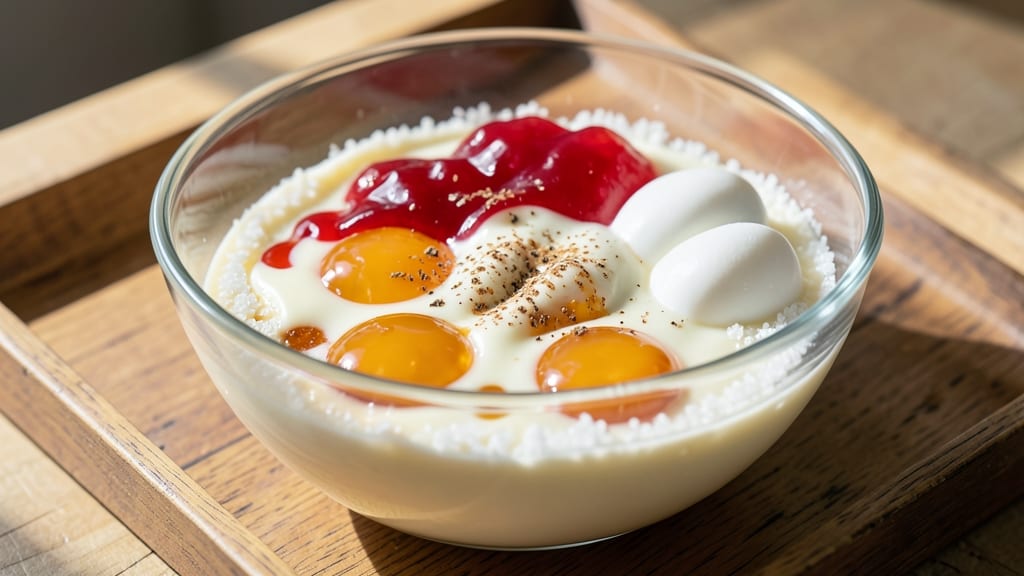
This Vietnamese egg cream recipe delivers the perfect balance of silky egg yolk custard and fragrant coconut-cardamom frosting—a nostalgic dessert that feels like a warm hug in every bite. 💛 The secret lies in steaming the egg yolk mixture until it reaches that signature velvety texture, then layering it with sweetened condensed milk and jelly for a restaurant-quality finish.
What makes this recipe special is the traditional technique of slow steaming, which transforms simple egg yolks and condensed milk into a luscious, cloud-like custard. The coconut-cardamom frosting adds a tropical twist, while the jelly layer provides a delightful contrast in texture and sweetness.
It’s the kind of dessert that feels indulgent yet light, perfect for breakfast or a special treat.
By the time you’re done, you’ll have a layered dessert with a smooth, creamy base, a fragrant coconut topping, and a jelly center that pops with every spoonful.
The aroma alone—warm cardamom and sweet coconut—will have everyone asking for seconds. This is comfort food at its finest, made even better with a few simple techniques.
Serve it chilled or at room temperature, and don’t forget the sprinkle of crushed peanuts on top for that authentic Vietnamese touch. Here’s how to make it step by step—no fancy equipment required, just patience and love.
Ingredients for vietnamese egg cream
Six egg yolks and a few pantry staples transform into Vietnam's beloved coconut-cardamom dessert.
| Ingredient | Amount | Notes |
|---|---|---|
| Large Egg Yolks 🥚 | 6 whole | Fresh, room temperature preferred |
| Sweetened Condensed Milk 🥛 | 14 oz | Canned, high-quality brand |
| Granulated Sugar 🍚 | ½ cup | White, fine grain preferred |
| Unflavored Coconut Milk 🥥 | 13 ½ oz | Canned, full-fat preferred |
| Ground Cardamom 🌿 | 1 tsp | Freshly ground for best flavor |
| Raspberry Jelly 🍓 | ½ cup | Seedless, smooth texture |
| Crushed Peanuts 🥜 | ¼ cup | Lightly toasted, unsalted |
| Vanilla Extract 💧 | ½ tsp | Pure, high-quality preferred |
| Salt 🧂 | ¼ tsp | Fine sea salt preferred |
| Unsalted Butter 🧈 | 2 tbsp | Cold, cut into small pieces |
| Water 💧 | ½ cup | Room temperature preferred |
| Light Corn Syrup 🍯 | 2 tbsp | For coconut frosting |
The egg yolks are the heart of this recipe—use only the yolks, as the whites would make the custard too stiff. Trader Joe's and Whole Foods carry high-quality eggs with vibrant yolks, which is key for that signature golden hue. For the condensed milk, Nestlé or Carnation are reliable brands, but check the expiration date—older cans can curdle when steamed. The coconut milk should be full-fat for the richest texture; Thai Kitchen or Goya cans work well, but avoid versions with added thickeners if possible.
Running short on raspberry jelly? Strawberry or mango jelly works equally well, though the flavor pairing won't be traditional. No cardamom? Cinnamon at half the amount adds warmth, though it won't replicate the floral notes. For the coconut frosting, light corn syrup is non-negotiable—it prevents graininess. If you can't find it, agave nectar is a decent substitute, though the texture may be slightly softer. The crushed peanuts should be toasted lightly—just until fragrant—to avoid bitterness, and unsalted is critical to balance the sweetness.
Store the jelly and crushed peanuts separately in airtight containers for up to 3 months at room temperature. The coconut frosting keeps for 1 week in the fridge, though it's best used within 3 days for peak texture. Assemble the dessert just before serving—this prevents the custard from absorbing moisture and becoming watery. The full dessert holds in the fridge for 4 days, but the first serving is always the best, so plan accordingly.
Why You'll Love This Recipe
- No-Fuss Whisking: I swear, this takes less effort than making coffee—just yolks, condensed milk, and a quick heat. No chopping, no peeling, no mess. Honestly, I’ve made it while scrolling through my phone.
- Silky-Smooth Magic: That first spoonful? Pure velvet. The cardamom adds this warm, floral note that makes it taste like a dessert you’d pay for at a café, not something you whipped up in 10 minutes.
- Crowd-Pleaser Flex: Serve it chilled for a refreshing treat, or warm it gently for a cozy drink. My kids ask for it after school, my husband sneaks seconds at dinner, and guests always want the recipe. (Yes, even on a Tuesday night.)
- Pantry Staple Power: You’re probably already using these ingredients—condensed milk, sugar, coconut milk—so it’s basically free. And leftovers? They last a week in the fridge, perfect for when you forget to make dessert.
Step-by-step instructions for Vietnamese egg cream
Transform simple ingredients into a velvety, aromatic dessert with this precise technique.
🍳 Step 1: Whisk Egg Yolks and Condensed Milk to Silky Perfection
In a heatproof mixing bowl, combine the 6 whole large egg yolks and 14 oz sweetened condensed milk. Using a hand mixer on medium speed, whisk for 3-4 minutes until the mixture becomes pale, thick, and nearly doubles in volume. This step incorporates air and creates the signature creamy texture.
I like to work in a bowl that fits snugly on my double boiler setup—this prevents spills when we heat it later. The mixture should coat the back of a spoon smoothly with no graininess. If you see any streaks of unincorporated yolk, whisk for another 30 seconds until fully emulsified.
🔥 Step 2: Heat the Yolk Mixture Over Gentle Heat
Place the mixing bowl over a pot of simmering water, ensuring the bottom of the bowl doesn't touch the water. Heat on medium-low heat, stirring constantly with a silicone spatula, for 8-10 minutes. You're looking for the mixture to reach 160°F—it should thicken noticeably and become slightly translucent.
Here's where attention matters: the temperature mustn't exceed 165°F or the eggs will curdle. Test doneness by running a clean finger through the mixture—it should leave a clean trail without any resistance. Remove from heat immediately once it reaches temperature.
🥘 Step 3: Incorporate Coconut Milk and Cardamom
In a separate saucepan, combine the 13.5 oz unflavored coconut milk, 0.5 cup granulated sugar, 1 tsp ground cardamom, 0.5 tsp vanilla extract, and 0.25 tsp salt. Heat over medium heat until steaming gently, then reduce to low heat and simmer for 5 minutes to infuse the flavors.
Slowly pour the warm coconut mixture into the egg yolk base while whisking continuously. This gradual combination prevents temperature shock that could cause separation. The final mixture should be smooth, glossy, and hold its shape when spooned—this indicates proper emulsification.
⏰ Step 4: Chill and Layer the Raspberry Jelly
Transfer the combined mixture to a 9x5-inch loaf pan lined with parchment paper. Smooth the top with a spatula, then spread the 0.5 cup raspberry jelly evenly over the surface. Refrigerate for at least 4 hours or until completely set—this allows the jelly to fully meld with the custard.
For best results, chill overnight. The texture contrast between the creamy base and fruity jelly layer creates the signature Vietnamese egg cream experience. Don't skip this step—rushing leads to a runny dessert instead of the perfect sliceable texture.
🍽️ Step 5: Prepare the Coconut Frosting and Assemble
In a small saucepan, combine the 0.5 cup water, 2 tbsp light corn syrup, and 2 tbsp unsalted butter. Bring to a gentle boil over medium heat, then reduce to low heat and simmer for 3 minutes until slightly thickened. Remove from heat and whisk in the 0.25 cup crushed peanuts until evenly distributed.
Spread the warm coconut frosting over the chilled egg cream, then sprinkle with additional crushed peanuts if desired. Serve immediately or refrigerate for 30 minutes before slicing. Each piece should reveal the vibrant raspberry layer beneath the creamy custard and nutty topping.
Pro Tips For Making Vietnamese Egg Cream
- Whisk Yolks Cold: I learned this the hard way—room-temperature yolks turn grainy when you heat them with condensed milk. Pop those yolks in the fridge for 10 minutes first, then whisk them until they’re pale and frothy. That smooth texture is non-negotiable.
- Measure Coconut Milk Right: The recipe calls for coconut milk, but don’t just eyeball it. Use a liquid measuring cup—this stuff separates easily, and you want a thick, creamy consistency, not a watery mess. If it’s too thin, reduce it on low heat for 2 minutes first.
- Temper the Mixture Slowly: After mixing yolks, condensed milk, and sugar, heat the coconut milk separately to a gentle simmer first. Then, drizzle the hot coconut milk into the yolk mixture while stirring constantly—this prevents curdling. (Yes, even if you’re impatient like me.)
- Cardamom Last, Lightly: Skip the urge to add cardamom early—it burns fast. Sprinkle it in at the very end, stir once, then serve immediately. Too much or too early, and you’ll taste bitter spice instead of that warm, floral note. A pinch is enough.
Essential equipment for this recipe
Double Boiler Setup
Your most critical tool is a double boiler—this gentle heat source prevents eggs from curdling. I use a heatproof glass bowl (like Pyrex) that fits snugly over a saucepan with 2-3 inches of water between them.
Never let the bowl touch the water—this creates direct heat transfer that can scramble your yolks. A silicon spatula (like OXO Good Grips) is perfect for stirring during this delicate process. 🌡️
Precision Thermometer
An instant-read thermometer (I recommend Thermoworks Thermapen ONE) is non-negotiable for achieving that perfect 160°F temperature. The custard mustn't exceed 165°F or it'll turn grainy. I place the probe directly in the mixture while stirring—this gives me real-time feedback to pull it off heat at the exact moment.
For budget options, the Taylor Precision Products digital thermometer works well too.
Mixing Tools
A hand mixer (like KitchenAid KHM5211CU) is essential for whipping the egg yolks and condensed milk to that signature pale, thick consistency. The whisk attachment creates air pockets that transform the base into a cloud-like texture.
For the coconut frosting, a small whisk (like Zyliss 3-in-1) helps incorporate the crushed peanuts evenly without overmixing. Avoid metal whisks—they can scratch your mixing bowl.
Layering Essentials
For perfect layers, use a 9x5-inch loaf pan (like Wilton) lined with parchment paper—this prevents sticking and makes removal easy. A flexible silicone spatula (like Epicurean) helps spread the jelly layer smoothly.
For portioning, I recommend 6-ounce plastic cups (like Solo) for individual servings—they're clear so guests can see the layered effect. Store extras in airtight containers to maintain texture.
Optional Pro Tools
For the coconut frosting, a small saucepan with tight-fitting lid (like All-Clad Stainless) helps control the simmering process. A fine-mesh sieve (like OXO Good Grips) catches any peanuts that might burn during toasting.
For presentation, edible gold leaf (like Amazon Basics) adds a luxurious touch—just press it gently on top before serving. The aroma alone from freshly toasted peanuts makes this dessert irresistible. 🥜
Nutrition facts
Frequently asked questions
Why does the egg cream mixture need to reach exactly 160°F?
The 160°F target temperature transforms the egg yolks into a silky, cloud-like texture without curdling. This gentle heat gently cooks the proteins while preserving their creamy structure. Going above 165°F causes the mixture to break, resulting in a grainy or scrambled texture instead of the signature smooth custard.
Can I make this dessert without a double boiler?
Yes, but with caution! Use a heatproof bowl over a pot of simmering water, ensuring the bowl doesn't touch the water. Stir constantly with a silicone spatula to prevent hot spots. A thermometer is essential—without precise temperature control, you risk overcooking and ruining the texture.
What's the best jelly flavor to use besides raspberry?
Traditional options include strawberry or mango jelly—both complement the coconut-cardamom flavors beautifully. For a tropical twist, try guava jelly. Avoid overly tart flavors like lemon or pineapple, as they can overpower the delicate egg cream base.
How do I fix curdled egg cream?
If your mixture curdles, immediately remove it from heat and whisk in 1 tablespoon cold condensed milk per 2 egg yolks used. For severe curdling, strain through a fine-mesh sieve to remove lumps, then proceed with the recipe. Prevention is key—never exceed 165°F and stir constantly during heating.
Can I make this dessert ahead of time?
Assemble the egg cream layer (without frosting) up to 3 days ahead and refrigerate. Add the coconut frosting 2 hours before serving to maintain texture. For best results, serve within 4 days—the jelly layer softens over time, and the peanuts may lose crispness.