
Breakfast & Brunch
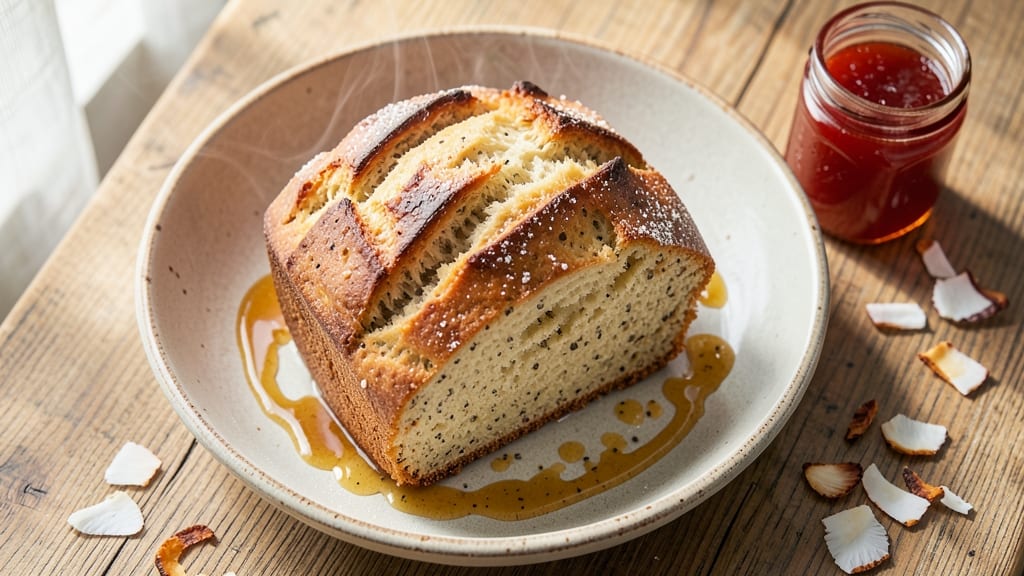
Wheat-free egg-free bread that rises high and stays moist—without gluten or eggs—isn’t just possible, it’s foolproof. This recipe transforms almond flour and aquafaba into a bread that’s light, airy, and perfect for toast or sandwiches, proving dietary restrictions don’t mean sacrificing texture. The secret lies in hydration techniques and precise baking that create that coveted oven-spring, even without traditional binders.
What sets this recipe apart is the flax egg substitute that mimics egg’s binding properties while keeping it plant-based, and the aquafaba that whips into a stable foam for lift. No special equipment is needed—just a standard loaf pan and a little patience for the dough to hydrate properly.
The result? A bread with a tender crumb and golden crust that toasts beautifully, making it versatile for breakfast or lunch.
Baking time is 45 minutes at 350°F, yielding a loaf that’s ready to slice immediately or stored for up to 5 days in the fridge. For longer storage, freeze slices and toast as needed.
The flavor is subtly nutty from the almond flour, with just enough sweetness to satisfy without overpowering. This isn’t just a substitute—it’s a superior alternative that rivals traditional bread.
Perfect for those avoiding gluten or eggs, this recipe also works as a vegan-friendly option for potlucks or meal prep. Serve with avocado toast, as sandwich bread, or even as a side to soups.
The key to success? Measuring ingredients precisely and letting the dough rest—both critical steps for achieving that perfect rise and texture.
Ingredients for wheat free egg free bread
Transform almond flour and aquafaba into a bread so light and airy, you'd never guess it's wheat-free and egg-free.
| Ingredient | Amount | Notes |
|---|---|---|
| Almond Flour 🌰 | 3 cups | Finely ground, unsweetened |
| Aquafaba 🌱 | 1 cup | Chickpea brine, whipped to stiff peaks |
| Ground Flaxseed 🌿 | ¼ cup | For flax eggs, mixed with water |
| Water 💧 | ½ cup | For flax eggs, room temperature |
| Coconut Sugar 🍯 | ⅛ cup | Or maple syrup for liquid sweetness |
| Apple Cider Vinegar 🍎 | 1 tbsp | For rise activation |
| Baking Powder 🍞 | 1 ½ tsp | Aluminum-free for best results |
| Salt 🧂 | ½ tsp | Fine sea salt preferred |
| Vanilla Extract 🌸 | 1 tsp | Pure vanilla for subtle flavor |
| Olive Oil 🫒 | ¼ cup | Extra-virgin for richness |
| Psyllium Husk Powder 🌿 | 1 tbsp | For gluten-free binding |
| Tapioca Starch 🌾 | ¼ cup | For tender crumb texture |
The almond flour is the backbone of this recipe—Bob's Red Mill or Anthony's Goods are my go-tos for consistency. Freshly ground flour makes all the difference, so if you're buying whole almonds, grind them yourself. Aquafaba is the secret weapon here; save the brine from a can of chickpeas (or buy it pre-packaged at Trader Joe's). The psyllium husk powder is non-negotiable for that perfect rise and structure—Frontier Co-op sells it in bulk. For the coconut sugar, Wholesome! brand has the best texture, but maple syrup works in a pinch if you're in a hurry.
No aquafaba? Whipped coconut cream is a decent stand-in, though the texture won't be identical. Swap the vanilla extract for almond extract at half the amount if you're avoiding vanilla. The psyllium husk can be tricky—if you can't find it, xanthan gum at one-quarter the amount will help, but the bread won't rise as high. For the flax eggs, make sure the flaxseed is ground finely—a coffee grinder works perfectly. If you're short on time, chia seeds soaked in water also work, though they're slightly thicker.
This dough needs time to hydrate—at least 30 minutes before baking, up to 2 hours for best results. Store any leftovers in an airtight container for 5 days at room temperature, or freeze slices for up to 3 months. For extra crispiness, toast slices in the oven at 350°F for 3-5 minutes—they'll be golden and perfect for avocado toast. The bread also freezes beautifully; just thaw at room temperature before slicing.
Why You'll Love This Recipe
- No-Fuss Mixing: I swear, this bread comes together with just a whisk and a bowl—no stand mixer, no kneading, no stress. The flaxseed and aquafaba (yes, chickpea water!) do all the heavy lifting while I sip my coffee.
- Sweet Nuttiness: That almond flour gives it a rich, toasty depth, and the coconut sugar adds just the right caramel hint. Honestly, it tastes like a bakery loaf without the guilt—especially when toasted with a little butter.
- Meal Prep MVP: Slice it, freeze it, toast it later. I keep a stack of pre-sliced bread in my freezer for lazy mornings or when I need a quick sandwich. It reheats like a dream and stays fresh for days.
- Budget-Friendly Staple: Almond flour might sound fancy, but it stretches further than regular bread, and the other ingredients are pantry basics. I’ve made this for breakfast, snacks, and even a fancy charcuterie board—no extra cost, just versatility.
Step-by-step instructions for wheat-free egg-free bread
This gluten-free, egg-free bread delivers a light, airy crumb—no compromises required.
Whip the Aquafaba to Stiff Peaks
In a large mixing bowl, combine the 1 cup Aquafaba using a stand mixer fitted with the whisk attachment. Beat on high speed for 8-10 minutes until the aquafaba forms stiff peaks that hold their shape when the whisk is lifted. You'll know it's ready when the mixture resembles whipped egg whites—thick and glossy with a slight sheen.
This step is absolutely critical. The aquafaba acts as our egg substitute, providing both structure and lift. If you don't achieve stiff peaks, your bread will be dense rather than fluffy. I like to stop occasionally and scrape down the sides with a spatula to ensure even incorporation. Don't rush this—patience here pays off with a perfect rise.
Create Flax Eggs and Mix Wet Ingredients
In a separate small bowl, whisk together the 0.25 cup Ground Flaxseed and 0.5 cup Water. Let this mixture sit for 5 minutes to thicken into gel-like flax eggs. Meanwhile, in your mixing bowl with the whipped aquafaba, add the 0.25 cup Olive Oil, 0.125 cup Coconut Sugar, 1 tsp Vanilla Extract, and 1 tbsp Apple Cider Vinegar. Mix on low speed until just combined.
The flax eggs provide the binding that would normally come from eggs. The apple cider vinegar might seem like an odd addition, but it reacts with the baking powder to create lift—just like buttermilk would in traditional bread. I always measure my ingredients carefully here; too much sugar can interfere with the rise, while too little oil affects the final texture.
Combine Dry Ingredients for Perfect Texture
In a medium bowl, sift together the 3 cups Almond Flour, 0.25 cup Tapioca Starch, 1 tbsp Psyllium Husk Powder, 1.5 tsp Baking Powder, and 0.5 tsp Salt. The psyllium husk powder is essential here—it mimics gluten's binding properties without any wheat content. Use a fine-mesh sieve to avoid lumps in your final batter.
With the mixer on low speed, gradually add the dry ingredients to the wet mixture. Mix just until combined—about 30 seconds—being careful not to overmix. The batter should be thick but pourable, similar to traditional bread dough. If it's too thick, add 1-2 tablespoons of water to reach the right consistency. The tapioca starch helps create that tender crumb we're after, while the almond flour provides structure without gluten.
Fold in Whipped Aquafaba for Maximum Rise
Using a spatula, gently fold the whipped aquafaba into the batter in three additions. Be careful not to deflate the aquafaba as you incorporate it—this is what will give your bread that signature height. The batter should be smooth and glossy with visible air bubbles throughout. Let the batter rest for 10 minutes at room temperature while you prepare your baking pan.
This folding technique is where the magic happens. The aquafaba's airiness gets incorporated into the batter, creating pockets that will expand during baking. I always find it helpful to scrape the sides of the bowl with a spatula during this resting period to ensure even distribution of ingredients. The batter will thicken slightly during this rest—this is normal and actually improves the final texture.
Bake for a Golden, Fluffy Loaf
Preheat your oven to 350°F and line a 9x5-inch loaf pan with parchment paper, allowing it to overhang the sides for easy removal. Pour the batter into the prepared pan and smooth the top with a spatula. Bake for 50-55 minutes until the top is golden brown and a toothpick inserted into the center comes out clean.
Here's where precision matters most. The bread is done when it reaches an internal temperature of 205-210°F. I always check both the color and the toothpick test—sometimes the bread can look done before it's fully cooked inside. For the best results, tent the pan with foil after 30 minutes of baking to prevent the top from browning too quickly while the center finishes cooking.
Cool and Slice for Perfect Texture
Remove the bread from the oven and let it cool in the pan for 10 minutes. Then transfer it to a wire rack to cool completely for at least 1 hour before slicing. This resting period allows the crumb to set properly, preventing a gummy texture. The bread should have a tender crumb with a slightly crisp exterior—just like traditional bread, but without any gluten or eggs.
I know it's tempting to slice immediately, but trust me on this one. The longer you wait, the better the texture will be. For the first few slices, you'll notice how beautifully the crumb holds together without falling apart. This bread keeps well at room temperature for 3-4 days or can be frozen for up to 3 months—perfect for meal prep or sharing with friends who have dietary restrictions.
Pro Tips For Making Wheat Free Egg Free Bread
- STIR FLAXSEED FIRST: Mix the ground flaxseed with water before adding it to the almond flour—this gives the binding gel time to thicken properly. I learned this the hard way when my first batch turned into crumbly almond dust instead of bread.
- WHIP AQUAFABA LONG: Beat the aquafaba for at least 3-4 minutes until it forms stiff peaks—like meringue, but less dramatic. Skimping here means your bread will be dense and gummy, not light and airy.
- DON’T OVERMIX THE DOUGH: Combine wet and dry ingredients just until combined—overworking the almond flour releases oils that make the bread greasy. Stop when it’s shaggy, not smooth.
- BAKE AT 325°F, NOT HIGHER: Almond flour burns fast, so 325°F is your sweet spot—any hotter and you’ll end up with a charred brick. Use an oven thermometer to confirm; mine ran 50°F hotter than the dial said.
Perfect pairings for this wheat free egg free bread
Avocado Toast Upgrade
This bread is a game-changer for avocado toast—its nutty almond flavor pairs perfectly with ripe avocados. Mash 1 ripe avocado with 1 tbsp lime juice, salt, and ½ tsp chili flakes, then spread on toasted slices.
Top with everything bagel seasoning for extra crunch. The bread's tender crumb holds up beautifully to the creamy avocado without getting soggy. 🥑
Gourmet Sandwich Bread
Use this bread for elevated sandwiches like Caprese or Mediterranean wraps. For Caprese, layer fresh mozzarella, tomato slices, basil leaves, and a drizzle of balsamic glaze.
For Mediterranean, try hummus, sliced cucumber, red onion, and kalamata olives. The bread's neutral flavor lets the fillings shine while providing sturdy structure. 🥖
Breakfast Toast Variations
Toast slices with butter or coconut oil and top with peanut butter + banana slices, or almond butter + honey drizzle. For savory options, try olive oil + sea salt with a poached egg (if not vegan) or avocado slices.
The bread's crisp exterior contrasts perfectly with soft toppings. 🍯
Dinner Rolls Alternative
Cut the loaf into 1-inch thick slices and toast until golden. Serve as dinner rolls with vegan butter or olive oil. Pair with soups like tomato basil or creamy mushroom—the bread's sturdy texture holds up to dipping.
For a gourmet touch, brush with garlic-infused olive oil before serving. 🍲
French Toast Adaptation
Slice the bread into ½-inch thick pieces and soak in a mixture of ½ cup almond milk, 1 tbsp maple syrup, 1 tsp vanilla extract, and 1 tsp cinnamon.
Cook in a pan with 1 tbsp coconut oil until golden brown. Top with berries and maple syrup for a decadent breakfast. The bread's structure holds up beautifully to soaking. 🍓
Breadcrumbs Substitute
Crush leftover slices into fine breadcrumbs using a food processor. Use as a coating for vegan nuggets, fried vegetables, or meat substitutes. The almond flavor adds a nice nutty note to crispy coatings. For extra crunch, mix with 1 tbsp nutritional yeast before using. 🌱
Nutrition facts
Frequently asked questions
Why does this bread need aquafaba instead of eggs?
Aquafaba (chickpea brine) replaces eggs by providing both structure and lift when whipped to stiff peaks. The protein in aquafaba creates a stable foam that mimics egg whites' airiness, while the psyllium husk mimics gluten's binding properties. This combo gives you that classic bread texture without any animal products or gluten.
Can I make this bread without a stand mixer?
Whip the aquafaba by hand using a balloon whisk for 10-12 minutes until stiff peaks form. For the batter, use a sturdy spoon or rubber spatula to gently fold everything together. The key is patience—hand-whipping takes more time but works perfectly.
What if my bread turns out dense instead of fluffy?
Dense bread usually means the aquafaba wasn't whipped enough or the batter was overmixed. Next time, whip the aquafaba until it holds stiff peaks (like meringue), and mix the batter just until combined. Also ensure your baking powder is fresh—old leavening loses potency. A 350°F oven and proper cooling time are critical too.
How do I store this bread to keep it fresh?
Store in an airtight container at room temperature for 3-4 days or freeze slices for up to 3 months. For extra crispiness, toast frozen slices directly from the freezer. The bread's moisture content means it won't last as long as wheat bread, but proper storage prevents drying out.
Can I substitute almond flour with another nut flour?
Yes! Try cashew flour or hazelnut flour in a 1:1 ratio, though the flavor will change slightly. Almond flour's mild nuttiness works best here. For a seed-based option, sunflower seed flour (nut-free) works but may yield a denser crumb. Always sift your flour for best results.