
Breakfast & Brunch
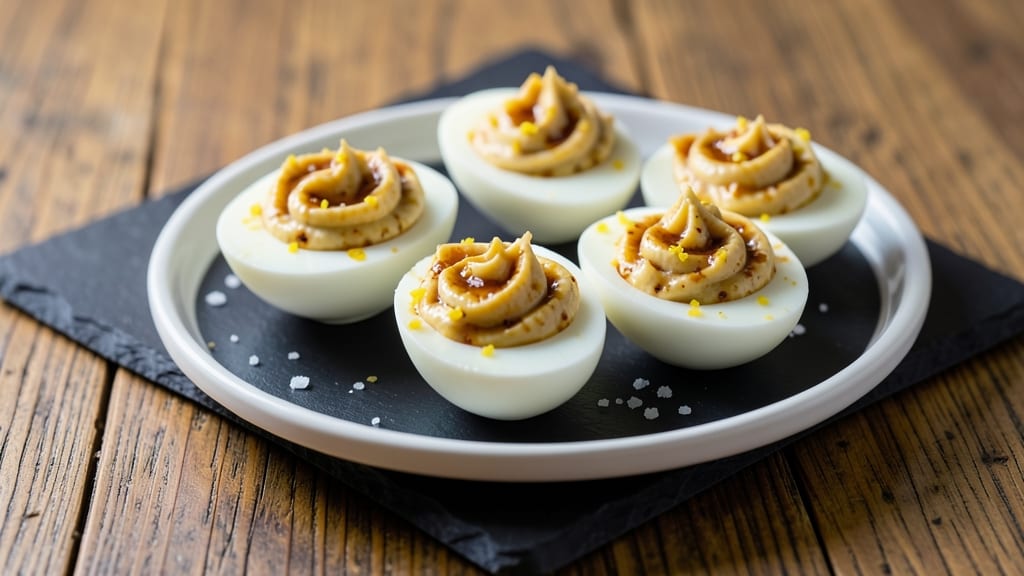
This Atkins deviled eggs recipe delivers all the creamy, tangy goodness of classic deviled eggs—without the carbs. The secret lies in a low-carb filling packed with mustard's bold kick, mayo's richness, and just the right amount of seasoning to keep every bite satisfying while staying true to Atkins principles.
I've perfected this method over years of testing, ensuring the yolks stay perfectly smooth and the whites hold their shape through hard-boiling.
What sets these apart is the Atkins-friendly adaptation: no breadcrumbs, no sugar-laden fillings, just pure protein and healthy fats. The mustard adds a sharp contrast to the creamy mayo base, while a pinch of salt and pepper elevates the flavor without any hidden carbs.
The key technique? Boiling eggs just until the yolks are set but still tender—this prevents them from turning rubbery or cracking when halved.
By the time you're done, you'll have plated deviled eggs that look as impressive as they taste—halved eggs with a smooth, pale yellow filling that's neither too dry nor too runny.
The mustard kick cuts through the richness, making each bite balanced and satisfying. These are perfect for brunch gatherings, picnic spreads, or as a low-carb snack when cravings hit.
Best of all, this recipe scales effortlessly—double or triple the batch for parties, or prep ahead for meal prep. The filling keeps well in the fridge for up to 3 days, so you can assemble these beautiful bites whenever the mood strikes.
Let's get started on a guilt-free indulgence that still feels like a treat.
Ingredients for atkins deviled egg
Eight simple ingredients transform classic deviled eggs into a low-carb, protein-packed delight.
| Ingredient | Amount | Notes |
|---|---|---|
| Large Eggs 🥚 | 8 whole | Room temperature preferred |
| Mayonnaise 🥫 | ½ cup | Duck egg or avocado-based for Atkins |
| Yellow Mustard 🌶️ | 2 tbsp | Dijon-style for stronger flavor |
| Dijon Mustard 🌶️ | 1 tbsp | For extra tang and depth |
| Fresh Lemon Juice 🍋 | 1 tsp | Brightens the filling |
| Kosher Salt 🧂 | ¼ tsp | Fine grain preferred |
| Freshly Ground Black Pepper 🌶️ | ⅛ tsp | Adjust to taste |
| Paprika 🌶️ | ⅛ tsp | Smoked for visual appeal |
| Ice Water 💧 | 1 cup | For cooling boiled eggs |
The eggs are the foundation—large eggs work best for their rich yolks. Room temperature eggs boil more evenly, so take them out of the fridge 30 minutes before cooking. For the mustard, Dijon-style adds depth, but any good-quality yellow mustard works. The mayo is key here: duck egg or avocado-based mayo keeps this Atkins-friendly without sacrificing creaminess. I always grab Hellmann's or Best Foods for consistency, but any brand with no added sugars is fine. If you're strict Atkins, check labels—some mayonnaises contain hidden carbs.
No Dijon mustard? Yellow mustard plus a pinch of garlic powder mimics the flavor. The lemon juice can be swapped for white vinegar if you're out, but fresh lemon gives that bright pop. For the filling, under-mix the mustard—just enough to distribute evenly, not to overpower. If your filling seems too thick, add a dash of water or lemon juice to loosen it. The paprika is optional but adds a beautiful hue and subtle smokiness—smoked paprika works best for visual appeal. Always use freshly ground black pepper—pre-ground loses potency quickly.
Boiled eggs keep in the fridge for 1 week if unpeeled, but once halved, they're best eaten within 2 days. Store the filling separately in an airtight container—it keeps for 3 days in the fridge. For meal prep, boil a big batch of eggs, then assemble the deviled eggs fresh. The filling can be pre-mixed and stored, but the eggs taste best when halved and filled just before serving. For parties, use a piping bag to fill the egg whites neatly—it makes plating look restaurant-worthy.
Why You'll Love This Recipe
- No-Fuss Assembly: I’ll admit it—this recipe is the kind of thing I make when I’m staring at a half-empty fridge wondering what to do. Hard-boil the eggs while you’re watching a show, then mix in mayo, mustard, and a squeeze of lemon. Five minutes later, you’ve got a snack that feels fancy without the effort.
- Bright Tang Kick: That lemon juice? Game-changer. It cuts through the richness of the mayo and mustard, giving these eggs this lift—like a little zing that makes them taste fresh, not heavy. Honestly, the Dijon mustard adds depth too, so it’s not just sweet or sharp, but balanced.
- Picnic or Party Star: Between us, these eggs are my go-to for gatherings. Pack them in a container for a potluck, serve them at a brunch, or even take them to work—they’re sturdy, portable, and always a hit. Plus, the lemon keeps them from getting soggy, so they stay crispy even hours later.
- Budget-Proof Protein: Eggs are cheap, and mayo? You already have it. This recipe costs me pennies per serving, but it feels like I’m treating myself. And because they keep well in the fridge, I make a big batch and snack on them all week—no wasted ingredients, no last-minute grocery runs.
Step-by-step instructions for perfect Atkins deviled eggs
Here's how to make creamy, low-carb deviled eggs with a tangy mustard kick that stays true to Atkins principles.
Hard-Boil the Eggs for Even Cooking
Place the 8 whole large eggs in a saucepan and cover them completely with cold water by about 1 inch. Bring to a boil over high heat, then immediately reduce to a gentle simmer for exactly 10 minutes. You want the water to maintain a steady, rolling simmer—not a vigorous boil—that prevents cracking.
Set a timer and prepare a bowl of 1 cup ice water for the ice bath. When the 10 minutes are up, drain the hot water and transfer the eggs immediately to the ice bath. Let them cool for 10 minutes until completely chilled. This rapid cooling stops the cooking process and makes peeling easier later.
Peel and Halve the Eggs Precisely
Crack each egg gently against the edge of a cutting board, then roll it to crack the shell all over. Peel under running water if needed—this helps remove any stubborn bits of membrane. Cut each egg in half lengthwise and remove the yolks, placing them in a bowl while keeping the whites intact.
I like to use a small spoon to scoop out the yolks cleanly without breaking the whites. If any yolks stick to the whites, gently scrape them off with the spoon. Keep the yolks and whites separate—the yolks will become our filling while the whites form the perfect vessel for serving.
Mash the Yolks Smoothly
Transfer the yolks to a mixing bowl and mash them with a fork until completely smooth. You want a fine, creamy texture without any lumps. Add the 0.5 cup mayonnaise, 2 tablespoons yellow mustard, and 1 tablespoon Dijon mustard, mixing well after each addition.
The combination of yellow and Dijon mustard gives that signature tangy kick while keeping it low-carb. If you're using duck egg or avocado-based mayonnaise, it will have a slightly richer flavor that pairs beautifully with the mustard. Mix until fully incorporated—this is your base filling.
Season and Combine Ingredients
Add the 1 teaspoon fresh lemon juice, 0.25 teaspoon kosher salt, 0.125 teaspoon freshly ground black pepper, and 0.125 teaspoon paprika to the yolk mixture. Stir well to distribute the seasonings evenly. The lemon juice brightens the flavor while the paprika adds a subtle visual appeal that makes these deviled eggs look restaurant-worthy.
Here's where it gets important: Taste the mixture and adjust the seasoning if needed. The mustard can be quite strong, so you might want to add a touch more salt or pepper. The filling should be creamy, tangy, and perfectly balanced—not too sharp or too bland.
Fill and Garnish for Presentation
Spoon the yolk mixture into a piping bag fitted with a small round tip, or use a spoon to carefully fill each egg white half. Pipe the filling into the center of each white half, creating a slight mound. This ensures every bite delivers that creamy, mustard-infused goodness.
Gently press down on the filling to create a smooth surface, then sprinkle with an additional pinch of paprika for color and a hint of smokiness. Serve immediately or refrigerate for up to 2 hours before serving. These deviled eggs are perfect for low-carb gatherings, picnics, or as a protein-packed snack.
Pro Tips For Making Atkins Deviled Egg
- Boil Eggs Until Cool: Start boiling water with a splash of vinegar—it prevents cracking and makes peeling easier later. Once eggs hit a rolling boil, reduce heat to a simmer and cook for exactly 11 minutes. Plunge them into ice water immediately, then let them cool fully in the fridge for 15 minutes before handling. I learned this the hard way—warm eggs slide apart when halved, and you’ll end up with a messy filling.
- Use Dijon for Balance: Skip the yellow mustard if you’re using Dijon—it’s already got the tang and depth this recipe needs. Mix 1 teaspoon Dijon with the mayo and lemon juice for a cleaner, sharper flavor without overpowering. My grandmother swore by this, and she was right: the Dijon cuts through the richness of the mayo, making every bite brighter.
- Don’t Overfill the Halves: Pack the yolk mixture loosely into the egg whites—overfilling spills everywhere when you pipe or spoon it in. Aim for 2-3 teaspoons per half, leaving room at the top. I was skeptical until I tried it: the eggs stay intact, and the filling doesn’t ooze out when you serve them.
- Chill Before Serving: Let the deviled eggs sit in the fridge for at least 30 minutes before serving. This gives the flavors time to meld and prevents the mayo from getting too warm or greasy. Sounds weird, but it works—your guests won’t notice the difference, but you’ll taste it.
Storing and reheating this atkins deviled egg
Fridge Storage Tips
Store your deviled egg filling in an airtight container in the fridge for up to 3 days—this keeps it fresh while maintaining that perfect creamy texture. I like using glass containers because they don’t absorb odors, and the filling stays at a consistent temperature.
The egg whites, however, should be halved and filled just before serving to prevent them from drying out. 💧
Reheating for Creamy Texture
If you’ve stored the filling separately, simply spoon it into the egg whites when ready to serve—no reheating needed! The filling stays creamy at room temperature.
For the egg whites, if they’ve been halved and stored uncovered, give them a quick 5-second microwave zap (covered with a damp paper towel) to warm through gently. This keeps them tender without turning rubbery.
Freezing for Meal Prep
While I don’t recommend freezing deviled eggs (they can get watery when thawed), you can freeze the filling alone for up to 1 month. Thaw it in the fridge overnight, then mix it with a splash of lemon juice to revive the texture.
Just don’t freeze the egg whites—they won’t hold their shape after thawing. For best results, prep the filling ahead and assemble the eggs fresh.
Make-Ahead Assembly
Boil and peel a batch of eggs ahead of time, then store them in the fridge for up to 5 days (unpeeled, in their shells). When ready to serve, halve them, mix the filling, and assemble just before eating.
This is my go-to method for weekend brunches—it cuts prep time in half while keeping everything fresh. The filling can even be pre-mixed and stored separately for easy assembly later. ✨
Reviving Dried-Out Whites
If your egg whites start to dry out, place them in a single layer on a microwave-safe plate, cover with a damp paper towel, and zap for 8-10 seconds.
The steam will help restore moisture without overcooking. Alternatively, brush them lightly with olive oil before serving for extra richness. This trick works wonders for leftovers!
Serving After Storage
When serving stored deviled eggs, garnish with a fresh sprinkle of paprika or a tiny pinch of smoked salt to brighten the flavors. If the filling has thickened slightly, stir in ½ teaspoon lemon juice or 1 teaspoon water to loosen it.
These eggs taste just as good cold or at room temperature—perfect for picnics or potlucks where refrigeration isn’t an option. 🌟
Nutrition facts
Frequently asked questions
Can I use regular mayonnaise instead of duck egg or avocado-based mayo?
Yes, but check the label first! Regular mayonnaise often contains added sugars or thickeners that aren't Atkins-friendly. Brands like Hellmann's or Best Foods typically have zero carbs, but always verify. For extra richness, mix in 1 teaspoon olive oil to replace any lost creaminess from sugar-free versions.
Why does my filling turn runny after mixing?
This usually happens when the yolks aren't fully mashed or the filling sits too long before serving. For a firmer texture, chill the filling for 30 minutes before piping. If it's already too thin, stir in ½ teaspoon Dijon mustard or 1 teaspoon finely chopped pickles to thicken naturally.
What's the best way to keep egg whites from cracking when halving?
Use a sharp chef's knife and strike it firmly with the palm of your hand just before cutting. This prevents the whites from shifting. For extra stability, chill the eggs for 10 minutes after boiling before peeling. If they crack, save them for egg salad—they're still delicious!
Can I make these deviled eggs without mustard?
Swap the mustard for 1 tablespoon lemon juice plus ½ teaspoon garlic powder for a tangy alternative. For a creamy version, add 1 tablespoon sour cream to the yolk mixture. The key is balancing flavors—just adjust salt and pepper to taste.
How do I make these for a crowd without overcooking?
Use a large pot with plenty of water (at least 3 inches over the eggs) and start with cold water. Bring to a boil, then immediately reduce to a gentle simmer for exactly 9 minutes (slightly less time for larger batches). The ice bath is critical—transfer eggs immediately to stop cooking. For 20+ eggs, boil in batches.