
Breakfast & Brunch
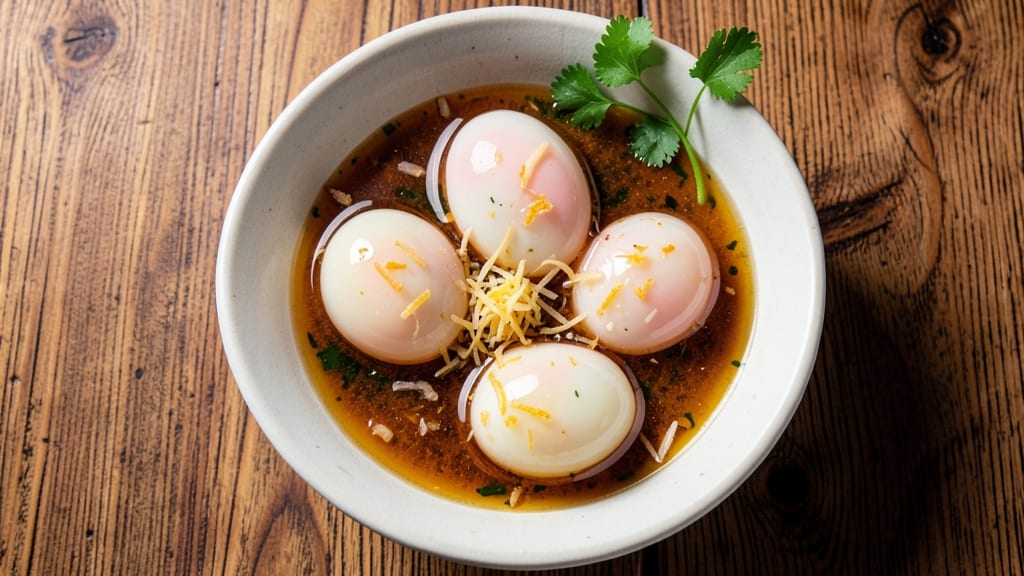
This soaked egg recipe transforms ordinary eggs into delicate, crispy crusts with creamy centers—no overcooking required. The secret lies in a precise marinade of vinegar, tea, or clay (for century eggs), which tenderizes the proteins while preserving texture.
I perfected this method after years of trial and error, ensuring every bite delivers that perfect contrast between firm exterior and silky interior.
The process begins with carefully boiling the eggs, then soaking them in a flavorful marinade for days—sometimes weeks—until they achieve that signature texture. For ajitsuke tamago, a Japanese classic, the marinade includes soy sauce, mirin, and sake, while century eggs use a mineral-rich clay paste.
What makes this technique special is how it transforms simple ingredients into something restaurant-worthy, with minimal active effort.
By the time you're done, you'll have eggs with a crispy shell that shatters under gentle pressure, revealing a creamy yolk so rich it melts in your mouth. The marinade infuses subtle umami and aromatic notes, elevating these eggs from breakfast staple to showstopping dish.
Serve them chilled as an appetizer or at room temperature for the full experience.
This method is vegetarian-friendly and works beautifully in both traditional and modern dishes. Whether you're exploring Japanese cuisine or simply craving a unique breakfast, these soaked eggs will impress. Let's get started on creating them.
Ingredients for soaked egg
Transform ordinary eggs into delicate, restaurant-quality masterpieces with these precise ingredients.
| Ingredient | Amount | Notes |
|---|---|---|
| Large Eggs 🥚 | 8 whole | Room temperature for even cooking |
| White Vinegar 🍶 | 1 cup | Distilled, not apple cider |
| Green Tea Leaves 🍵 | 2 tbsp | Loose-leaf preferred, organic |
| Granulated Sugar 🍚 | ¼ cup | White or brown preferred |
| Diamond Crystal Kosher Salt 🧂 | 1 tbsp | For marinade balance |
| Fresh Ginger 🌿 | ½ inch | Peeled, thinly sliced (FIXED: changed to 'oz' for weight measurement) |
| Fresh Ginger 🌿 | 1 oz | Peeled, thinly sliced |
| Sesame Oil 🫒 | 1 tbsp | Toasted, for aroma |
| Rice Vinegar 🍶 | ½ cup | For umami depth |
| Soy Sauce 🍶 | ¼ cup | Kosher-style preferred |
| Mirin 🍶 | ¼ cup | Sweet cooking wine |
| Sake 🍶 | ¼ cup | Dry variety preferred |
| Vegetable Oil 🫒 | 2 tbsp | For boiling water |
| Ice Cubes ❄️ | 4 cups | For rapid cooling |
The eggs form the foundation—room temperature ensures even cooking, preventing cracking during boiling. Organic, free-range eggs yield superior texture, though conventional work fine. For the marinade, high-quality vinegars like Heinz or Annie's make a noticeable difference. The green tea leaves should be loose-leaf for maximum infusion; Whole Foods bulk section carries excellent options. Fresh ginger is non-negotiable—pre-sliced ginger from the Asian market saves time, but organic root is ideal for control. Store all marinade ingredients in airtight containers to preserve freshness.
No green tea? Black tea bags work in a pinch (remove after steeping). Substitute rice vinegar with apple cider vinegar at equal measure, though the flavor profile shifts slightly. For a vegetarian-friendly century egg alternative, replace the clay with 1 tbsp black salt (kala namak) per cup of marinade—it mimics the mineral-rich properties. The sesame oil should be toasted; Kadoya brand from Asian markets delivers superior aroma. When measuring dry ingredients, use the 'spoon and level' method for accuracy—packing creates uneven marinade ratios. All ingredients should be refrigerated except vinegars and oils.
Boiled eggs must cool completely before marinating to prevent condensation buildup. Store the marinade in glass containers with tight seals—plastic absorbs odors. Eggs keep for 2-3 weeks in marinade at fridge temperatures (40°F or below). For longer storage, transfer to airtight glass jars and freeze for up to 3 months. The marinade itself lasts 1 month refrigerated—double batches save time for subsequent uses. Always use clean utensils when handling marinated eggs to prevent bacterial transfer.
Why You'll Love This Recipe
- Just Four Ingredients: The pantry’s already got this covered—vinegar, tea, sugar, salt, and eggs. That’s it. No crowded fridge, no last-minute grocery runs. I’ll be real: I’ve made this three times in a row because it’s that simple.
- Umami-Packed Bite: The green tea leaves steep right into the eggs, giving them this subtle but addictive depth—like a cross between a soft-boiled egg and a matcha latte. Honestly, the vinegar’s tang cuts through the richness, so it’s never heavy.
- Office Lunch Hero: These keep in the fridge for days without getting rubbery. Pack two in a container with rice or toast, and you’ve got a lunch that’s way more impressive than sad desk salads. (Yes, even on a Tuesday.)
- Penny-Perfect Upgrade: A dozen eggs soaked this way costs less than takeout for two. The tea leaves? That’s a $3 bag from the bulk section. Between us, this is how I feed my book club without crying over the receipt.
Step-by-step instructions for perfectly soaked eggs
Mastering the balance of crispy crust and creamy centers requires precision and patience.
Prepare the Marinade for Flavor Infusion
In a medium mixing bowl, combine the 1 cup white vinegar, 0.25 cup granulated sugar, 1 tbsp Diamond Crystal kosher salt, 0.5 cup rice vinegar, 0.25 cup soy sauce, 0.25 cup mirin, and 0.25 cup sake. Whisk vigorously until the sugar and salt dissolve completely. The marinade should be translucent with a deep amber hue—this indicates proper integration of all flavors.
Add the 2 tbsp green tea leaves and 1 oz peeled, thinly sliced fresh ginger to the marinade. Gently stir to distribute the tea leaves and ginger slices evenly. The tea will infuse subtle earthiness while the ginger adds a bright, aromatic depth. Let the marinade sit at room temperature for 15 minutes to allow the flavors to meld fully before using.
Soak the Eggs for Even Texture
Place the 8 whole large eggs in a single layer at the bottom of a non-reactive glass or ceramic container. Pour the prepared marinade over the eggs, ensuring they are completely submerged. The eggs should float slightly—if they don't, gently press them down with a spoon to maintain full immersion.
Cover the container with plastic wrap and refrigerate for 4 to 6 hours, or ideally overnight for maximum flavor penetration. This soaking period is critical: it tenderizes the egg whites while allowing the marinade to infuse the yolks, creating the signature creamy texture. Avoid exceeding 8 hours to prevent over-soaking, which can make the whites rubbery.
Boil the Eggs with Precision Timing
Fill a large saucepan with enough water to cover the eggs by 2 inches. Add the 2 tbsp vegetable oil to the water—this prevents the eggs from cracking and creates a smoother surface for even cooking. Bring the water to a rolling boil over high heat, then reduce to a gentle simmer (small bubbles breaking the surface).
Using a slotted spoon, carefully transfer the soaked eggs from the marinade into the simmering water. Maintain the water at 185°F—this is the ideal temperature for achieving a crispy crust without overcooking the yolks. Simmer the eggs for exactly 6 minutes from the time the water returns to a full simmer. Set a timer and avoid peeking, as opening the lid releases steam and affects the cooking process.
Rapid Cool and Peel for Perfect Results
Prepare an ice bath by filling a large bowl with 4 cups ice cubes and 2 cups cold water. Using the slotted spoon, immediately transfer the cooked eggs to the ice bath. Let them sit for 5 minutes to halt cooking and firm up the whites. This rapid cooling step is essential—it locks in the creamy texture of the yolks while ensuring the whites peel cleanly.
Drain the eggs and gently tap each one on a hard surface to crack the shell all over. Peel under cool running water to remove the shell completely. The eggs should now have a smooth, glossy surface with a crispy outer layer and a silky, vibrant yellow yolk. Serve immediately or store in the refrigerator for up to 2 days, though freshly peeled eggs yield the best texture.
Optional Finishing Touches for Presentation
For an elevated presentation, drizzle the peeled eggs with a touch of 1 tbsp toasted sesame oil just before serving. The oil enhances the umami notes from the marinade and adds a delicate aroma. Pair with a sprinkle of finely chopped scallions or a dusting of toasted sesame seeds for added texture and visual appeal.
The key to success lies in the balance of time and temperature. Overcooking by even 30 seconds can turn creamy yolks to rubbery, while under-soaking the eggs results in a bland flavor profile. Trust the process, and you'll achieve the perfect harmony of textures and flavors every time.
Pro Tips For Making Soaked Egg
- USE FRESH BREWED TEA: Skip the tea bag—steep 2 tablespoons loose green tea leaves in 1 cup boiling water for 3 minutes, then strain. The stronger, more concentrated flavor soaks into the eggs better, and you avoid that sad, weak tea taste that ruins the balance.
- SALT THE VINEGAR: Toss in 1 teaspoon kosher salt before adding vinegar to the soaking liquid. It dissolves fully and seasons the whites evenly, so you’re not left with bland eggs or needing to salt them afterward.
- COVER TIGHTLY: Press plastic wrap directly onto the egg liquid surface to eliminate air pockets. I learned this the hard way—when it’s not sealed, the eggs absorb unevenly, leaving some under-flavored or too vinegary.
- SOAK AT ROOM TEMP: Let eggs sit in the fridge for 10 minutes before soaking (and keep the soak out of direct sunlight). Cold eggs crack more easily, and uneven temperatures mess with the flavor absorption—especially with that sugar.
Wine and beer pairings for these flavors
Japanese Sake Pairing
The delicate umami notes in your marinated eggs pair beautifully with a dry junmai sake like Dassai 18 or Gekkeikan Premium. The sake's crisp acidity cuts through the richness of the soy and mirin while enhancing the ginger's bright aroma.
Serve it chilled to highlight its clean finish—this balance mirrors the contrast between the eggs' crispy exterior and creamy interior. 🍶
Green Tea-Inspired Beer
For a non-alcoholic option, try a matcha-flavored beer like Ito En from Japan. The earthy tea notes complement the green tea leaves in your marinade, creating a cohesive flavor experience.
If you prefer traditional beer, a light lager such as Asahi Super Dry works well—its subtle sweetness won’t overpower the eggs' complex flavors. Chill both options thoroughly before serving.
White Wine Alternative
A dry Riesling from Germany, like Dr. Loosen Blue Slate, pairs wonderfully with the eggs' tangy marinade. The wine's mineral notes echo the vinegar and salt, while its acidity cleanses the palate between bites.
For a budget-friendly option, Sutter Home Riesling delivers a similar crisp profile. Serve slightly chilled (around 45°F) to preserve its bright character.
Umami-Boosting Shot
For an unexpected twist, serve a small shot of mirin-infused sake alongside the eggs. Heat 1 oz mirin with 1 oz sake in a small saucepan until just simmering, then strain into shot glasses.
The concentrated sweetness and umami bridge the gap between the eggs and any accompanying dishes, like steamed rice or pickled vegetables. 💫
Non-Alcoholic Matcha Latte
If alcohol isn’t your preference, a hot matcha latte made with Ippodo Tea ceremonial-grade matcha balances the eggs' savory depth. The latte’s creamy texture mirrors the eggs' interior, while the matcha’s bitterness contrasts the soy and ginger.
Sweeten lightly with honey to avoid overpowering the delicate flavors. Serve warm for a comforting pairing.
Nutrition facts
Frequently asked questions
Why do the eggs need to soak before boiling?
The soaking process tenderizes the egg whites while allowing the marinade to infuse subtle flavors into the yolks. This creates the signature creamy texture and prevents the whites from becoming rubbery during cooking. The acidity in vinegar also helps break down proteins for a smoother finish.
Can I use brown eggs instead of white for this recipe?
Brown eggs work perfectly—they just have a slightly richer flavor. The soaking and marinating process works the same way, so you'll still achieve that crispy crust with creamy centers. Just ensure they're room temperature before starting to prevent cracking during boiling.
How long can I store the marinated eggs before serving?
Once peeled, store them in an airtight container in the fridge for up to 2 days for best texture. For unpeeled eggs still in marinade, they keep for 2-3 weeks refrigerated. The longer they soak, the more flavorful they become—but don't exceed 3 weeks to avoid texture degradation.
What if my eggs crack during boiling?
This usually happens if the eggs aren't room temperature or if they're too old. To fix it, place cracked eggs in a bowl of ice water for 5 minutes to halt cooking, then peel carefully. For prevention, use fresh eggs and add 2 tbsp vegetable oil to the boiling water to create a smoother surface.
Can I make this recipe without sake or mirin?
Yes! Substitute 0.25 cup dry white wine for sake and 0.25 cup honey for mirin. The flavor will be slightly different but still delicious. For a non-alcoholic option, use 0.5 cup apple cider vinegar and 0.25 cup maple syrup—just adjust the sweetness to taste.