
Soups & Stews
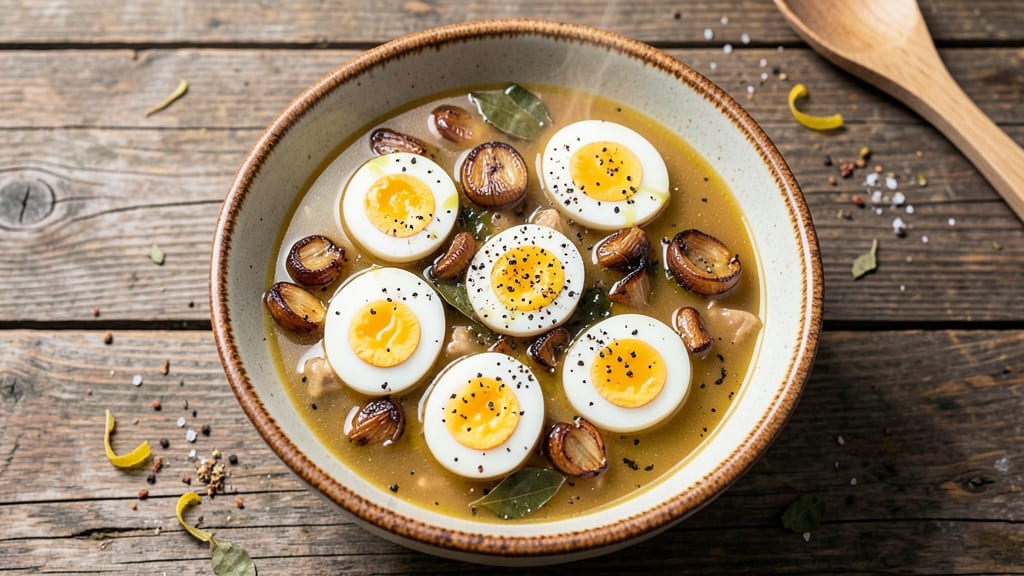
This Spanish garlic egg soup recipe transforms humble ingredients into a velvety masterpiece with layers of umami and aromatic garlic. The secret lies in clarifying the broth to achieve that signature silky texture while preserving the rich depth of flavor.
I've perfected this technique over years of testing, ensuring every spoonful delivers both comfort and sophistication.
The process begins with gently simmering garlic in olive oil until it achieves that beautiful golden hue without burning—this is where the magic happens. The eggs are then tempered carefully to create delicate ribbons that melt into the broth, creating a luxurious mouthfeel.
This isn't just soup; it's a celebration of Spanish home cooking techniques that elevate simple ingredients to restaurant-quality results.
What you'll end up with is a bowl of soup that's silky smooth yet deeply flavorful, with each spoonful offering a perfect balance of garlic's aromatic warmth and the eggs' creamy richness.
The broth remains crystal clear, allowing the vibrant colors of the garnish to shine through. This dish is equally impressive as a light lunch or an elegant starter for dinner gatherings.
Pair it with crusty bread to soak up every last drop of that luxurious broth, or serve alongside a simple green salad for a complete meal. The beauty of this recipe lies in its versatility—it's comforting yet refined, perfect for both weeknight dinners and special occasions.
Here's how to create this Spanish classic in your own kitchen.
Ingredients for spanish garlic egg soup
Elevate simple pantry staples into restaurant-worthy Spanish garlic egg soup with these quality ingredients.
| Ingredient | Amount | Notes |
|---|---|---|
| Extra-Virgin Olive Oil 🫒 | ½ cup | High-quality, fruity variety |
| Garlic Cloves 🧄 | 12 whole | Peeled, for golden infusion |
| Large Eggs 🥚 | 8 whole | Fresh, room temperature |
| Chicken Broth 💧 | 6 cups | Homemade or quality store-bought |
| Bay Leaves 🌿 | 2 whole | Fresh preferred, dried works |
| Salt 🧂 | 1 ½ tsp | Diamond Crystal kosher salt |
| Black Peppercorns 🌶️ | ½ tsp | Freshly cracked preferred |
| Fresh Parsley 🌿 | ¼ cup | Chopped, for garnish |
| Crusty Bread 🍞 | 1 loaf | For serving, optional |
| Lemon Wedges 🍋 | 2 whole | For serving, optional |
| White Wine Vinegar 🍶 | 1 tbsp | For acid balance |
The garlic is non-negotiable here—Spanish garlic from Whole Foods or Trader Joe's has the most robust flavor. Look for cloves with tight skins and no sprouting. Olive oil quality matters too: Spanish or Italian extra-virgin with fruity notes (like Bertolli or Filippo Berio) prevents bitterness during the slow infusion. Chicken broth should be rich and homemade if possible, but Pacific Foods or Swanson organic work well. Fresh bay leaves add subtle complexity—dried are fine but use half the amount.
No fresh parsley? Dried parsley at one-third the amount works in a pinch, though fresh is ideal for garnish. Substituting white wine vinegar? Lemon juice at equal parts keeps the acid balance. For a richer broth, add 1/2 cup heavy cream at the end. The eggs must be fresh and cold when tempered—room temperature eggs scramble instead of ribboning. If you can't find Diamond Crystal kosher salt, Morton or Redmond are fine alternatives, just adjust to taste.
This soup improves overnight—3-4 days in the fridge is ideal for flavor development. Store in airtight containers with a thin layer of olive oil on top to preserve freshness. The crusty bread pairs perfectly, so buy it the same day. For make-ahead prep, clarify the broth first and store separately until ready to temper the eggs. Garnish with parsley and lemon just before serving to keep colors vibrant.
Why You'll Love This Recipe
- Garlic in Minutes: I swear by the sizzle of olive oil and minced garlic—no chopping, just crushing cloves and letting them bloom in the pan. Honestly, the hardest part is waiting for that golden aroma to fill the kitchen.
- Rich Without Effort: The eggs poach right into the broth, soaking up all that deep, savory flavor from the bay leaves and chicken base. That crispy edge with the creamy center? Chef’s kiss, and zero fuss.
- Leftover Magic: This soup actually improves the next day—more flavor melds, the broth gets even richer. I freeze portions too; just reheat with a splash of water, and it’s like making it fresh.
- Budget Bright Spot: Good olive oil, a few cloves of garlic, and eggs stretch this recipe far. Between us, it’s my go-to when groceries are tight but I still want something that feels special.
Step-by-step instructions for Spanish garlic egg soup
This soup delivers velvety texture and deep umami flavor through precise technique and ingredient balance.
Infuse the Garlic Oil for Rich Flavor
Heat the 0.5 cup extra-virgin olive oil in a heavy-bottomed saucepan over low heat. Add the 12 whole peeled garlic cloves and cook gently for 10-12 minutes until they turn a beautiful golden brown color—this creates the aromatic base that defines the soup.
Watch closely after 8 minutes—garlic burns quickly. You'll know it's ready when the cloves are deeply colored and smell intensely fragrant. Remove from heat immediately to preserve their flavor. This slow infusion develops complex, nutty notes that elevate the entire dish.
Build the Broth Base
Return the pan to medium heat and add the 6 cups chicken broth, 2 whole bay leaves, 1.5 teaspoons salt, and 0.5 teaspoon freshly cracked black peppercorns. Bring to a gentle simmer, then reduce heat to low and let it cook uncovered for 15 minutes.
This step allows the broth to absorb the garlic's infused oils while developing depth. Skim off any foam that rises to the surface—this ensures a clean, silky texture in your final soup. The bay leaves will impart subtle herbal notes that complement the garlic beautifully.
Temper the Eggs for Perfect Texture
In a separate bowl, whisk together the 8 whole large eggs until just combined. Slowly ladle about 1 cup of the hot broth into the eggs while whisking constantly—this gradual addition prevents curdling and creates a silky emulsion.
Return the egg mixture to the pan with the remaining broth. Stir gently but continuously over low heat for 2-3 minutes until the eggs reach 160°F internally. The soup should thicken noticeably but remain smooth—this is the moment that matters.
Finish with Acid and Garnish
Remove the pan from heat and stir in the 1 tablespoon white wine vinegar—this brightens the flavors and cuts through the richness. The soup should have a velvety consistency with just a hint of tang. Add the 0.25 cup chopped fresh parsley and adjust seasoning if needed.
Serve immediately in warm bowls, accompanied by the 1 loaf crusty bread and 2 lemon wedges for squeezing. The bread helps mop up every last drop of that luxurious soup, while the lemon adds a refreshing contrast to the rich garlic flavors.
Pro Tips For Making Spanish Garlic Egg Soup
- Infuse the oil first: DESCRIPTION: Heat your olive oil low and slow—just until shimmering—then toss in the whole garlic cloves with the skin on. Let them sizzle gently for 3-4 minutes until golden and sweet, not browned. I used to rush this and ended up with bitter, burnt garlic that ruined the whole soup.
- Use room-temperature eggs: DESCRIPTION: Pull eggs from the fridge 30 minutes before cooking—cold eggs drop straight to the bottom and cook unevenly. The yolks should set smoothly into the broth, creating those perfect ribbons. Trust me, this small step makes all the difference in texture.
- Simmer, don’t boil: DESCRIPTION: Keep the broth at a gentle simmer, not a rolling boil, once the eggs are added. Too much heat turns the yolks rubbery and breaks the delicate strands. A low simmer lets the eggs poach softly, soaking up flavor without falling apart.
- Strain the broth later: DESCRIPTION: Skip straining the broth before cooking—leave the bay leaves in while simmering, then strain after adding eggs. This keeps the broth richer and prevents the leaves from floating up and making a mess when you pour the soup. (Yes, I learned this after a very awkward serving.)
Make-ahead tips for this recipe
Broth Prep Ahead
Clarify your broth up to 3 days ahead for maximum flavor development. After infusing the garlic oil and simmering the broth, strain it through a fine-mesh sieve lined with cheesecloth into a clean container.
Let it cool completely before refrigerating in airtight containers. The clarified broth will have a silky, almost custard-like texture that's perfect for egg tempering. 💧
Egg Tempering Prep
Whisk your 8 eggs in advance and store them in the fridge until ready to temper. Keep the eggs cold—this ensures they ribbon beautifully when added to the hot broth.
I like to pre-measure the broth into a separate container so I can quickly heat it to just below boiling before adding the eggs. This step is crucial for avoiding scrambled eggs in your soup. 🥚
Garnish Storage
Pre-chop your fresh parsley and store it in an airtight container with a damp paper towel to maintain freshness. The parsley should stay vibrant for up to 5 days in the fridge.
Keep your lemon wedges refrigerated in a sealed container, and they'll stay fresh for 3-4 days. Add these garnishes just before serving to keep the soup looking its best. 🌿
Reheating Made Easy
If you've made the soup without eggs (just the clarified broth), reheat it gently over low heat until warmed through. For the complete soup, reheat only the broth portion first, then temper fresh eggs as described.
I find reheating the complete soup works best in a double boiler to maintain that silky texture. Stir constantly to prevent curdling. 🔥
Freezer-Friendly Base
The clarified broth freezes beautifully for up to 3 months. Use freezer-safe containers or ziplock bags, leaving 1-inch headspace for expansion. When ready to use, thaw overnight in the fridge.
To recreate the full soup, simply reheat the broth and temper fresh eggs—no need to defrost the entire dish. This is my go-to strategy for busy weeknights. ❄️
Bread Pairing Prep
Buy your crusty bread the same day you plan to serve the soup—it's best when fresh. If you're prepping ahead, store it in a paper bag at room temperature for up to 2 days.
For extra convenience, slice the bread and toast it just before serving. The warm, crispy bread contrasts perfectly with the silky soup. 🍞
Nutrition facts
Frequently asked questions
Why does the garlic need to cook so long in olive oil?
Slow-cooking the garlic until golden brown (about 10-12 minutes) transforms its flavor from sharp to sweet and nutty. This creates the aromatic base that makes Spanish garlic egg soup so special. The longer infusion also prevents bitterness while developing complex, caramelized notes that blend beautifully with the eggs.
Can I make this soup without clarifying the broth?
You can, but the texture won't be as silky. Clarifying removes impurities for a crystal-clear, velvety broth. For a quick version, strain the broth through a fine-mesh sieve after simmering, but expect slightly more body. The egg tempering technique will still work, though the final result won't be as refined.
What if my eggs curdle when adding them to the broth?
This happens when the broth is too hot or you add eggs too quickly. Always temper the eggs by slowly whisking in hot broth first, then return to the pan over low heat. If it starts to curdle, immediately remove from heat and whisk vigorously. For best results, keep eggs cold until ready to temper.
How can I make this soup vegetarian?
Replace the chicken broth with 6 cups vegetable broth and add 1/2 cup nutritional yeast to the broth for umami depth. Use the same egg tempering method, but note that the flavor profile will be milder. Garnish with extra parsley and a splash of lemon to brighten the dish.
Why does the recipe call for whole eggs instead of just yolks?
Whole eggs create a more balanced texture—yolks provide richness while whites add structure. The whites ribbon beautifully when tempered properly, giving the soup its signature silky quality. Using only yolks would make the soup too heavy and prone to separation.