
Main Courses
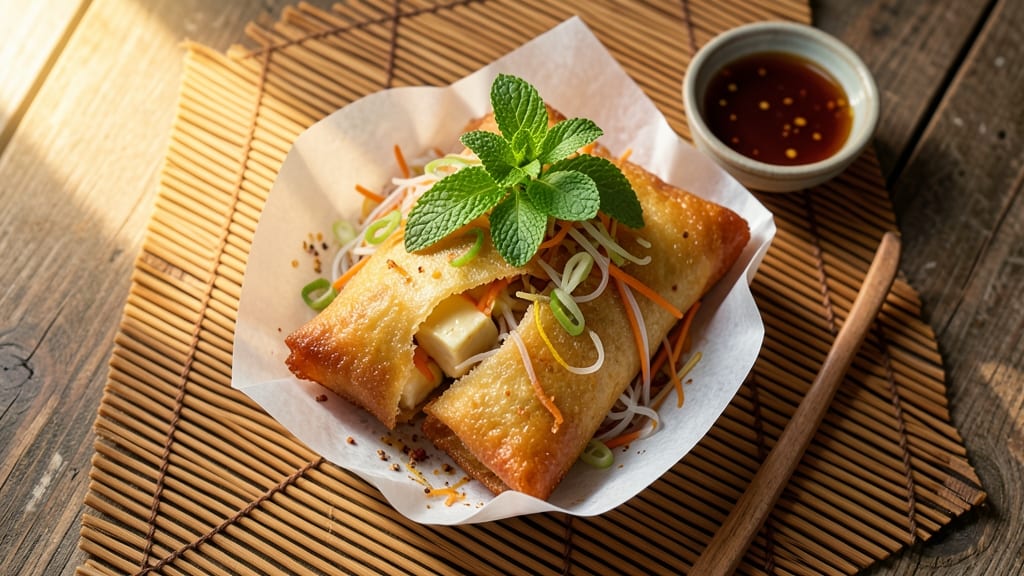
This Vietnamese egg roll recipe with rice paper delivers the perfect balance of crispy texture and vibrant flavors—no deep-frying required. I developed this version after years of experimenting with fresh spring rolls, focusing on a vegetarian-friendly filling that still packs bold, savory punch.
The secret lies in the delicate rice paper, which becomes tender yet sturdy enough to hold all the fillings without tearing. Whether you prefer the fresh version or opt for pan-frying, this method ensures every bite is packed with fresh herbs, tender vegetables, and aromatic spices.
The beauty of these egg rolls is their versatility—you can customize the filling with tofu, mushrooms, or even shrimp if you're not vegetarian. I love using a mix of rice vermicelli for texture and fresh mint for that signature Vietnamese brightness.
The key to success is proper rolling technique: keep the rice paper slightly damp and work quickly to prevent drying. Once assembled, you can serve them fresh with a tangy nuoc cham dipping sauce or pan-fry them for a crispy exterior that contrasts beautifully with the cool, fresh interior.
What makes this recipe truly special is how it captures the essence of Vietnamese street food in your home kitchen. The combination of crispy (when fried) or tender (when fresh) rice paper with the savory filling creates a harmonious balance of textures and flavors.
Each roll is a perfect bite-sized package of freshness and umami, making it an ideal dish for gatherings or a satisfying weeknight meal. The dipping sauce—made with fish sauce, lime, and sugar—adds another layer of complexity that ties everything together.
This recipe is designed to be approachable yet impressive, proving that you don't need a complicated process to create restaurant-quality results. With just a few simple ingredients and a bit of practice, you'll master the art of rolling these delicate wraps.
Whether you're serving them as an appetizer or a light main course, they're sure to become a favorite in your household. Let's get started!
Ingredients for vietnamese egg roll recipe rice paper
Fresh rice paper and vibrant veggies come together for crispy, savory egg rolls everyone will love.
| Ingredient | Amount | Notes |
|---|---|---|
| Rice Paper Sheets 🍱 | 12 whole | Fresh, not dried |
| Firm Tofu 🍫 | 1 lb | Extra-firm, pressed and cubed |
| Carrots 🥕 | 2 medium | Shredded, about 1 cup |
| Rice Vermicelli 🍜 | 4 oz | Uncooked, cut into 3-inch pieces |
| Fresh Mint Leaves 🌿 | 1 cup | Chopped, stems removed |
| Green Onions 🧅 | 4 whole | Thinly sliced, white and green parts |
| Lime Juice 🍋 | ½ cup | Freshly squeezed |
| Fish Sauce 🍶 | ¼ cup | Vegetarian alternative: soy sauce |
| Sugar 🍚 | ¼ cup | White or brown |
| Vegetable Oil 🫒 | ½ cup | For pan-frying |
| Salt 🧂 | ½ tsp | Kosher or sea salt |
| Garlic Cloves 🧄 | 4 cloves | Minced, for dipping sauce |
| Red Chili Peppers 🌶️ | 1 whole | Thinly sliced, optional for heat |
Rice paper is the star—look for fresh sheets at Asian markets or the refrigerated section of larger grocery stores. Thanh Long brand is my go-to, but any brand with a soft, pliable texture works. Keep them submerged in warm water for just 5-10 seconds before wrapping—any longer and they'll get too soft to handle. Fresh mint is non-negotiable for that signature Vietnamese brightness, but if you can't find it, cilantro works in a pinch. For the tofu, extra-firm is essential—press it between paper towels for 20 minutes to remove excess water before cubing.
No fish sauce? Soy sauce or coconut aminos mimic the umami punch. The carrots can be baby carrots or regular—just shred them finely. Want more texture? Add shredded cabbage or bean sprouts to the mix. For the dipping sauce, I use vegetarian fish sauce (like Red Boat or Three Crabs), but regular soy sauce works too. If you're feeling adventurous, add a splash of rice vinegar for tang. The rice vermicelli should be cut into 3-inch pieces—this gives the perfect bite-sized texture without making the rolls too bulky.
Fresh rice paper keeps in the fridge for 1 week if sealed tightly, but use it within 3 days for best results. The filling ingredients (except oil) stay fresh for 5 days in the fridge. For make-ahead convenience, prep all components except the rice paper, then assemble and pan-fry just before serving. The dipping sauce can be made 2 days ahead—the flavors deepen over time. Store completed rolls in an airtight container between layers of parchment paper to prevent sticking.
Why You'll Love This Recipe
- No-Fuss Assembly: I swear by this recipe because it’s the only time I’ve ever made egg rolls without a single mess. Just dip, roll, and fold—no frying, no wrapping paper, no stress. The rice paper soaks up the tofu and carrot mix like a dream, and even my kids can help (mostly).
- Herb-Packed Crunch: That first bite? Fresh mint and rice vermicelli add a bright, chewy contrast that makes it taste like a whole meal. Honestly, the tofu stays tender while the carrots stay crisp—no soggy bits, just pure satisfaction.
- Lunchbox Hero: Between us, this is my go-to for packed lunches. Roll them up ahead of time, toss in a container, and they’re ready to grab. The rice paper holds together surprisingly well, and the vermicelli adds that satisfying bite—no reheating required.
- Budget-Friendly Flex: I can make a whole batch for under $10 using store-brand tofu and seasonal veggies. Plus, leftovers? They reheat beautifully in a pan or microwave, so it’s my secret weapon for feeding the family without breaking the bank.
Step-by-step instructions for Vietnamese egg rolls with rice paper
Assemble these delicate wraps with confidence—crispy edges and tender fillings every time.
Prepare the Filling Ingredients
Start by pressing the 1 lb firm tofu between paper towels for 15 minutes to remove excess moisture. Cut it into small cubes that will cook evenly. In a large bowl, combine the shredded 2 medium carrots, the 4 oz rice vermicelli cut into 3-inch pieces, and the chopped 1 cup fresh mint leaves. Add the sliced 4 whole green onions and toss everything together gently.
In a separate small bowl, whisk together the 0.5 cup lime juice, 0.25 cup fish sauce, 0.25 cup sugar, and 0.5 tsp salt. Taste and adjust the seasoning—this sauce should balance sweet, salty, and tangy. Add the minced 4 cloves garlic and thinly sliced 1 whole red chili peppers if you like some heat. Pour this dressing over the vegetable mixture and toss until everything is evenly coated. Let the filling sit for 10 minutes to allow the flavors to meld.
Pan-Fry the Tofu for Crispy Texture
Heat the 0.5 cup vegetable oil in a non-stick skillet over medium-high heat until it shimmers but isn't smoking. Add the tofu cubes in a single layer, leaving space between them. Cook undisturbed for 4-5 minutes until the bottoms are golden brown and crispy—this is crucial for that perfect texture. Flip carefully and cook another 3-4 minutes until evenly browned on all sides. Transfer the crispy tofu to a paper towel-lined plate to drain excess oil.
Real talk: don't overcrowd the pan or the tofu will steam instead of crisp. If needed, work in batches. Once cool enough to handle, add the tofu to your prepared filling mixture and combine gently. The filling should be moist but not soggy—if it seems too wet, let it sit another 5 minutes to absorb excess liquid.
Soften the Rice Paper for Wrapping
Fill a large shallow dish with warm water—just enough to cover the bottom. Working with one rice paper sheet at a time, carefully dip it into the water at a 45-degree angle. Let it soak for 5-8 seconds until pliable but still slightly firm—it should be soft enough to wrap but not mushy. I like to hold it with tongs to avoid burning my fingers on the hot water.
Lay the softened sheet on a clean kitchen towel to drain excess water for about 10 seconds. The paper should be translucent and flexible. Keep the remaining sheets covered with a damp towel to prevent drying while you work. Here's the thing—rice paper dries out fast, so work quickly but carefully to avoid tearing.
Assemble the Egg Rolls
Place about 2 tablespoons of the tofu filling near the bottom of the rice paper sheet, about 1 inch from the edge. Fold the bottom edge over the filling, then fold in the sides like you're wrapping a burrito. Roll tightly but gently, using your fingers to press the edges as you go. The goal is to create a neat cylinder with the filling completely enclosed.
For the crispy finish, place the assembled rolls seam-side down on a clean surface. You'll notice they'll be slightly sticky—this helps them hold together. Repeat with all 12 rice paper sheets, working quickly to maintain the paper's pliability. If any rolls start to dry out before you're done, lightly mist them with water to soften again.
Pan-Fry for Golden Crispiness
Heat 2 tablespoons of vegetable oil in a clean skillet over medium heat. Add 3-4 egg rolls at a time and fry for 2-3 minutes on each side until golden brown and crispy. The key is patience—don't rush this step or the rice paper will tear. You'll know they're ready when they release easily from the pan and have a beautiful golden hue.
Transfer the fried egg rolls to a paper towel-lined plate to drain excess oil. Serve immediately while still warm and crispy. These rolls are best enjoyed right away when the rice paper is at its crispest. For extra flavor, serve with additional lime wedges or a side of the reserved dipping sauce. Each bite should deliver that perfect balance of crispy, tender, and savory flavors.
Pro Tips For Making Vietnamese Egg Roll Recipe Rice Paper
- SOAK RICE PAPER RIGHT: I learned this the hard way—don’t just dunk and go. Soak each sheet for 10-15 seconds in warm (not boiling) water until pliable but still slightly firm. Over-soaking turns them mushy, and under-soaking makes them brittle. Work in batches so they don’t dry out while you assemble.
- PRESS TOFU DRY: Skip the paper towels—this isn’t a sponge. After pressing tofu, wrap it in a clean kitchen towel and place a heavy pan or cast-iron skillet on top for 10 minutes. The direct pressure removes more water, and the texture stays firm when you pan-fry it. Trust me, your egg rolls won’t fall apart later.
- SHRED CARROTS FINE: Julienne them into matchstick-thin strips, then chop crosswise into rice-grain-sized pieces. Thick shreds stay crunchy and chewy, while fine shreds soften perfectly and blend into the filling. Use a sharp knife—dull blades crush the carrots, turning them into a sad, mushy paste.
- COOK VERMICELLI AL DENTE: Boil vermicelli for 2-3 minutes less than the package says, then rinse immediately in cold water. Overcooking turns them into a gluey mess that ruins the roll’s structure. Cold water stops the cooking and keeps them light and separate—critical for texture. (Yes, even if you’re impatient like me.)
Dietary considerations for vietnamese egg roll recipe rice paper
Vegetarian-Friendly Filling
The beauty of this Vietnamese egg roll recipe lies in its adaptability—especially for vegetarians. I swapped out traditional shrimp or pork with extra-firm tofu pressed to remove excess moisture, ensuring it stays crispy when pan-fried.
The filling also includes rice vermicelli for texture, shredded carrots for crunch, and fresh mint for that signature Vietnamese brightness. This combo delivers a satisfying, meat-free experience that still packs bold flavors. 🌱
Gluten-Free Adaptations
For gluten-free diets, this recipe is naturally compliant since it relies on rice paper, fresh herbs, and vegetables. Just double-check your fish sauce—some brands contain wheat. I recommend Red Boat Vegetarian Fish Sauce or coconut aminos as gluten-free alternatives.
The rice vermicelli should also be certified gluten-free, and the pan-frying oil (like vegetable or avocado oil) is inherently safe. Always verify labels, but this dish is a great gluten-free option for those avoiding wheat.
Allergen Considerations
If you're watching for common allergens, this recipe is relatively safe with a few precautions. The rice paper itself is typically free of top allergens, but always check the packaging. For nut allergies, ensure your fish sauce (or substitute) is nut-free. Soy allergies?
Stick to vegetable oil for pan-frying and avoid soy-based fish sauces. The filling ingredients—tofu, carrots, mint, and vermicelli—are usually safe, but homemade tofu may contain soy. For extra caution, use a dedicated pan for frying to avoid cross-contamination.
Nut-Free & Soy-Free Options
To make this recipe completely nut-free and soy-free, replace the tofu with pan-seared mushrooms (like shiitake or oyster) for umami depth. Use coconut aminos instead of fish sauce, and ensure your vermicelli is made from rice or mung beans. For extra protein, add chickpeas or lentils to the filling.
The key is balancing flavors—mushrooms and coconut aminos work well together, but taste as you go and adjust seasonings to your preference. This version keeps the dish hearty and satisfying without relying on soy or nuts. ✨
Dairy-Free by Design
This recipe is already dairy-free, which makes it perfect for those avoiding lactose. The filling relies on fresh herbs, vegetables, and tofu (or mushrooms), while the rice paper and dipping sauce are naturally dairy-free.
If you're serving alongside other dishes, just double-check any sauces or garnishes—like a creamy dipping sauce or sprinkled cheese—to keep it fully dairy-free. The crispy texture and vibrant flavors shine without dairy, making this a great option for vegan or lactose-intolerant diets.
Make-Ahead Tips for Dietary Needs
Prepping ahead is a game-changer for dietary restrictions. Assemble the filling ingredients (tofu, carrots, vermicelli, and herbs) up to 2 days in advance and store in an airtight container. Keep the rice paper separate until ready to use—it dries out quickly.
For the dipping sauce, make it 1 day ahead and store in the fridge. When ready to assemble, pan-fry the rolls fresh for the best texture. This approach ensures you can accommodate dietary needs without last-minute stress, and everything stays fresh and flavorful. 💡
Nutrition facts
Frequently asked questions
What's the difference between fresh spring rolls and fried egg rolls?
Fresh spring rolls (Gỏi cuốn) are served raw with a dipping sauce, while fried egg rolls (Chả giò) get pan-fried for crispy edges. The rice paper stays tender in fresh rolls but becomes golden and crispy when fried. Both use the same filling, but the texture and serving style differ completely.
Can I use store-bought rice paper for this recipe?
Look for fresh rice paper sheets at Asian markets or the refrigerated section of larger grocery stores. Brands like Thanh Long work perfectly. Just avoid dried rice paper—it's too thick and won't wrap properly. Keep unused sheets covered with a damp towel while working to prevent drying.
How do I prevent the filling from leaking when rolling?
Work quickly with slightly damp rice paper and use about 2 tablespoons of filling per roll. Press the edges firmly as you roll to seal the filling inside. If your filling is too wet, let it sit for 5 minutes to absorb excess moisture. For extra security, place the assembled rolls seam-side down on a clean surface before frying.
What's the best way to reheat leftover fried egg rolls?
Reheat in a dry skillet over medium heat for 1-2 minutes per side until crispy again. Avoid microwaving—they'll get soggy. For extra crispiness, place them on a baking sheet and broil for 30 seconds after reheating. Store leftovers in an airtight container between layers of parchment paper to maintain texture.
Can I make these egg rolls without fish sauce?
Yes! Use soy sauce or coconut aminos for a vegetarian version. For extra depth, add a splash of rice vinegar or lime juice to balance flavors. The dipping sauce will still taste tangy and savory—just taste as you go and adjust seasonings. This works especially well for soy-free diets too!