
Breakfast & Brunch
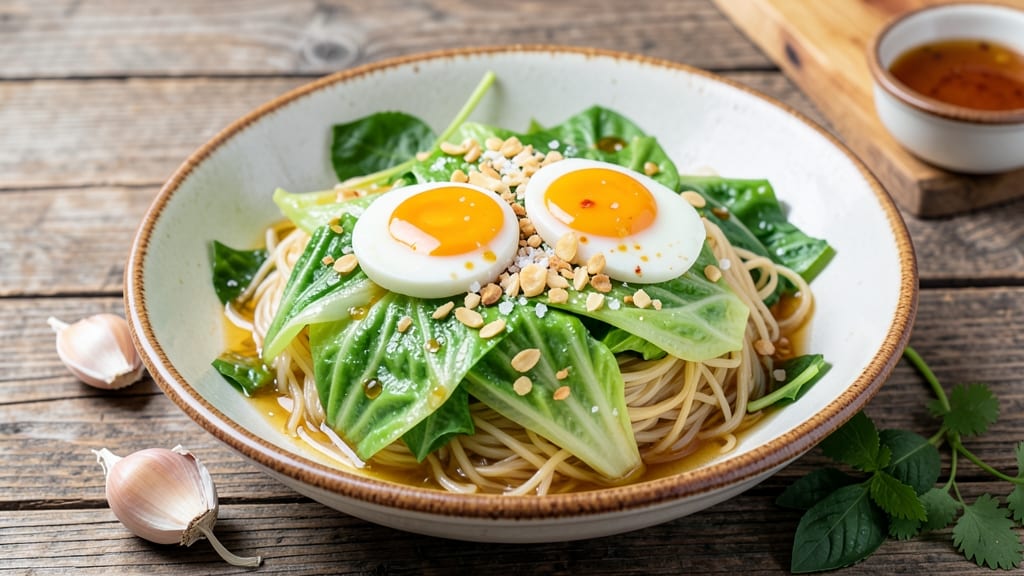
This Vietnamese cabbage and egg recipe delivers the perfect balance of textures—crispy noodles, tender cabbage, and a silky, runny yolk that ties everything together. 🌟 A staple in Northern Vietnam, this dish transforms humble ingredients into a restaurant-worthy breakfast that’s ready in under 20 minutes.
The secret lies in the quick stir-fry technique, where high heat ensures the noodles stay crispy while the cabbage softens just enough to absorb the savory egg yolk.
The dish starts with thinly sliced cabbage and fresh rice noodles, both cooked to perfection before hitting the pan. A light touch of fish sauce and a splash of soy sauce build the umami foundation, while a fried egg adds richness and that signature silky texture.
What makes this recipe special is how it highlights simplicity—no complicated techniques, just the right balance of heat, timing, and fresh ingredients to create something deeply satisfying.
By the time you plate it, you’ll have a dish that’s crispy at the edges, tender in the center, and dripping with golden yolk. The aroma of garlic and fish sauce lingers in the air, while the contrast of textures—crunchy noodles, silky cabbage, and creamy egg—makes every bite unforgettable.
It’s the kind of meal that feels both comforting and elegant, perfect for a quick breakfast or a light lunch.
For an extra layer of flavor, consider adding shrimp or thinly sliced pork to the pan before the cabbage. The protein cooks quickly and soaks up the savory sauce, making this dish even more hearty.
Whether you’re cooking for yourself or sharing with guests, this recipe is a testament to how a few simple ingredients can create something truly special.
Ingredients for vietnamese cabbage and egg
Fresh rice noodles, crisp cabbage, and runny eggs transform simple ingredients into a restaurant-worthy Vietnamese breakfast.
| Ingredient | Amount | Notes |
|---|---|---|
| Fresh Rice Noodles 🍜 | 4 oz | Flat, wide variety preferred |
| Green Cabbage 🥬 | 4 cups | Thinly sliced, core removed |
| Large Eggs 🥚 | 2 whole | Fresh, room temperature |
| Vegetable Oil 🫒 | ¼ cup | High smoke point for frying |
| Garlic Cloves 🧄 | 2 cloves | Minced, for aroma |
| Fish Sauce 🍶 | 1 tbsp | Vegetarian-friendly brand |
| Light Soy Sauce 🥄 | 1 tbsp | For umami balance |
| Sugar 🍚 | ½ tsp | White granulated |
| Lime Juice 🍋 | 1 tbsp | Freshly squeezed |
| Fresh Cilantro 🌿 | ¼ cup | Chopped, for garnish |
| Red Chili Flakes 🌶️ | ½ tsp | Adjust to taste |
| Salt 🧂 | ½ tsp | Kosher or sea salt |
The rice noodles are the foundation—look for flat, wide varieties at Asian markets or the international aisle. Thai Kitchen brand is reliable, but any rice noodle will work. Soak them in warm water for 10-15 minutes until pliable but still holding shape. For the cabbage, choose a small head with crisp leaves—the texture should snap when sliced. Thin slices ensure even cooking and maximum crunch. If your cabbage is wilted, submerge it in ice water for 15 minutes to revive it. Garlic is non-negotiable here—freshly minced releases more aroma than pre-minced or powdered.
No fish sauce? Vegetarian oyster sauce or soy sauce with a splash of vinegar works in a pinch, though the umami won't be identical. The soy sauce can be swapped for tamari if gluten-free, but traditional light soy adds depth. For heat, fresh chili slices or Thai bird's eye chili bring more complexity than flakes. If you're adding protein, shrimp or thinly sliced pork should be cooked first and removed before the cabbage goes in—this keeps the noodles crispy. The eggs are the star, so use the freshest you can find—room temperature eggs fry more evenly with a higher chance of that perfect runny yolk.
Prep everything ahead—soak noodles, slice cabbage, mince garlic—so cooking is just assembly. Store prepped cabbage in a sealed container with a paper towel to keep it crisp for up to 2 days. The cooked noodles reheat best in a dry pan over medium heat for 1-2 minutes—just until warmed through. This dish is best served immediately, but leftovers keep for 1 day in the fridge. For extra crispiness, pat noodles dry before frying to prevent sogginess.
Why You'll Love This Recipe
- No-Chop Nightmare: The cabbage barely needs slicing—just tear those leaves into rough strips, and you’re done. Fresh rice noodles? Soak them for five minutes while you fry the eggs. Honestly, this is the kind of meal that lets you zone out to a show while still feeling like you cooked something special.
- Crispy-Creamy Magic: That first crack of the egg yolk against the wok-seared cabbage is where this dish gets you. The garlic sizzles into fragrant bits, the noodles soak up the savory oil, and the cabbage stays just crisp enough to cut through the richness. Not fancy, but ridiculously good.
- Lunchbox Hero: Pack it cold for work or school—no reheating needed. The noodles stay chewy, the eggs hold their shape, and the cabbage won’t turn to mush. My kids actually ask for this in their bento boxes. (Yes, even on a Tuesday.)
- Pantry Staple Power: Eggs, cabbage, garlic—ingredients you’re already buying. No specialty items, no last-minute grocery runs. And leftovers? Toss them in a thermos for a 30-second office lunch. This is my go-to when the fridge is empty but the wallet isn’t.
Step-by-step instructions for Vietnamese cabbage and egg recipe
Here's how to create crispy noodles with silky egg magic—simple steps for perfect texture every time.
🍳 Step 1: Soak and Prepare the Fresh Rice Noodles
Fill a large bowl with warm water and add the 4 oz fresh rice noodles. Let them soak for 8-10 minutes until pliable but still holding their shape. You'll know they're ready when they bend easily but don't break when pinched. Drain immediately and rinse with cold water to stop the cooking process.
I like to spread the drained noodles on a clean kitchen towel and gently pat them dry. This prevents them from sticking together when you fry them later. Keep them covered with a damp towel while you prepare the rest of the ingredients—this keeps them soft and ready for cooking.
🍳 Step 2: Fry the Noodles Until Golden and Crispy
Heat 0.25 cup vegetable oil in a large skillet over medium-high heat until shimmering but not smoking. Add the soaked noodles in a single layer and fry for 3-4 minutes, stirring gently with a spatula. You want them to turn golden brown and crispy at the edges—this is where the magic happens for that perfect texture.
Don't overcrowd the pan or they'll steam instead of crisp. If needed, work in batches to maintain even cooking. Once crispy, remove the noodles and set them aside on a paper towel-lined plate. They'll continue cooking slightly from residual heat, so don't let them sit too long before adding them back to the pan.
🍳 Step 3: Cook the Cabbage and Aromatics
In the same skillet (with the remaining oil), add the 4 cups thinly sliced green cabbage and stir-fry over medium-high heat for 3-4 minutes until just wilted but still vibrant green. Add the 2 cloves minced garlic cloves and cook for another 30 seconds until fragrant—this is where the foundation flavor develops.
Add 1 tbsp fish sauce, 1 tbsp light soy sauce, 0.5 tsp sugar, and 0.5 tsp salt. Stir well and cook for 1 minute until the cabbage is tender but still retains a slight bite. The sauce should coat the cabbage evenly, creating a perfect balance of umami and brightness.
🍳 Step 4: Fry the Eggs to Silky Perfection
Increase heat to medium-high and add the 2 whole large eggs to the skillet. Let them sit undisturbed for 10-15 seconds until the edges begin to set, then gently tilt the pan to let the raw egg flow toward the edges. This creates that signature silky yolk center with crispy edges.
Once the eggs are 80% set but still runny in the center, remove them from the pan and set aside. The residual heat will finish cooking them slightly, but you want that perfect runny yolk when you serve it. If the pan isn't hot enough, the eggs will cook too quickly and lose their silky texture.
🥘 Step 5: Combine and Finish with Lime and Chili
Return the crispy noodles to the skillet and toss them with the cabbage mixture. Add the fried eggs and gently fold everything together. Drizzle with 1 tbsp lime juice and 0.5 tsp red chili flakes, tossing gently to combine. The acidity from the lime brightens the dish, while the chili adds just the right amount of heat.
Garnish with 0.25 cup chopped fresh cilantro and serve immediately while everything is hot and crispy. The contrast between the crispy noodles, silky eggs, and tender cabbage makes this dish truly special. Each bite delivers that perfect balance of textures and flavors.
Pro Tips For Making Vietnamese Cabbage And Egg
- SOAK NOODLES SEPARATELY: Fresh rice noodles stick together like glue if you toss them in the wok dry—trust me, I’ve ruined a batch. Soak them in warm water for 10-15 minutes, then drain and rinse just before cooking. That way, they stay loose and absorb the egg-cabbage sauce perfectly instead of turning into one sad, gummy lump.
- SHRED CABBAGE THIN AND EVEN: Thick cabbage strips take forever to soften, and you’ll end up with a dish where half is still crunchy. Cut the core off first, then slice the wedges paper-thin—almost translucent—using a sharp knife. The smaller the pieces, the faster they wilt into that perfect tender-crisp texture, and the more evenly they’ll cook with the eggs.
- CRACK EGGS INTO COLD WATER: I used to just crack eggs straight into the hot pan, and they’d either scramble too fast or stick like glue. Instead, whisk them in a bowl of cold water first, then pour the whole egg (water and all) into the wok. The water helps distribute the yolk evenly, and the eggs cook into silky ribbons instead of breaking into uneven chunks.
- GARLIC FIRST, THEN CABBAGE: Add garlic to the oil when it’s just shimmering—not smoking—then let it sizzle for 10 seconds until fragrant. Now toss in the cabbage. If you wait, the garlic burns and turns bitter, or the cabbage steams instead of getting that quick, bright-wilted texture. The order matters more than you’d think for that clean, fresh flavor.
Perfect pairings for these flavors
Crispy Noodle Garnishes
Freshly toasted fried shallots add a delicate crunch and aromatic depth that elevates the dish. I like to use 1 tbsp of store-bought fried shallots (like La Choy) or make my own by thinly slicing 2 shallots and frying in oil until golden.
Sprinkle them over the top just before serving—they crisp up beautifully from the residual heat. 🌟
Protein Additions
For a heartier version, add 4 oz shrimp or 4 oz thinly sliced pork shoulder to the pan after frying the noodles. Cook them for 1-2 minutes until just done, then remove and set aside.
Toss them back in at the very end to warm through—this keeps the noodles crispy while adding protein. I recommend boneless shrimp or marinated pork for best results.
Dipping Sauces
A simple hoisin sauce or chili garlic sauce makes this dish even more satisfying. Mix 1 tbsp hoisin with 1 tsp lime juice and a pinch of sriracha for a sweet-spicy dip.
Alternatively, blend 2 tbsp fish sauce, 1 tbsp lime juice, and 1 tsp sugar for a tangy, umami-rich sauce. Serve on the side for dipping or drizzle lightly over the dish.
Vegetable Sides
Pair with a quick cucumber salad to balance the richness. Thinly slice 1 English cucumber, toss with 1 tbsp rice vinegar, ½ tsp salt, and 1 tsp sugar.
The cool, refreshing crunch contrasts perfectly with the warm, crispy noodles. For extra freshness, add 2 tbsp chopped mint or cilantro to the salad.
Beverage Pairings
A jasmine green tea or coconut water complements the dish beautifully. The floral notes of jasmine tea enhance the garlic and fish sauce flavors, while coconut water’s natural sweetness balances the savory elements. For a boozy option, a light lychee martini or sake adds a sophisticated touch. 🍵
Nutrition facts
Frequently asked questions
Can I substitute fresh rice noodles with dried rice noodles?
You can use dried rice noodles, but they require extra prep time. Soak them in warm water for 20-30 minutes until fully tender, then drain and pat dry thoroughly. The texture will be slightly softer than fresh noodles, but they'll still work well for this dish. For best results, use 4 oz dried rice noodles and follow the same frying technique.
How do I get the perfect runny yolk?
Use room temperature eggs and cook them over medium-high heat for just 10-15 seconds undisturbed. The key is to let the edges set while keeping the center liquid. Remove the eggs when they're 80% cooked—the residual heat will finish them perfectly. If your pan isn't hot enough, the yolk will firm up too quickly.
What if I don't have fish sauce?
You can substitute with 1 tbsp soy sauce + ½ tsp sugar for umami, or vegetarian oyster sauce for a deeper flavor. For a tangier option, use 1 tbsp soy sauce + ½ tsp vinegar. Just note that the dish won't have the same authentic depth without fish sauce, but it'll still taste delicious.
Can I make this dish ahead of time?
This dish is best served immediately for maximum crispiness, but you can prep components ahead. Soak and drain the noodles, slice the cabbage, and mince the garlic—store them separately in the fridge for up to 2 days. Reheat the noodles in a dry pan for 1-2 minutes before frying again. Fry the eggs fresh when ready to serve.
Why does my cabbage turn mushy?
Overcooking is the most common cause. Stir-fry the cabbage over medium-high heat for only 3-4 minutes—it should be tender but still slightly crisp. Another tip: pat the cabbage dry before cooking to prevent excess moisture. If using pre-cut coleslaw mix, drain it well and squeeze out excess liquid first.